
Safe Home Setup for Newborn: 15 Must-Know Safety Tips Before Baby Arrives
Creating a safe home setup for newborn is essential before your baby arrives home. Bringing your newborn home is one of the most beautiful moments of your life. If you are a new parent, you may be concerned about your baby’s safety, even inside your own home. The truth is, many everyday household items like loose wires, loose bedding, too hot or too cold room temperature can cause risks to the safety of a fragile newborn.
In this guide, you’ll learn simple and practical ways to create a safe home setup for newborn baby and making your home a secure, clean, and comfortable space, so you can focus on what truly matters and that is caring for and bonding with your baby with peace of mind.
What Does a Safe Home Setup Mean?
A safe home setup for newborn baby involves preparing a clean, hazard-free, and comfortable environment to protect the baby from common risks.
This includes setting up a safe sleeping area, maintaining proper room temperature, ensuring hygiene, removing sharp objects, covering electrical outlets, and safely storing medicines or harmful items. Creating a newborn-safe home helps reduce accidents and supports healthy development in the early days.
Why Safe Home Setup for Newborn Is Essential?
Newborns are extremely delicate. Their immune system is still developing phase, and they depend entirely on you for protection.
Most parents think accidents happen outside. But the truth is, many risks exist inside the home. From unsafe sleeping arrangements to poor hygiene, small mistakes can affect your baby’s health and safety. Preparing your home in advance helps you:
- Reduce risk of infections and injuries.
- Create a calm, stress-free environment.
- To feel more confident as a new parent.
Common Hazards to Remove Before Baby Arrives
Before bringing your newborn baby home, take some time to identify and remove potential risks. Even though your newborn won’t move yet, early preparation is key.
Things You Need to Watch Out Include:
- Sharp furniture edges.
- Loose wires and open sockets.
- Small objects (choking hazards).
- Medicines and cleaning products within reach.
- Slippery floors or cluttered areas.
Safe Sleeping Setup for Newborn
This is the stage when your baby will spend most of his/her time sleeping. To ensure a safe sleep for newborn, his/her sleeping area must be 100% safe. Remember, safe sleep reduces the risk of serious conditions like suffocation.
Safe Sleeping Essentials Include:
- Use a firm mattress in a crib or bassinet.
- Always place baby on their back to sleep.
- Keep crib empty (no pillows, blankets, toys).
- Share a room, never share a bed.
What Must be Avoided While Creating a Safe Home Setup for Newborn:
- Loose or soft bedding must be avoided for newborn.
- Heavy blankets.
- Sleeping on sofas or adult beds
Ideal Temperature and Air Quality for Newborn
Maintaining the right environment and ideal room temperature is crucial for your baby’s comfort and health. Clean air and proper temperature help prevent breathing issues for the baby.
Best Practices for a safe home setup for newborn Include:
- Keep room temperature around 20 to 22°C (68 to 72°F)
- Ensure baby room ventilation properly.
- Use light, breathable clothing.
- Ensure safe air quality for baby.
Must Avoid Regarding Proper Temperature:
- Direct fan or AC airflow on baby.
- Smoke, perfumes, and strong chemicals around baby.
Hygiene and Cleanliness for Newborn Safety
Newborns are highly sensitive to germs, so hygiene matters more than ever before. A clean environment protects your baby from infections. Newborn hygiene guidelines include:
Newborn Hygiene Tips:
- Wash hands before handling baby.
- Limit visitors in the first few weeks.
- Clean baby clothes, bedding, and bottles on regular basis.
- It’s very important to keep pets away from baby’s sleeping area.
- Keeping baby environment clean to protect him/her from infections is crucial.
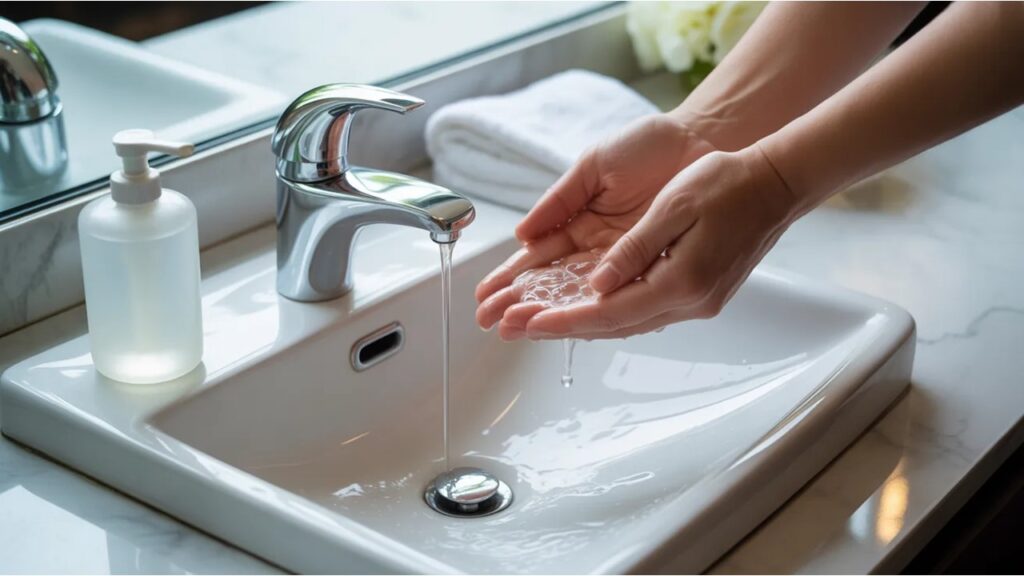
Home Safety to Ensure Basic Baby-Proofing for Newborn
Even though your baby isn’t mobile yet, basic baby-proofing should start early to make it a habit. These steps prepare your home for future growth stages too. All household hazards for newborn should be fixed for proper safety and comfort.
Important Home Safety Steps:
- Cover electrical outlets.
- Keep cords and wires out of reach.
- Secure heavy furniture.
- Keep hot liquids and appliances away from newborn baby.
- Ensure safe storage of medicines.
Safe Bathing and Changing Area Setup
Newborn daily care routine also includes bath time and diaper changes. These things need careful planning, especially for first-time mothers. Never leave your baby unattended, even for a second. To ensure newborn bathing safety, you need to do a proper setup.
Safe Bath Setup Tips for Newborn:
- Use a stable changing table.
- Keep all essentials within reach.
- Test warm water temperature before bathing. Never use cold water.
- Always handle newborn safely and properly
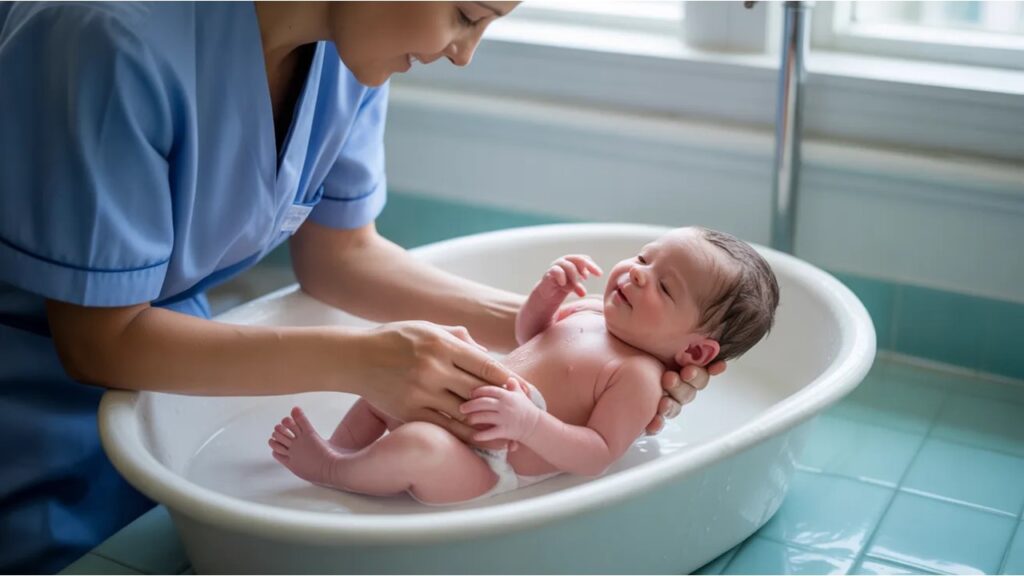
Room-by-Room Safe Home Setup for Newborn
Besides baby’s room, look for your entire house and remove any hazards to ensure safety.
Bedroom Safety
- Keep crib away from windows and cords.
- Avoid loose bedding.
- Use dim night lighting instead of sharp lighting.
Living Room Safety
- Remove clutter and mess.
- Keep sharp/heavy objects away.
- Avoid placing baby on high surfaces.
Kitchen Safety
- Keep baby away from cooking areas.
- Store chemicals and utensils safely.
Common Mistakes to Avoid for Safe Home Setup for Newborn
Every parent must be fully aware of newborn care mistakes. Many parents unknowingly make these unsafe baby practices. Awareness helps prevent these easily avoidable risks. Common newborn safety risks include:
- Overcrowding the baby’s crib.
- Ignoring small hazards.
- Using unsafe baby products.
- Poor hygiene practices.
Safe Home Setup for Newborn Checklist
Before Newborn Baby Arrives:
- Set up safe sleeping area.
- Remove hazards.
- Clean and organize home which is the core of safe home setup for newborn.
Daily Safety Routine:
- Check room temperature.
- Maintain hygiene.
- Keep baby’s space clutter-free.
FAQs About Safe Home Setup for Newborn
Q1: How do I make my home safe for a newborn?
Ans: Ensure a clean, clutter-free space, safe sleeping setup and ideal temperature. Things to avoid with newborn include all hazards like sharp objects and chemicals.
Q2: What temperature is safe for a newborn at home?
Ans: Around 20 to 22°C (68 to 72°F) is ideal.
Q3: When should I start baby-proofing?
Ans: Start before your baby arrives to stay prepared.
Q4: Can newborns sleep in parents’ room safely?
Ans: Yes, room-sharing is recommended, but avoid bed-sharing.
Summary
Creating a safe home setup for newborn baby includes small, thoughtful changes. Remember, these can make a big difference in your baby’s safety and comfort. Your baby doesn’t need a perfect home, he/she needs a safe, clean, and loving environment. Trust yourself, stay mindful, and enjoy these precious early moments with your little one.
If you find this guide helpful, share it with other parents or save it for later as every baby deserves a safe start in life. Read our article about Newborn First Hour Safety Tips and leave a comment for suggestions.

11 Responses
[…] to the first on-leash meeting. Besides, exactly what to do if your pet hisses, growls, or licks. A safe home setup for newborn baby is a key for safety and health of your little […]
[…] These risks increase due to fatigue, physical weakness, and recovery after childbirth. Creating a safe home setup for mom and newborn baby helps prevent falls, injuries, and complications during postpartum […]
[…] out our Safe Home Setup for Newborn, Vitamin K Shot for Newborn 2026, How to Introduce Pets to Newborn Safely and Newborn Care […]
[…] helped you, share it with another parent/guardian. Do read Newborn Care Immediately After Birth, Safe Home Setup for Newborns & Introducing Pets to Newborn […]
[…] risk of asthma and eczema. Continue your routines: HEPA filters, weekly washing, and a pet-free nursery. By managing pet allergies during pregnancy and beyond, you’re protecting your whole […]
[…] enjoy our other child safety articles designed to help parents build safer spaces for their kids: Safe Home Setup for Newborn, Introducing Pets to Newborn […]
[…] article from our site like: Newborn First Hour Safety Tips, Introducing Pets to Newborn Safely, Safe Home Setup for Newborns and leave a comment for feedback and […]
[…] from this site: Baby Breathing Problems Due to Room Spray, Bamboo Baby Plates Vs. Plastic Plates, Safe Home Setup for Newborn and stay connected for […]
[…] AM doubts. For more evidence-based newborn care tips, explore more helpful guides from our website: Safe Home Setup for Newborn, Newborn Baby Care Immediately After Birth and stay […]
[…] How to Avoid Them (2026 Guide), Introducing Pets to Newborn Safely: A 7-Step Vet-Approved Timeline, Safe Home Setup for Newborn: 15 Must-Know Safety Tips Before Baby Arrives, Microplastics in Baby Bottles: Risks, Research, and How Parents Can Reduce […]
[…] personal protective equipment (PPE), and provides actionable steps to ensure your home or 100% safe nursery transformation remains for both you and your […]