
Introducing Pets to Newborn Safely: A 7-Step Vet-Approved Timeline

You’ve just arrived home with newborn baby. The front door opens, and your dog or cat rushes forward, tail wagging or eyes wide. One wrong move could mean a scratch, a jump, or worse.
The fear is real as over 80,000 pet-related injuries to infants occur each year in the U.S., yet most are preventable. You’re exhausted and worried that your once-gentle pet might become jealous, anxious, or aggressive.
The good news is introducing pets to newborn safely is a proven, step-by-step process. In this guide, you’ll learn a vet-approved timeline, from prenatal scent swaps to the first on-leash meeting. Besides, exactly what to do if your pet hisses, growls, or licks. A safe home setup for newborn baby is a key for safety and health of your little angle.
How to Introduce Pets to Newborn Safely?
Introducing pets to newborn safely involves a three-step process:
- Before birth, swap scents by bringing home a blanket rubbed on the baby.
- On arrival day, keep the pet on a leash, have another adult hold it, and allow brief sniffing of the baby’s feet.
- Never leave pet and newborn unsupervised, and redirect licking or jumping immediately.

Preparing Your Pet for a Newborn
Success begins long before you arrived at the front door with your infant. When you start introducing pets to newborn safely, the preparation phase is actually more important than the first meeting itself.
How to adjust your pet’s routine before the baby comes?
Pets thrive on predictability. If your dog is used to morning walks at 7:00 AM and evening hugs on the couch, suddenly changing that routine after the baby arrives creates stress. Stress leads to growling, hiding, or accidents.
Key points:
- Shift walks, feeding times, and play sessions 2/3 months before your due date.
- Gradually reduce the amount of 1:1 attention you give, so your pet learns to self-settle.
- Play recordings of baby sounds (crying, cooing) at low volume, then slowly increase over weeks.

Introducing pet scent to newborn: The blanket method
This is the single most effective tool for introducing pets to newborn safely before both ever see each other.
When your baby is born, ask a nurse or family member to take a small receiving blanket and rub it gently on the baby’s skin (cheek, hands, feet). Bring that blanket home before you and the baby arrive. Your pet will associate the newborn’s scent with a neutral or positive environment. This simple step is often overlooked, but it dramatically improves introducing pets to newborn safely.
How to practice the Blanket Method:
- Place the blanket near your pet’s food bowl or bed.
- Let your pet sniff it freely.
- After an hour, remove the blanket. Repeat twice daily for 2 to 3 days.

Pet obedience training before baby arrives
Even a well-behaved pet can become overexcited. These three commands are non-negotiable when introducing pets to newborn safely. Practice these daily for 10 minutes. If your pet struggles, hire a certified trainer 6 weeks before your due date.
- “Leave it”: Prevents licking or grabbing baby toys.
- “Place”: (go to a mat or bed): Keeps your pet at a safe distance during diaper. changes.
- “Settle”: (calm lying down): Reduces jumping and frantic energy.
Creating a pet-free zone nursery
Your baby’s room must be a sanctuary. When introducing pets to newborn safely, you need a physical barrier. By the time the baby comes home, your pet should already accept that the nursery is off-limits.
Safety steps:
- Install a tall baby gate (minimum 30 inches) that your cat cannot squeeze through.
- Place a crib tent or canopy if your cat likes to jump.
- Never allow pets into the nursery unsupervised, even before the baby arrives.
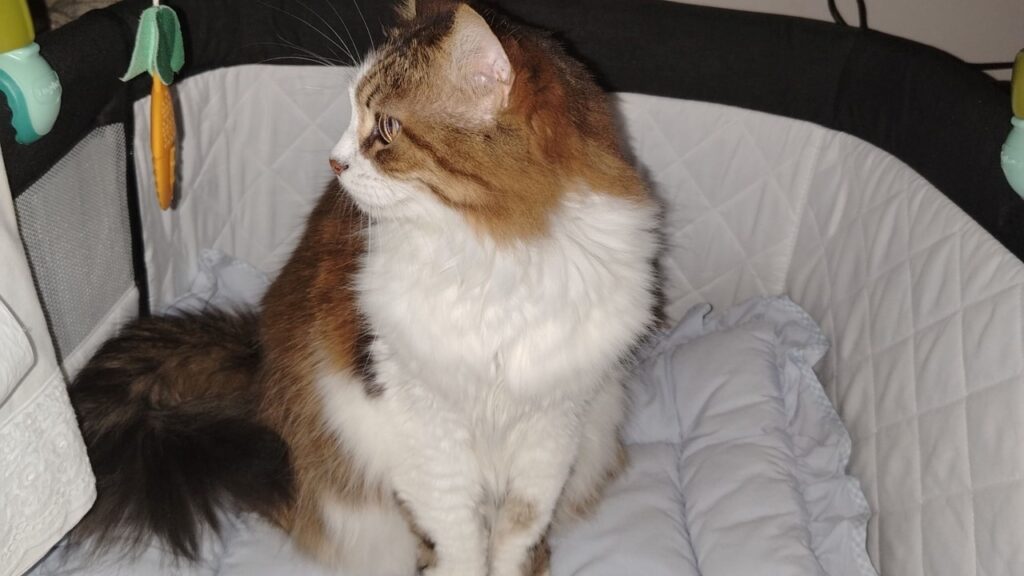
The First Meeting: Introducing Pets to Newborn Safely (Day of Arrival)
Finally, the day has come. You’re holding your newborn, and your pet is watching from across the room. This is the moment when introducing pets to newborn safely becomes real.
When to introduce pet to newborn after birth?
Do not rush. After you arrive home, spend 15 to 20 minutes with your pet alone (without the baby). Let them greet you, sniff your clothes, and calm down. Then, put the baby in a bassinet or have another adult hold the infant.
The ideal time for introducing pets to newborn safely is when your pet is already relaxed, not right after a meal (which can cause resource guarding) or when they are overly excited from your arrival.
First meeting between dog and baby
Your dog must be on a leash, even if they have never needed one inside the home.
Safety steps to follow:
- Have a second adult hold the leash loosely.
- You sit in a chair with the baby in your arms.
- Let the dog approach slowly from the side, never head-on.
- Allow sniffing (feet, blanket, bottom of baby carrier) but block access to the face.
- After 30 seconds, call the dog away and give a high-value treat.
Repeat this leash greeting 3 to 4 times during the first day. Introducing pets to newborn safely is not a single event, it’s a process of short, positive repetitions.

Introducing cat to newborn baby
Cats are different. They value vertical space and can become stressed by loud noises. Remember, when introducing pets to newborn safely with a cat, patience is your superpower.
Safety steps you need to follow:
- Let the cat approach the baby on their own terms, never force a face-to-face meeting.
- Keep the baby in a bassinet or on a bed. A cat may feel threatened if you hold the baby at cat-eye level.
- Use a pheromone diffuser in the room 24 hours before.
Don’t do the following:
- Don’t chase or scold the cat for hissing, that makes anxiety worse.
- Don’t lock the cat away for hours; they need to see the baby naturally.

Signs of pet stress around baby
You must recognize red flags immediately. These signs mean you should pause introducing pets to newborn safely and consult a vet or behaviorist. If you observe any of the following behaviors in your dog or cat, separate your pet from the baby right away and restart the scent-swapping process (blanket method) for another 3 to 5 days before attempting another face-to-face meeting.
Red flags in dogs:
- Lip licking, yawning.
- Stiff body, tail tucked.
- Growling or showing teeth.
- Blocking access to the baby.
Red flags in cats:
- Hissing, swatting.
- Ears flattened sideways.
- Hiding for more than 4 hours.
Daily Safety Routines While Introducing Pets to Newborn Safely
After the first meeting, you enter the long-term phase of introducing pets to newborn safely, everyday habits that prevent accidents.
Why should you never leave pet alone with newborn?
This is the golden rule. When introducing pets to newborn safely, supervision is not optional. It’s the difference between a happy home and an emergency room visit.
Even the most gentle, trusted dog or cat can react unpredictably to a sudden cry or a reflexive grab. Strictly follow these safety steps:
- No leaving the room to answer the door.
- No “just a quick shower.”
- No sleeping with the baby and pet in the same bed.

How to stop dog licking baby’s face?
Licking seems affectionate, but a dog’s mouth contains bacteria that can cause serious infections in newborns. Consistency in introducing pets to newborn safely means you redirect 100% of the time, not 90%.
Safety steps:
- Teach “leave it” with a treat reward.
- If the dog moves towards the baby’s face, call them to their specific place/mat.
- Never slap or yell, that creates fear-based aggression.
Crib safety with pets, barriers, covers, and room rules
Cats are the biggest risk than dogs. A cat may jump into a warm crib and accidentally suffocate a newborn by lying on their chest. When introducing pets to a newborn safely, the nursery becomes a pet-free zone permanently.
Crib safety checklist:
- Use a mesh crib tent (tested for infant safety).
- Keep the nursery door closed at all times when baby is sleeping.
- Place aluminum foil or a motion-activated mat on the crib surface for 2 weeks before baby arrives as cats hate the texture.
What to do if pet hisses or growls at baby?
First, do not panic. A single hiss or growl is a warning, not an attack. Even during introducing pets to a newborn safely, setbacks are normal. What matters is how you respond.
Immediate safety steps:
- Calmly say “no” and remove your pet from the room.
- Put the pet in a quiet space with water and a toy (not as punishment, but for decompression).
- Wait 30 minutes, then try a very short, leashed re-introduction. If the behavior repeats, call your vet for a referral to a veterinary behaviorist.

Long-Term Adjustment: From Jealousy to Bonding
Over the first 3 to 6 months, your pet will learn that the baby is not a threat. Remember, introducing pets to newborn safely doesn’t end after one week, it evolves.
How to reduce anxiety & cat’s jealousy of newborn?
Cats show jealousy by spraying, scratching furniture, or ignoring you. This shows insecurity. When introducing pets to newborn safely with a jealous cat, vertical space leads to emotional safety.
Safety steps to follow:
- Provide high perches (cat trees) in every room so the cat can observe from above.
- Set a daily 10-minute “cat only” play session after the baby sleeps.
- Use puzzle feeders so the cat works for food as mental stimulation reduces stress.
Can dogs sense a newborn is fragile?
Yes. Research shows dogs can detect hormonal changes (oxytocin, cortisol) and alter their behavior. Many dogs naturally walk slower, sniff gently, and even guard the baby’s room.
However, “sensing fragility” does not mean they understand not to jump. That is why introducing pets to newborn safely relies on your actions, not the dog’s intuition.
Newborn Pet Allergy Symptoms: When to Call a Pediatrician?
Some babies develop allergies to pet dander, saliva, or urine. Symptoms can appear even if you’ve had the pet for years. If you see these after introducing pets to newborn safely, separate the baby from the pet for 48 hours. If symptoms improve, talk to your pediatrician about allergy testing. You rarely need to rehome your pet, HEPA filters, room restrictions, and bathing the pet weekly usually solve the problem.
Watch baby for the following symptoms:
- Persistent sneezing, wheezing, or coughing.
- Red, watery eyes.
- Hives or eczema on exposed skin.
- Difficulty feeding (nasal congestion.)

FAQ’s About Introducing Pets to Newborn Safely
Q1: How do I introduce my dog to my newborn for the first time?
Ans: Put your dog on a leash. Have another adult hold the leash. Sit in a chair holding your baby. Let the dog approach from the side for 30 seconds of sniffing (feet, blanket), then call the dog away and give a treat. Repeat 3 to 4 times on the first day.
Q2: Is it safe for a cat to sleep in the baby’s room?
Ans: No. Never allow a cat to sleep in the same room as a newborn unsupervised. Cats can accidentally suffocate an infant by lying on their chest or face. Keep the nursery door closed or use a mesh crib tent.
Q3: When should I start preparing my pet for a new baby?
Ans: Start 2 to 3 months before your due date. Adjust routines, introduce baby sounds, practice obedience commands (“leave it,” “place,” “settle”), and create a pet-free nursery. The earlier you begin introducing pets to a newborn safely, the smoother the transition.
Q4: What if my dog growls at the baby during the first meeting?
Ans: Immediately remove the dog from the room. Put them in a quiet space for 30 minutes. Then restart with scent swapping (blanket method) for 3 to 5 days before attempting another face-to-face meeting. If growling continues, hire a veterinary behaviorist.
Q5: Is it safe to have cats around newborns?
Ans: It is safe only with constant, direct supervision and never allowing the cat unsupervised access to the newborn, especially in the nursery or crib.
Q6: What are necessary precautions regarding dog’s hygiene before interaction with newborn?
Ans: Keep your dog’s vaccinations and parasite prevention up to date, wash your hands after touching the dog, and prevent the dog from licking the baby’s face or hands.
Q7: What is the safest way to introduce a dog to a newborn baby?
Ans: The safest way is to first let the pet smell the baby’s blanket, then have the pet on a leash while you sit holding the baby, rewarding calm behavior.
Summary
Introducing pets to newborn safely is not about chance. It is about preparation, supervision, and patience. Most pets adapt beautifully, often becoming gentle guardians of their new human sibling.
Follow the 7-step timeline in this guide:
- Pre-birth routine shifts
- Scent swapping (blanket method)
- Obedience training
- Pet-free nursery
- Leashed first meeting
- Daily supervision rules
- Long-term adjustment
You do not have to rehome your pet. You do not have to live in fear. With the right steps, introducing pets to newborn safely will make your family flourish.
If this article helped you, leave a comment below and share it with another parent who may find it useful too.



5 Responses
[…] If this article helped you, share it with another parent/guardian. Do read Newborn Care Immediately After Birth, Safe Home Setup for Newborns & Introducing Pets to Newborn Safely. […]
[…] more helpful guides: Introducing Pets to Newborn, Managing Pet Allergies During […]
[…] Have questions about safe sleep or the FDA warning? Leave a comment below or talk to your pediatrician. You may also enjoy our other child safety articles designed to help parents build safer spaces for their kids: Safe Home Setup for Newborn, Introducing Pets to Newborn Safely […]
[…] a safe start in life. Read more helpful article from our site like: Newborn First Hour Safety Tips, Introducing Pets to Newborn Safely, Safe Home Setup for Newborns and leave a comment for feedback and […]
[…] articles from this site: 10 Newborn Sleep Safety Mistakes & How to Avoid Them (2026 Guide), Introducing Pets to Newborn Safely: A 7-Step Vet-Approved Timeline, Safe Home Setup for Newborn: 15 Must-Know Safety Tips Before Baby Arrives, Microplastics in Baby […]