
FDA Warning on SUID Prevention Monitors 2026: Your “SUID-Proof” Baby Monitor May Be Useless
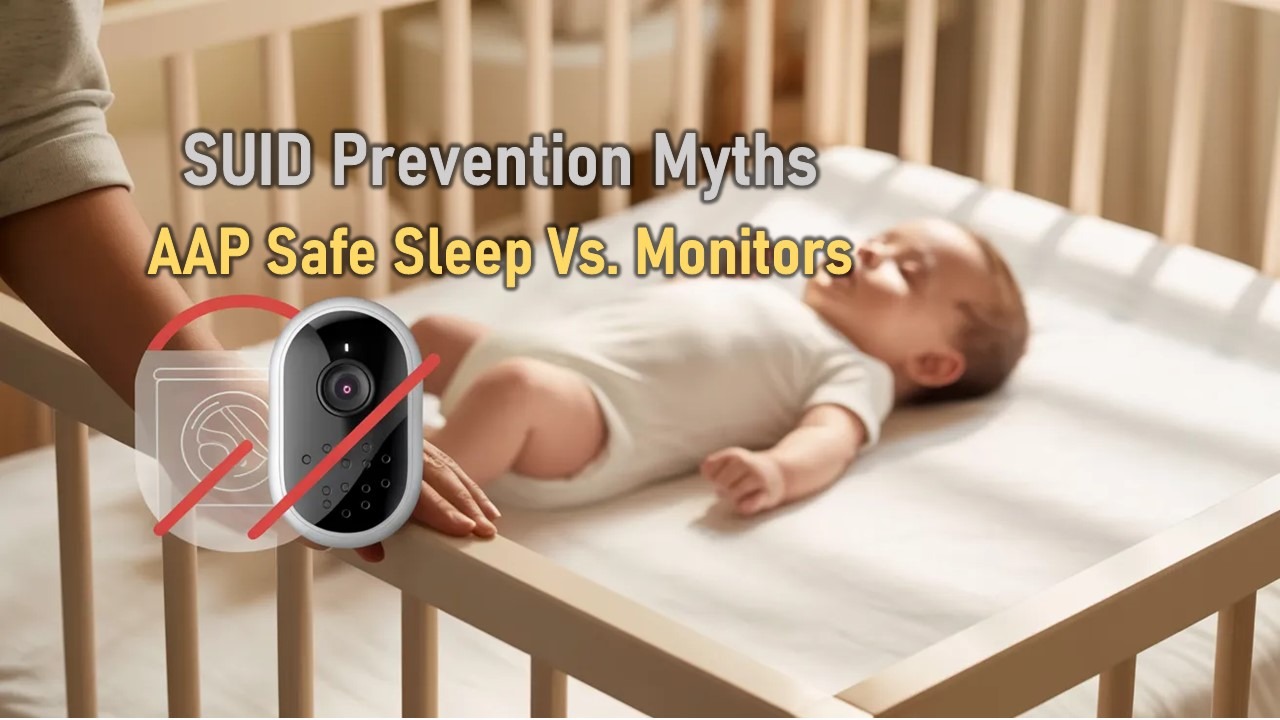
You just want your baby to sleep safely. That’s why you’ve probably seen ads for “SUID prevention monitors”, wearables, cameras, and smart sensors that promise to detect if your baby stops breathing. But here’s the hard truth the FDA just clarified in 2026: no baby monitor can prevent SUID.
As a parent, that warning can feel scary even frustrating. You’re doing everything right, and yet technology may have given you false reassurance. The American Academy of Pediatrics (AAP) has always taught that safe sleep practices (back sleeping, a firm mattress, a bare crib, and room-sharing) are the only proven ways to reduce the risk of Sudden Unexpected Infant Death (SUID).
So why did the FDA issue this warning now? And what should you do if you already own one of these monitors?
In this post, we’ll break down the FDA warning on SUID prevention monitors and their claims, explain what these devices can and cannot do, and give you a clear, guilt-free path forward, rooted in AAP’s latest 2026 guidelines. Because you deserve peace of mind, not empty promises.
Can a Baby Monitor Prevent SUID?
No. According to the FDA’s 2026 warning, no baby monitor, wearable, camera-based, or smart sensor has been proven to prevent Sudden Unexpected Infant Death (SUID) or SIDS. These devices are not FDA-approved medical devices and can give parents false reassurance. The only proven way to reduce SUID risk is to follow the AAP’s safe sleep guidelines: back sleeping, a firm bare crib, room‑sharing without bed‑sharing, and no loose bedding.
What Exactly Did the FDA Warn About SUID prevention monitors in 2026?
The Official Statement from The FDA (summarized)
In early 2026, the FDA issued a public safety communication targeting manufacturers and retailers of baby monitors that claim to “prevent,” “reduce the risk of,” or “detect early signs of” SUID or SIDS. The agency made it clear: no consumer-grade baby monitor has received FDA clearance for SUID prevention. Any such claim is misleading and potentially dangerous.
The FDA also reminded parents that SUID prevention monitors have not undergone rigorous clinical testing for accuracy in detecting life‑threatening events like apnea or cardiac arrest. Relying on them could delay seeking real medical help.
Why No Baby Monitor Can Legally Claim To “Prevent” SUID
SUID is a broad category that includes SIDS, accidental suffocation, and strangulation in bed. Prevention would require a device to stop these events before they happen—something no wearable or camera can do. Even if a monitor detects paused breathing, by the time an alarm sounds, irreversible harm may have already occurred.
Legally, a device can only claim to “prevent” a medical outcome if it is proven in peer‑reviewed studies and cleared by the FDA. None exist for SUID.
Key Differences Between SIDS, SUID, And Breathing Monitors
- SIDS (Sudden Infant Death Syndrome): Unexplained death of an infant under 1, even after full investigation.
- SUID (Sudden Unexpected Infant Death): A broader term that includes SIDS, accidental suffocation, and unknown causes.
- Breathing monitors: These track movement or oxygen levels. They may alert you after breathing slows, but they do not prevent the underlying cause.

Which Baby Monitors Are Affected by the FDA Warning?
List Of Devices Cited in the 2026 FDA Communication
The FDA did not name individual brands in its initial 2026 warning, but it referenced categories of products commonly marketed with SUID/SIDS prevention language. These include:
- Wearable breathing sensors (ankle or chest straps).
- Smart pacifiers that claim to monitor oxygen or breathing.
- AI‑powered cameras that claim to detect “early signs of SUID”.
- Mattress pads with apnea detection.
Common Marketing Phrases that Triggered the Warning
Watch out for these exact phrases on product packaging or websites regarding SUID prevention monitors:
- “Reduces the risk of SIDS/SUID”.
- “Prevents SUID”.
- “Clinically proven to detect life‑threatening events”.
- “FDA‑registered” (this does not mean FDA‑approved).
“SUID Prevention,” “SIDS Prevention,” and “apnea Detection” Claims
Even if a monitor says “apnea detection,” that does not equal SUID prevention. Apnea monitors are medical devices used in hospitals under supervision. Home versions have been studied and found to cause more anxiety than benefit and no reduction in SUID rates.
Why the FDA Is Cracking Down on SUID prevention monitors Now (2026 Context)
Rise of AI and Wearable SUID Prevention Monitors
Over the last three years, dozens of new “smart” baby monitors have flooded the market. Many use artificial intelligence to analyze breathing patterns, movement, or oxygen levels. But AI doesn’t replace clinical evidence. The FDA saw a spike in complaints from parents who were falsely reassured by these devices—some of whom later lost infants to SUID despite the monitor showing “normal” data.
Previous FDA Warnings (2018, 2023) Vs. 2026 Update
The FDA first warned about SIDS‑prevention claims in 2018, then again in 2023. But manufacturers found loopholes, using words like “wellness” or “peace of mind” while implying prevention. The 2026 warning is stronger: it clarifies that no claims of SUID prevention are allowed, period.
Increased Reports of False Reassurance Among Parents
Pediatricians and sleep specialists have observed a troubling trend: parents who use SUID‑claim monitors are more likely to place babies on their stomachs or add loose bedding, thinking the monitor will “catch” any problem. This is exactly the opposite of safe sleep.
Can Any Baby Monitor Help Reduce SUID Risk?
What Monitors Can Actually Do (Track Movement, Breathing, Position)
Let’s be fair: a basic video or audio monitor can help you hear when your baby wakes up or see if they’ve rolled over. Some advanced monitors can track room temperature or alert you if your baby’s face is covered. These are features, not prevention.
What Monitors Cannot Do (Prevent, Diagnose, Or Treat SUID)
No monitor, none, can stop a SUID event. SIDS is not caused by a breathing stoppage alone; it involves complex, poorly understood factors. Suffocation happens quickly and silently. By the time an alarm sounds, it’s often too late.
The Danger of Over‑Relying On Unapproved SUID Prevention Monitors
The biggest risk isn’t the monitor itself. It’s the false sense of security. Parents might stop room‑sharing, stop putting baby on their back, or ignore safe sleep rules because “the monitor will alert me.” That trust can be deadly.
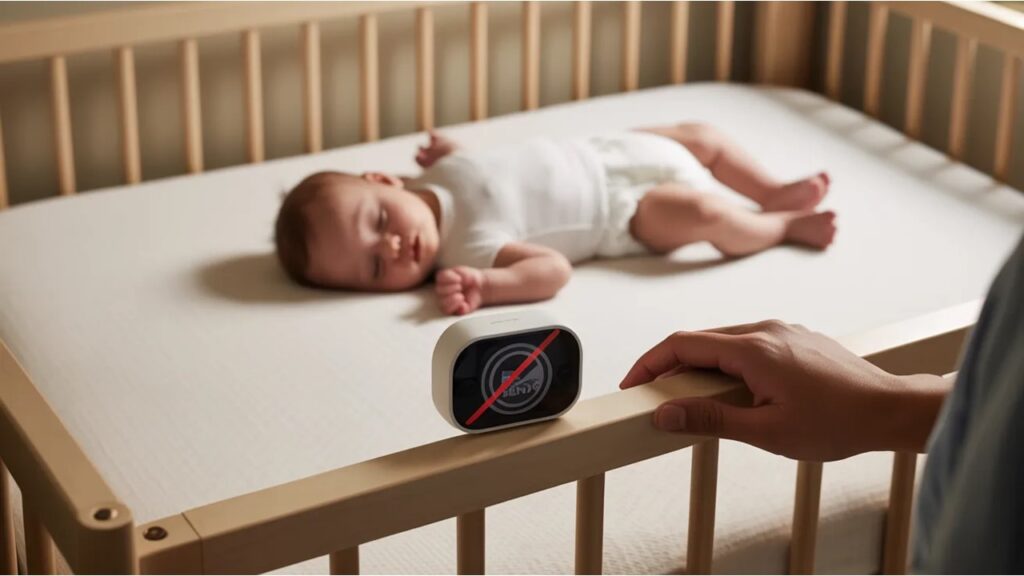
What Should Parents Do If They Own One of These SUID prevention monitors?
Step 1: Stop using the device as a medical tool
If you own a monitor that claims to prevent SUID, continue using it only as a basic audio/video monitor—nothing more. Ignore any “risk score” or breathing alerts.
Step 2: Follow AAP safe sleep guidelines instead
This is your real protection. Here are the AAP’s 2026 recommendations:
- Back to sleep for every sleep, day and night.
- Firm, flat mattress with only a fitted sheet.
- No loose bedding, no bumpers, no toys, no pillows.
- Room‑share without bed‑sharing for at least 6 months.
- Pacifier at naptime and bedtime (once breastfeeding is established).
Step 3: Report adverse events to the FDA if relevant
If your baby experienced a health issue that you believe was related to a monitor (e.g., a false negative where the monitor showed normal breathing but your baby needed emergency care), report it to the FDA’s MedWatch program. Your report helps protect other families.
Safe, Evidence‑Based Alternatives to “SUID Prevention” Monitors
Bare Crib, Firm Mattress, No Loose Bedding
A cheap, basic crib with a firm mattress and fitted sheet protects your baby better than an expensive smart monitor.
Room‑Sharing Without Bed‑Sharing (first 6 months)
Place your baby’s crib or bassinet in your bedroom, next to your bed. This reduces SUID risk by up to 50%, no technology required.
Using a Basic Audio/Video Monitor for Peace of Mind
If you want to hear your baby or check on them without getting out of bed, a simple, cheap monitor is fine. Just remember: it’s a convenience, not a safety device.
How to Spot Misleading Baby Tech Claims in the Future
Red Flags in Product Descriptions and Reviews
- Words like “prevents,” “eliminates risk,” or “FDA‑registered” (registration is not approval).
- “Clinically tested” but no link to peer‑reviewed studies.
- Reviews that say “gave me peace of mind”—that’s not evidence.
Checking FDA Clearance vs. FDA Registration Related to SUID Prevention Monitors
FDA clearance (510(k)) means the device is approved as a medical device for a specific use. No baby monitor for SUID has this. FDA registration simply means the manufacturer is listed with the FDA, it’s meaningless for safety.
Trusted Resources (AAP, NIH, Consumer Product Safety Commission)
Bookmark these sites:
- healthychildren.org (AAP’s official parent site)
- nichd.nih.gov (SIDS/SUID research)
- cpsc.gov (product recalls)
Frequently Asked Questions: FDA Warning About SUID Prevention Monitors
Can I still use my smart baby monitor?
Yes, but only as a basic monitor. Ignore any health or SUID prevention monitors claims. Never let it replace safe sleep practices.
Will the FDA ban these devices?
Not directly. The FDA regulates claims, not the hardware. Manufacturers can keep selling the devices if they remove illegal prevention language. Some may choose to rebrand.
Do any monitors have FDA approval for medical use?
A handful of prescription‑only apnea monitors exist for babies with known medical conditions (e.g., preterm infants with apnea of prematurity). They are used under a doctor’s care, not sold over‑the‑counter.

SUID Prevention Monitors 2026 Update: Summary
The news about the FDA warning for SUID prevention monitors can feel unsettling, especially when you’re trying so hard to keep your baby safe. But here’s what we want you to take away: you already have the tools that really work, and they don’t come with a gadget or a hefty price tag. You don’t need a smart monitor, a wearable, or an AI camera to protect your baby from a sleep‑related death. What you need is a bare crib, a firm mattress, a back‑sleeping position, and a room‑shared space without bed‑sharing. Those four things alone, rooted in decades of peer‑reviewed evidence from the AAP, dramatically reduce the risk of SUID.
And here’s a surprising truth: the AAP explicitly advises against using any monitor or device sold as a way to reduce the risk of SIDS. Why? Because there is no evidence they prevent SUID, and relying on them can create a dangerous sense of false reassurance. The safest baby monitor is simply you, being close enough to hear, see, or check on your little one during sleep.
If you own one of the devices mentioned in the FDA warning for SUID prevention monitors, please don’t feel frightened. You were doing what any loving parent would do: looking for every possible way to protect your child. Now you know better, and you can do better, without guilt. The AAP’s 2026 safe sleep guidelines are clear, simple, and free. You don’t have to choose between technology and safety. Choose the evidence. Choose the basics. And above all, choose peace of mind.
Have questions about safe sleep or the FDA warning? Leave a comment below or talk to your pediatrician. You may also enjoy our other child safety articles designed to help parents build safer spaces for their kids: Safe Home Setup for Newborn, Introducing Pets to Newborn Safely


3 Responses
[…] you think. Following a few, clear, evidence-based guidelines can dramatically reduce the risk of “Sudden Infant Death Syndrome” (SIDS) and other sleep-related […]
[…] onto their stomach faces a dramatically increased risk of SIDS (Sudden Infant Death Syndrome) and SUID (Sudden Unexpected Infant Death). Your baby needs free arms to push up, lift their head, or readjust their sleeping […]
[…] read more useful articles from this site: FDA Warning on SUID Prevention Monitors 2026, Microplastics in Baby Bottles: Risks, Research, and How Parents Can Reduce Exposure, Baby […]