
Spot Toxic Vs. Safe Bamboo Baby Plates: Find If Your Baby’s Natural Plate Is Really Toxic Plastic (The 7‑Steps Parent’s Checklist)
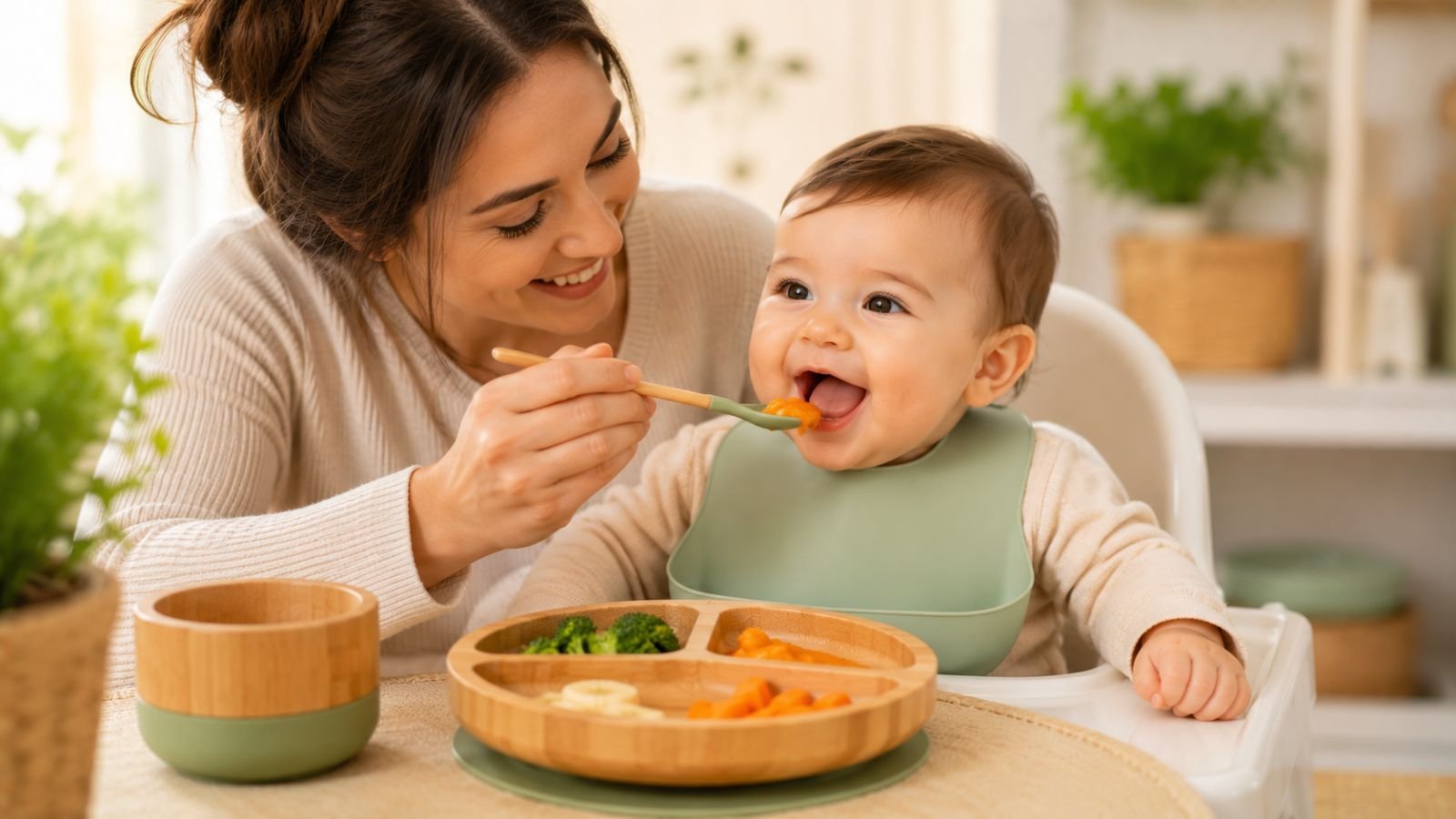
“I just want something natural for my baby.” That’s what almost every parent tells me when they reach for bamboo baby plates instead of plastic. And I get it, bamboo sounds pure, renewable, and safe. But here’s what the American Academy of Pediatrics wants you to know: not everything labeled “bamboo” is what it seems.
Over the last few years, the AAP has sounded the alarm on hidden toxins in children’s products, from melamine in “bamboo fiber” dishes to lead in brightly colored plates. As a parent, you shouldn’t need a chemistry degree to pick a safe dinner plate for your toddler.
So, let’s cut through the marketing. In this guide, you’ll find a simple, 7‑step checklist to spot the difference between safe, solid bamboo baby plates and toxic bamboo‑melamine composites. No fear‑mongering, just the facts you need to keep mealtime healthy and happy.
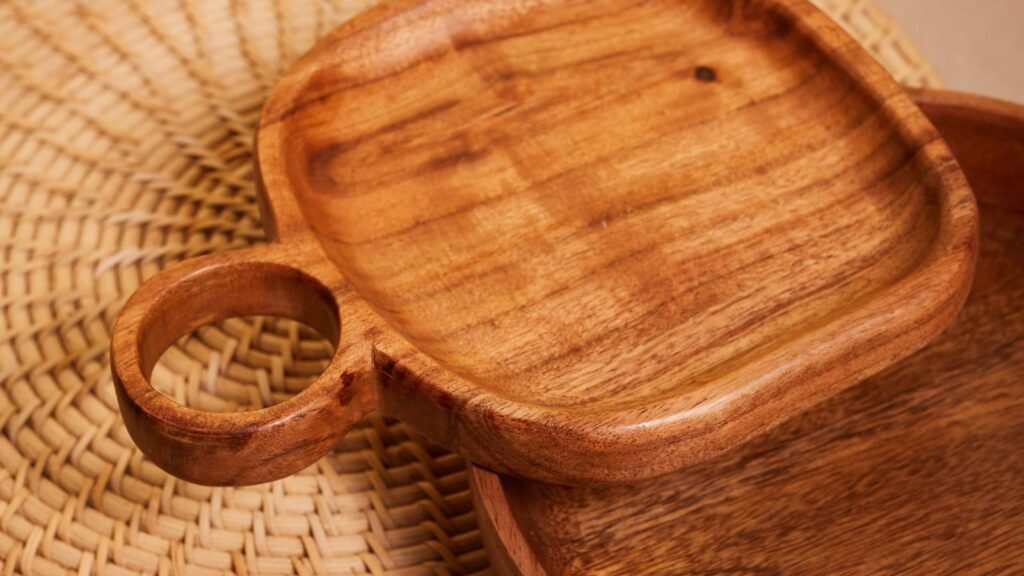
The Hidden Danger Most Parents Don’t Know About Bamboo Composite + Melamine
You see “bamboo” on the box, you imagine a chunk of natural wood. But most bamboo baby plates sold online and in stores are not solid bamboo. They’re a mixture of:
- Bamboo dust or powder (often less than 30%).
- Melamine‑formaldehyde resin (a type of plastic).
Manufacturers call this “bamboo fiber composite” or “bamboo tableware.” It looks smooth, feels like plastic, and can be molded into bright, cute shapes. But here’s the catch: when you put hot or acidic food on that plate, melamine and formaldehyde can leach into your baby’s meal.
What is Bamboo Fiber Composite? (Bamboo Dust + Melamine Resin)
Imagine sawdust mixed with plastic glue, that’s composite. It’s cheap to produce and easy to shape, but it’s not real wood. The FDA has approved melamine for cold food contact only. Yet most composite plates are used for warm purées, pasta, or soup. That’s where the risk begins.
The EU Ban on Bamboo‑Melamine Baby Plates (What US Parents Must Know)
Since 2021, the European Union has banned bamboo‑melamine composite for food contact. Why? Because testing showed that melamine and formaldehyde migrate into food at levels exceeding safety limits, especially for toddlers who eat smaller portions and are more vulnerable to toxins.
If you’re in the US, these plates are still legal. But many smart parents are choosing to follow the EU’s lead.
Lead Recall 2023: CPSC Finds Lead in Bamboo Children’s Plates
In 2023, the U.S. Consumer Product Safety Commission (CPSC) recalled Primark bamboo children’s plates due to excess lead. Lead damages developing brains and nervous systems, there is no safe level for babies.
So “bamboo” doesn’t just mean melamine and formaldehyde. It can also mean heavy metals hiding in the glaze, paint, or resin.

How to Tell Real Bamboo Baby Plates vs. Toxic Composite (The 3‑Second Test)
You don’t need a lab. You just need a physical examination with your eyes and fingers for bamboo baby plates. Here’s the 3‑second test any parent can do:
Visual Test: Natural Wood Grain vs. Solid Plastic Color
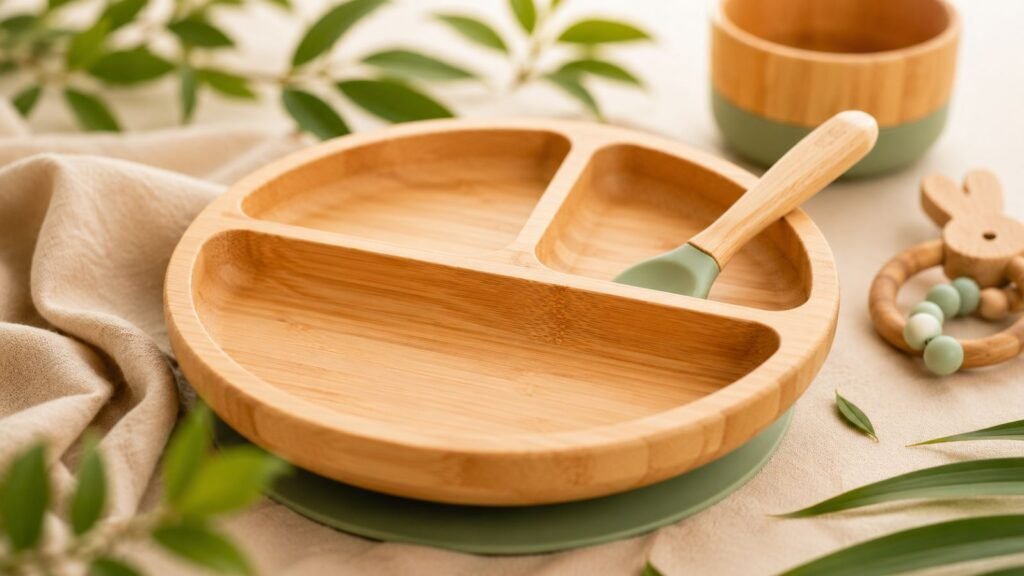
- Safe solid bamboo: Visible wood grain, slight color variation, tiny natural imperfections.
- Toxic composite: Uniform, plastic‑like color; looks like a single molded piece with no grain.
Tap Test: Dull Wood Sound vs. Sharp Plastic Click
- Safe solid bamboo: Tap it with your fingernail. You’ll hear a soft, dull wood sound.
- Toxic composite: Tap it, you’ll hear a sharp, higher‑pitched plastic click.
Edge Check: Visible Fibers vs. Seamless Molded Edge
- Safe solid bamboo baby plates: Look at the edge (especially the rim). You’ll see tiny bamboo fibers and a slightly rough, natural texture.
- Toxic composite: The edge is perfectly smooth, seamless, and shiny, like a plastic cup.
The Big 4 Toxins in Fake Bamboo Baby Plates
Let’s name the chemicals you’re trying to avoid. This isn’t about scaring you, it’s about empowering you to read labels like a pro.
Melamine Migration from Baby Plates (Kidney Risk)
Melamine is the same chemical that caused the 2008 Chinese milk scandal (kidney stones in infants). When a composite plate gets warm or acidic, melamine seeps into food. Chronic low‑dose exposure may increase risk of kidney stones and bladder issues.
Formaldehyde Leaching in Bamboo Tableware (Carcinogen Alert)
Formaldehyde is a known human carcinogen. In composite plates, it’s part of the resin. Studies show that formaldehyde releases faster at temperatures above 70°C (158°F), exactly when you serve warm oatmeal or mac and cheese.
Lead in Bamboo Baby Plates (CPSC Recall Data)
Lead can be present in the decorative paint or as a contaminant in the resin. The Primark recall proved this isn’t a theory, it’s happening. Lead causes irreversible brain damage in children.
Phthalates & Pesticide Residues in Bamboo Dinnerware
Phthalates (endocrine disruptors) have been found in some bamboo products, likely from recycled plastics or contaminated resins. Pesticide residues can linger in bamboo fiber if the source bamboo wasn’t organically grown.
Why Hot and Acidic Foods Make Bamboo Composite More Dangerous?
You might think, “I’ll just use the plate for cold snacks.” But babies eat warm purées, tomato sauce, citrus fruits, and yogurt, all of which are acidic or warm.
Acidic Baby Food (Tomato, Citrus, Berry Purée): A Major Trigger
A 2024 study tested bamboo‑melamine plates with 4% acetic acid (similar to tomato sauce and lemon). Result: melamine migration increased dramatically compared to neutral foods. The acid breaks down the resin faster.
Repeated Use Increases Melamine Migration
Even scarier? Researchers found that each use caused more leaching than the last. The plates degraded slightly every time they were washed or exposed to food. That means a six‑month‑old plate could be more toxic than a brand‑new one.
So no, “just using it for cold food” isn’t a safe workaround, because babies won’t stick to cold food forever.
Parent’s Safety Checklist: Spot Safe Bamboo Baby Plates in 7 Steps
Here’s your take‑to‑the‑store (or keep‑on‑your‑phone) checklist. Print it, save it, share it with other parents.
| Steps | Check This | ✅ Safe | ⚠️ Toxic / Skip |
|---|---|---|---|
| 1. | Does the label say “100% solid bamboo”? | Yes, clearly stated. | “Bamboo fiber”, “bamboo composite”, “bamboo dust” |
| 2. | Is it melamine‑free / formaldehyde‑free declared? | Explicitly written. | No mention or vague “food safe” |
| 3. | Does it carry FSC certified bamboo? | Yes | No certification |
| 4. | Has it passed LFGB or FDA food‑contact testing? | LFGB (German gold standard) or FDA section 177.1010 | No third‑party seal. |
| 5. | Is the plate hand‑wash only? | Yes (real bamboo can’t handle dishwasher heat) | Claims “dishwasher safe” – likely composite |
| 6. | Is there a removable, FDA‑approved silicone suction base? | Yes, detachable and labeled FDA food‑grade | Base is permanently attached / no info |
| 7. | Has the brand published recent migration test results? | Yes, within 2 years | No data or older than 5 years |
If you see the words “100% solid bamboo” + “hand‑wash only” + “LFGB certified”, you’re at right place. Anything else, walk away.
Certifications That Prove Bamboo Baby Plates Are Truly Safe
Not all certifications are equal. Here’s what to look for and why:
LFGB Certification (German Food Safety Gold Standard)
The LFGB (Lebensmittel‑ und Futtermittelgesetzbuch) is the strictest food‑contact material test in the world. It simulates repeated use, hot food, and acidic foods. If a plate passes LFGB, it’s safe for your baby.
FDA Approved Food Contact Substances (for Bamboo + Silicone)
The FDA regulates food contact materials. But be careful: FDA “compliance” for melamine resins exists only for cold, non‑acidic food. Many brands imply FDA approval without mentioning that limitation.
SGS Certification: Third‑Party Tested
SGS is an independent testing lab. Seeing SGS reports on a brand’s website is a good sign, especially if they test for melamine migration at 70°C.
CPSIA Compliance (Children’s Product Safety)
The Consumer Product Safety Improvement Act requires testing for lead and phthalates in children’s products in the U.S. Look for “CPSIA compliant” on the listing.
ASTM F963: Baby Feeding Safety Standard
This is the standard toy safety regulation, but some bamboo plate brands also voluntarily comply. It covers mechanical hazards (sharp edges, small parts) as well as chemical limits.
Safer Alternatives to Bamboo Baby Plates (Comparison)
If all of this feels overwhelming, remember: bamboo is not the only natural choice. Here are three alternatives that are proven safe.
Bamboo vs. Silicone Baby Plates (Which Leaches Less?)
- 100% solid bamboo: Safe but must be hand‑washed and not exposed to high heat repeatedly. Can warp or crack.
- Platinum silicone: No leaching, dishwasher safe, heat resistant. Look for “LFGB certified platinum silicone.” Avoid cheap silicone (may contain fillers).
Winner for busy parents: Platinum silicone, lowest maintenance, zero toxicity risk.
Bamboo vs. Stainless Steel Toddler Dishes (No Toxins)
- Stainless steel: Indestructible, dishwasher safe, no leaching (unless acidic foods stored for hours, which can cause metallic taste). Great for daycare.
- Solid bamboo: Natural, lightweight, antimicrobial, but requires hand‑washing and occasional oiling.
Best Non‑Toxic Baby Plates 2026: Glass, Silicone, Solid Wood
- Glass (with silicone sleeve): Safest material, but breakable. Good for supervised feeding.
- Platinum silicone: Best all‑around: safe, durable, easy to clean.
- Solid wood (bamboo or maple): Beautiful and safe if you verify it’s solid and untreated.
You don’t need bamboo plates if you just love the look. Buy 100% solid bamboo and follow the checklist. Otherwise, silicone and stainless steel are foolproof.
Frequently Asked Questions: Toxic Vs. Safe Bamboo Baby Plates (Parents’ Top Searches)
Are bamboo suction plates safe for babies?
Only if they are 100% solid bamboo with a removable, FDA‑approved silicone suction base. If the whole plate is composite with a molded‑in suction ring, skip it.
Can I put hot soup in bamboo baby plates?
Yes for solid bamboo, it’s naturally heat resistant. No for bamboo composite, heat increases melamine migration.
Do bamboo baby plates get moldy?
Solid bamboo is antimicrobial, but if you leave it wet in a dark cabinet, any organic material can mold. Hand wash and dry thoroughly. Composite bamboo plates don’t mold (they’re plastic), but they leach chemicals.
Are disposable bamboo baby plates safer than plastic?
Disposable “bamboo” plates are usually made of bamboo fiber and a non‑toxic binder (often starch). They’re generally safer than plastic for a single use, but they’re not meant for babies who chew on plates or reuse them.
What age can baby use bamboo baby plates?
Once baby starts solids (around 6 months). For solid bamboo, ensure the plate has no splinters, sharp edges, or loose varnish. Always supervise.
Conclusion: Toxic Vs. Safe Bamboo Baby Plates, Choose Wisely
Marketing loves the word “bamboo” because it feels green and gentle. But as you’ve seen, most bamboo baby plates are plastic in disguise, a melamine‑resin composite that can leach formaldehyde and lead into your child’s food.
Here’s what I want you to remember:
Read the fine print. Look for “100% solid bamboo.” Do the tap test. Check for LFGB certification. And when in doubt, reach for platinum silicone or stainless steel.
You’re doing a great job by even asking these questions. That’s what makes you a thoughtful, protective parent. Now go grab that plate, the safe one, and enjoy a happy, worry‑free meal with your little one.
Loved this guide? Share it with a fellow parent who’s wondering about bamboo plates. And if you want my personal brand recommendations for solid bamboo or silicone plates, just ask, I’m happy to share.
Do read more helpful articles from this site: Baby Breathing Problems Due to Room Spray, Bamboo Baby Plates Vs. Plastic Plates, Safe Home Setup for Newborn and stay connected for more.



1 Response
[…] Did this guide help you? Save it, share it with your partner or a family friend. For more evidence-based newborn care tips, explore more helpful articles from this site: Baby Breathing Problems Due to Room Spray, Bamboo Baby Plates Vs Plastic Plates for Babies, Spot Toxic Vs. Safe Bamboo Baby Plates. […]