
Sunscreen for Babies Under 6 Months: What AAP Recommends (And What to Do in Real Life)
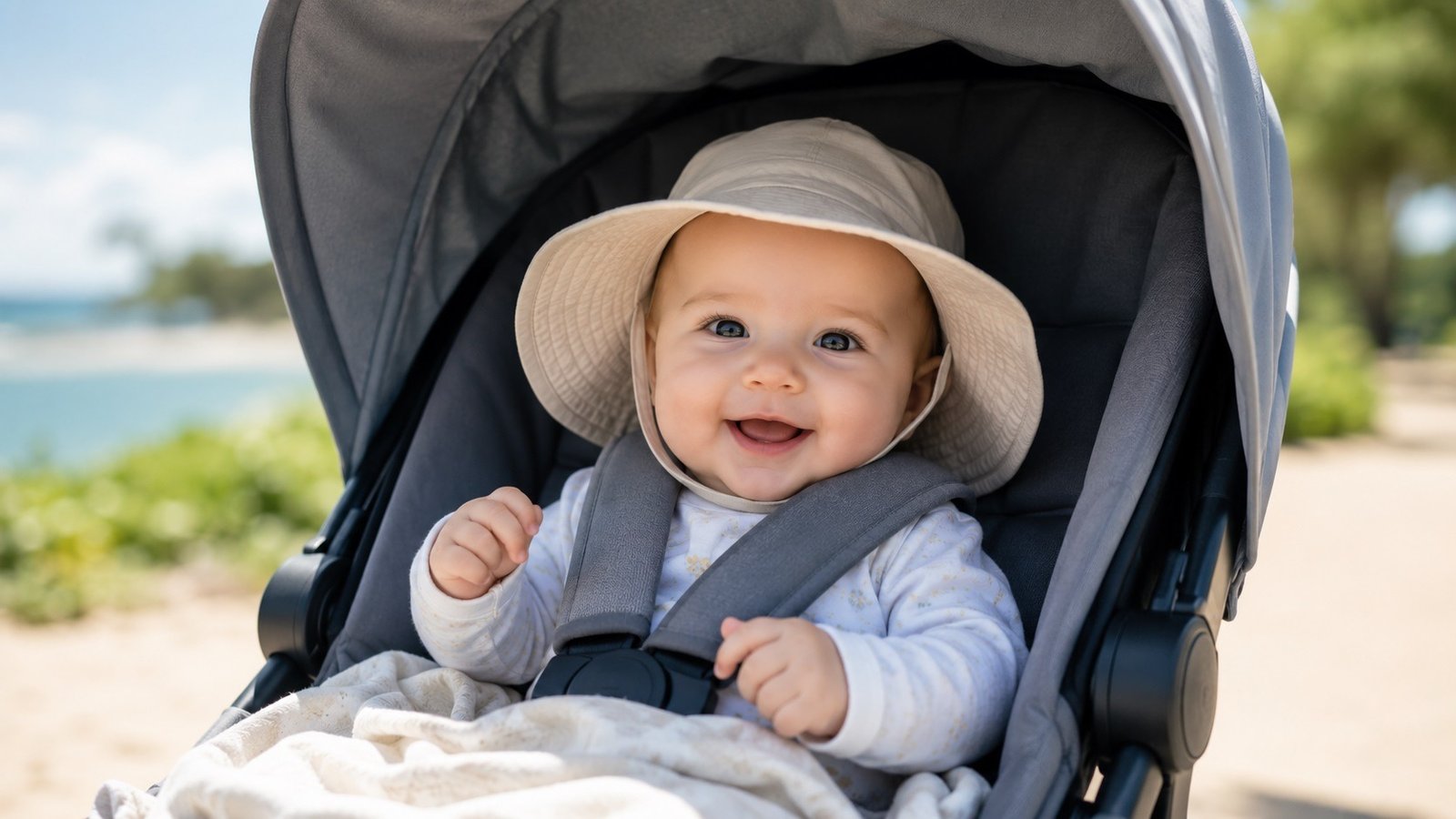
You’re standing at the beach or travelling in your car, your 4-month-old nestled in your arms, the sun beating down. Your baby’s delicate skin feels warm. And one question is striking your head: Can I just put sunscreen on my baby?
Here’s the thing; every parent has been there, caught between the fear of sunburn and the worry about what’s actually safe. And the American Academy of Pediatrics (AAP) understands that perfectly. That’s why their guidance on sunscreen for babies under 6 months isn’t a simple “yes” or “no.” It’s more nuanced than that.
While AAP still recommend keeping babies under 6 months out of direct sunlight, they now acknowledge that “it’s okay to use sunscreen on babies on small parts of their skin not protected by clothing or hats”. Yes, you read that right. There’s an exception.
But how much sunscreen for babies is okay? Where can you apply it? What kind is safe?
Let’s walk through exactly what the AAP says, why they say it, and most importantly, what to do when real life doesn’t cooperate with the perfect scenario.
What the AAP Says About Sunscreen for Babies Under 6 Months?
The Official Rule
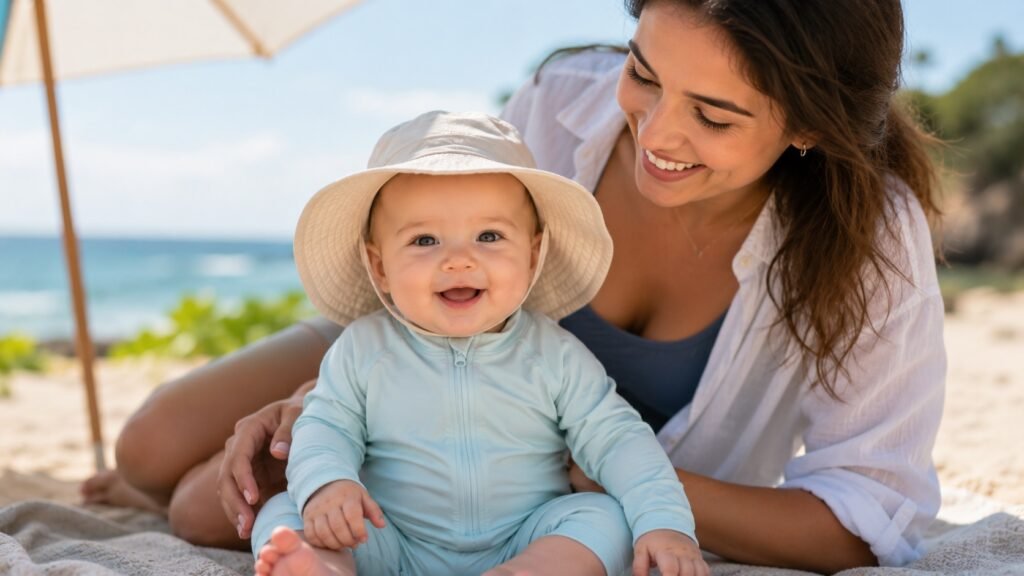
Both the U.S. Food and Drug Administration (FDA) and the American Academy of Pediatrics (AAP) recommend keeping newborns and babies younger than 6 months out of direct sunlight. The best sun protection for these infants is simple: stay in the shade.
The FDA puts it bluntly: sunscreen for infants? “Not usually”. Infants are at greater risk than adults for sunscreen side effects, such as rash, because their skin is extra sensitive.
Before You Apply Anything, Call Your Pediatrician First
Both the FDA and the AAP strongly recommend checking with your pediatrician before applying any sunscreen to babies under 6 months, even mineral sunscreen.
The reason is, pediatrician knows your baby’s unique health history including any skin sensitivities, allergies, or conditions like eczema. They can give you personalized guidance for your specific situation, especially if your baby was premature or has other medical concerns.
“Check with your pediatrician before applying sunscreen to babies younger than 6 months.” (FDA / AAP Joint Recommendation)
It’s better to save your pediatrician’s after-hours number in your phone. A quick call can give you peace of mind and a clear action plan.
Why the AAP and FDA Agree on This?
The recommendation isn’t arbitrary. Here’s the science behind it:
- Delicate skin absorbs more: A baby’s skin is thinner and more permeable than an adult’s, increasing the risk of irritation or allergic reactions.
- Underdeveloped sweat glands: Infants can’t regulate body temperature as easily. Their bodies haven’t fully developed that built-in heating-and-cooling system, so they can become easily overheated.
- Chemical absorption concerns: Dr. Brigitta Moresea, a pediatrician at Cleveland Clinic, explains: “In order for chemical sunscreens to protect you, they have to be absorbed into your skin. But the evidence we have says that babies can’t metabolize the ingredients well“.
- No safety studies: There are simply no studies on the safety and efficacy of sunscreen in infants.
The Overheating Risk Most Parents Don’t Know
Here’s something the AAP is especially concerned about sunscreen for babies. Sunscreen doesn’t just block UV rays; it also forms a physical barrier on the skin. For adults, that’s rarely an issue. But for babies under 6 months, it can be dangerous.
According to Brigitta Moresea, “When babies are covered in sunscreen, it can keep them from sweating. They can’t evaporate the heat off. Babies already can have more difficulty regulating their body temperature. And when you put on sunscreen, it can trap the heat in.“
In other words, sunscreen can interfere with your baby’s natural cooling system. Sweating is how the body releases heat. If sunscreen blocks sweat from evaporating, your baby’s temperature can rise more quickly increasing the risk of overheating, heat exhaustion, or even heat stroke.
This is a big reason why the AAP and FDA take such a cautious stance. It’s not just about chemical absorption. It’s about keeping your baby’s core temperature safe.
The Exception: When You CAN Use Sunscreen Under 6 Months
Let’s be realistic. Sometimes, shade and clothing simply aren’t enough. Maybe you’re at a family beach day, or on a hike with limited cover, or traveling somewhere sunny.
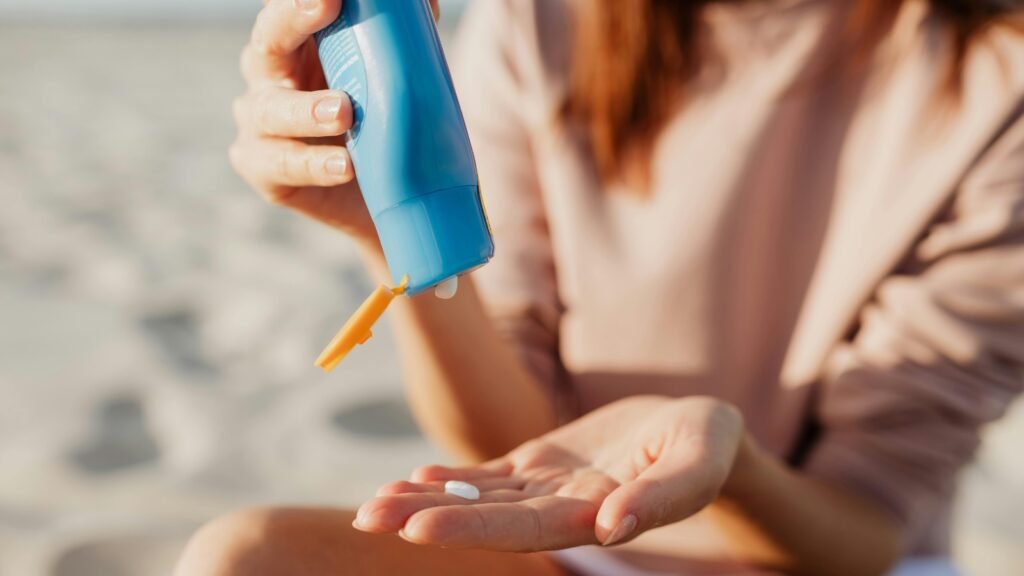
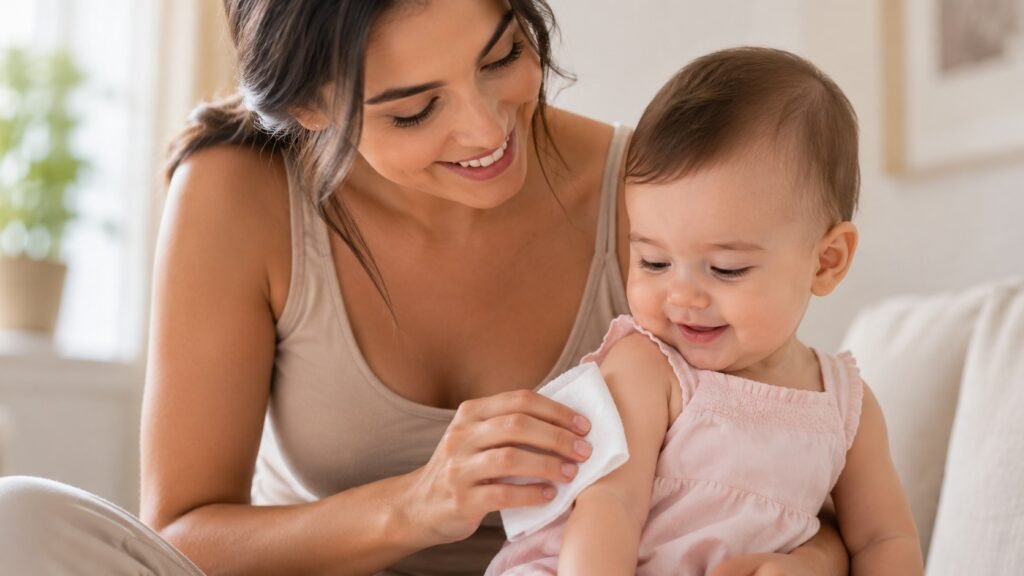
The AAP acknowledges this reality. Their guidance explicitly states that “it’s okay to use sunscreen on babies on small parts of their skin not protected by clothing or hats“.
The AAP also supports limited use of sunscreen on babies under 6 months when adequate clothing and shade are not available.
What “Small Amounts” Actually Means
Let’s be specific:
| What to Do | The Details |
|---|---|
| How much | A pea-sized amount for the face; a nickel-sized amount for both hands combined |
| Where to apply | Only on small, exposed areas like the face, backs of hands, and tops of feet |
| Where NOT to apply | Avoid hands if your baby puts them in their mouth. Avoid large body areas like arms, legs, chest, or back |
| How often | Once, as a last resort. Don’t reapply repeatedly unless genuinely necessary |
| What type | Mineral sunscreen only (zinc oxide or titanium dioxide) |
Sun Protection Without Sunscreen: The Complete Guide
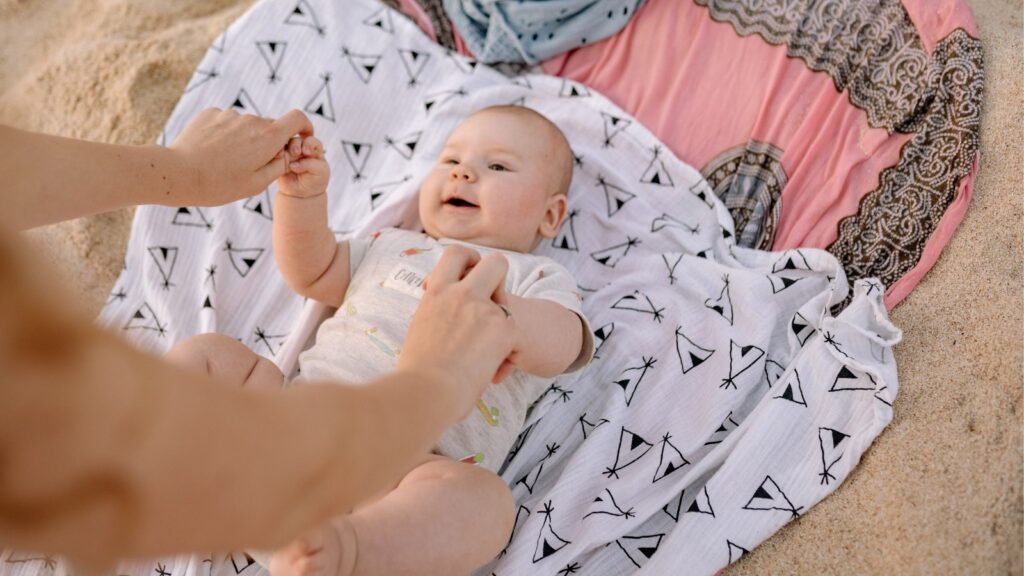
Before you even think about sunscreen on babies, here’s your first line of defense. The AAP recommends a hierarchy of protection:
#1: Shade (Natural and Manufactured)
Keep babies under 6 months out of direct sunlight. Move your baby to the shade under a tree, umbrella, or stroller canopy. Look for natural shade, or create your own with a beach umbrella, pop-up tent, or stroller canopy.
#2: Protective Clothing
Dress babies in lightweight clothing that covers the arms and legs. Here’s a pro tip from the FDA: “If you hold the fabric against your hand and it’s sheer enough to see through it, it probably doesn’t offer enough protection“.
Look for:
- Tightly woven fabrics (cotton is both cool and protective)
- UPF-rated clothing for extra protection
- Long sleeves and long pants, even in summer
#3: Wide-Brimmed Hats
Baseball caps don’t shade the neck or ears, both of which are sensitive areas for a baby. Instead, use a hat with a brim that shades the face, neck, and ears.
#4: Sunglasses with UV Protection
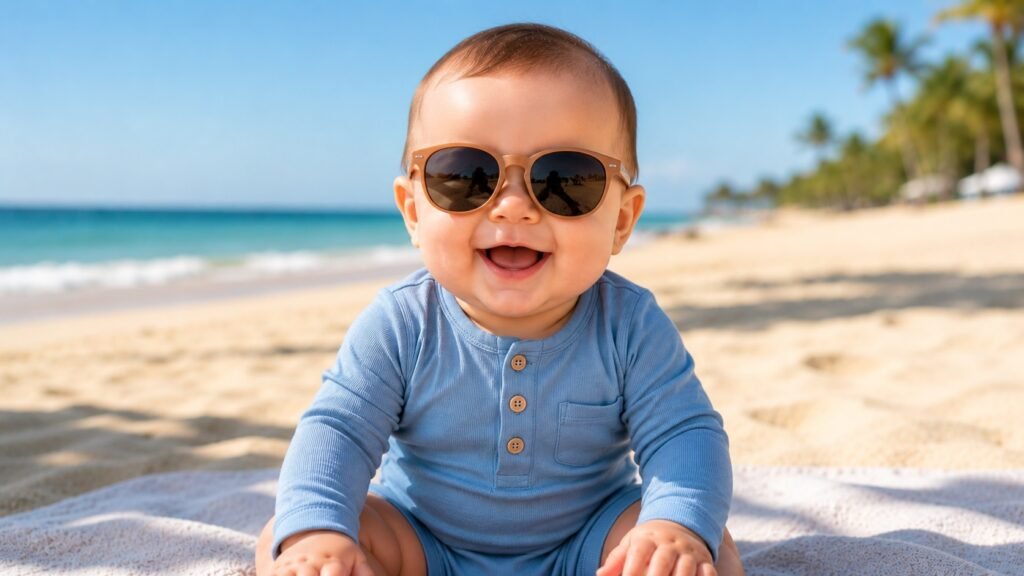
Sunglasses with ultraviolet (UV) protection are also a good idea for protecting your child’s eyes.
#5: Timing, The 10 AM to 4 PM Rule
It’s especially important to keep your baby out of the sun between 10 a.m. and 4 p.m., when UV rays are strongest. Plan outdoor activities for early morning or late afternoon.
#6: Sunscreen for Babies
For babies under 6 months, sunscreen is the last line of defense. For babies 6 months and older, it becomes a primary tool.
#7: Hydration Matters, “A Cool Baby Is a Safe Baby”
When babies are out in the sun, they lose fluids faster than adults. Their bodies have a higher percentage of water, and they can’t tell you when they’re thirsty.
Here’s what to watch for:
- Offer extra feeds: Breast milk or formula provides hydration. On hot days, your baby may want to feed more frequently but for shorter periods. Follow their cues.
- Watch for dehydration signs: Fewer wet diapers than usual (less than 4 to 6 per day for babies over 6 weeks), a sunken soft spot on the top of the head, no tears when crying, or unusual sleepiness.
- Don’t give water: Babies under 6 months should not be given plain water. It can interfere with their electrolyte balance and lead to water intoxication. Stick to breast milk or formula.
Practical tips for hot days:
- Keep feeds cool: If you use formula, prepare it with cooled boiled water (never hot).
- Offer a feed before and after sun exposure, even if baby doesn’t seem hungry.
- Check the back of your baby’s neck, if it feels hot and clammy, get them into a cooler environment immediately.
According to AAP, Dehydration can set in quickly in infants. If you notice signs of heat exhaustion (pale skin, rapid breathing, lethargy), move your baby to a cool place, offer fluids, and call your pediatrician right away.
Hidden UV Risks Every Parent Should Know
Reflected UV (Sand, Water, Snow, Concrete)
Shade isn’t always enough. The AAP warns that “The sun’s damaging UV rays can bounce back from sand, water, snow or concrete, so be extra careful around these areas“.
This means:
- At the beach, UV rays reflect off the sand and the water.
- Near pools, light-colored concrete reflects UV back onto your baby.
- Even if you’re sitting in the shade under an umbrella, reflected UV can still reach your baby’s face and body.
So, even in the shade, keep your baby in protective clothing and a hat.
Window and Car UV Exposure
UV rays penetrate glass. This means your baby can get UV exposure through:
- Car windows.
- Home windows.
- Stroller canopies (check if they have a UPF rating).
In that case, use car window shades, and be mindful of sun exposure during long car rides.
Choosing the Right Sunscreen for Babies
Once your baby hits the 6-month mark, sunscreen becomes a key tool. Here’s what to look for:
Mineral vs. Chemical Sunscreens for Babies
| Feature | Mineral Sunscreen | Chemical Sunscreen |
|---|---|---|
| How it works | Sits on top of skin, blocks UV rays | Absorbs into skin, converts UV to heat |
| Active ingredients | Zinc oxide or titanium dioxide | Oxybenzone, avobenzone, octinoxate, etc. |
| Safety for babies | Recommended | Avoid |
| FDA status | GRASE (generally recognized as safe) | Requiring more data |
| Visible on skin | White cast (normal!) | Clear |
Dr. Carol Cheng, UCLA Health pediatric dermatologist says, “We recommend using a broad-spectrum sunscreen with SPF 30 or greater”.
What the American Academy of Dermatology (AAD) Says About Sunscreen for Babies
The AAP isn’t the only major medical organization weighing in here. The American Academy of Dermatology (AAD) echoes the same message regarding sunscreen for babies: mineral sunscreens are the safest choice for babies and young children.
The AAD specifically recommends:
- SPF 30 or higher with broad-spectrum protection.
- Zinc oxide or titanium dioxide as the active ingredients.
- Fragrance-free and hypoallergenic formulas to minimize irritation.
- Water-resistant formulations for outdoor activities.
Additionally, the AAD notes that “baby” sunscreen is largely a marketing term. The active ingredients are the same as adult mineral sunscreens. So don’t feel pressured to buy expensive “baby” brands. Look for the ingredients, not the label.
The AAD’s endorsement adds a second layer of expert validation. If the AAP and the AAD agree, you can feel confident in the guidance.
Sunscreen for Babies: How to Apply (Step-by-Step)
Once your baby is 6 months or older, here’s how to apply sunscreen correctly:
Step 1: Patch Test First
Test a small amount on your baby’s inner wrist or thigh. Wait 24 hours to check for redness or irritation.
Step 2: Apply 15 to 30 Minutes Before Sun Exposure
Sunscreen needs time to absorb into the skin.
Step 3: Cover All Exposed Areas
Don’t forget commonly missed spots like the tops of feet, ears, the back of the neck, and the scalp for babies with fine or thin hair.
Step 4: Reapply Every 2 Hours
Reapply after swimming, sweating, or toweling off.
Frequently Asked Questions: Sunscreen for Babies
Can you put sunscreen on a 3-month-old?
Only as a last resort when shade and clothing aren’t possible. Use a tiny amount of mineral sunscreen on small, exposed areas.
When can babies start wearing sunscreen?
Most pediatricians consider it safe to use mineral-based sunscreen once your baby turns 6 months old.
Is mineral sunscreen safe for newborns?
Mineral sunscreen is safer than chemical sunscreen, but the AAP still recommends avoiding it under 6 months unless absolutely necessary.
Is sunscreen bad for newborns?
Sunscreen isn’t “bad,” but it’s not recommended unless necessary. The concern is absorption and overheating, not toxicity.
Do babies need sunscreen on cloudy days?
UV rays penetrate clouds. Use shade and clothing even on overcast days.
What happens if you put sunscreen on a newborn?
Most likely nothing serious, but the concern is skin irritation, absorption, and overheating. Consult your pediatrician.
Do I need to wash sunscreen off my baby?
Yes, at the end of the day. Use a gentle baby wash and warm water.
Can babies be allergic to sunscreen?
Yes. That’s why a patch test is recommended.
What sunscreen is best for babies with eczema?
A mineral-based, fragrance-free, hypoallergenic sunscreen with zinc oxide or titanium dioxide.
Can I use spray sunscreen on my baby?
No. Spray sunscreens can be inhaled or unevenly applied.
Does sunscreen cause vitamin D deficiency in babies?
No. Studies show daily sunscreen use doesn’t cause vitamin D deficiency.
Can babies overheat from wearing sunscreen?
Yes. Sunscreen can trap heat against the skin, making it harder for babies to cool down through sweating.
What happens if my baby ingests sunscreen?
Mineral sunscreens are less toxic if ingested, but you should still contact poison control if your baby eats a significant amount.
Can I use sunscreen on my baby’s hands?
Only if you can prevent them from putting their hands in their mouth. The AAP specifically notes that babies touch their mouths a lot and it’s best to prevent them from ingesting sunscreen.
Summary: Sunscreen for Babies
Parenting is hard enough without worrying about every ray of sun. Here’s the bottom-line regarding sunscreen for babies:
- Under 6 months: Prioritize shade, clothing, and hats. Sunscreen is a last resort.
- If you must use sunscreen: Use a tiny amount of mineral sunscreen (zinc oxide or titanium dioxide) on small exposed areas.
- At 6 months and older: Mineral sunscreen becomes your friend. SPF 30+, broad-spectrum, water-resistant.
- Always: Watch for reflected UV, car window exposure, and cloudy-day risks.
Your baby’s skin is precious, and your care and attention make all the difference safely.
If this guide helped you, consider sharing it with another parent. Drop in your comment for suggestions and stay connected for more useful guides.
Do read more useful articles from this site: FDA Warning on SUID Prevention Monitors 2026, Microplastics in Baby Bottles: Risks, Research, and How Parents Can Reduce Exposure, Baby Breathing Problems Due to Room Spray: Risks, Symptoms & Safe Alternatives.