How to Reduce Screen Time During Pregnancy and Why It Matters: Safe Limits for Moms-to-Be
Do you reach out for your phone the moment you wake up? Scroll through social media while eating breakfast? Watch videos until your eyes burn before bed? You are not alone. The average pregnant woman spends more than five hours per day on screens and that number has increased sharply in the last decade.
Emerging research suggests that excessive screen use can increase screen time pregnancy risks such as poor sleep, gestational diabetes, and even maternal anxiety.
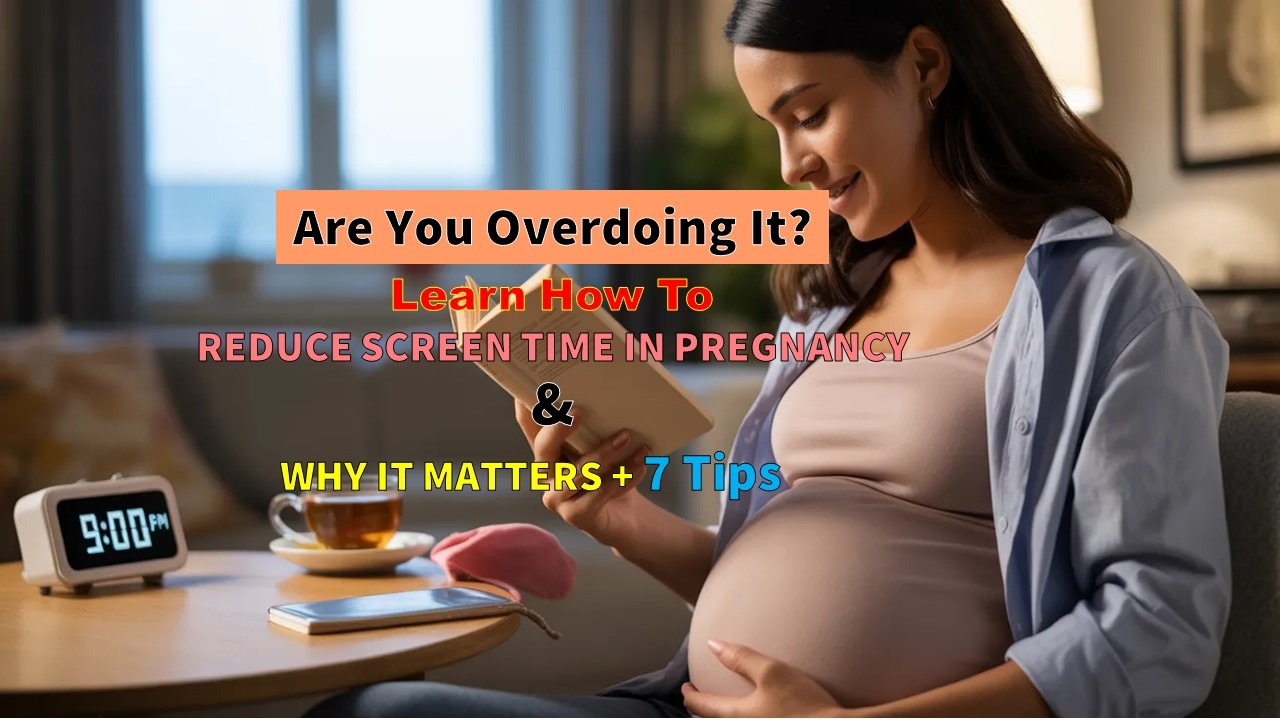
If you’ve been wondering how to reduce screen time during pregnancy, you’re already taking a positive step toward a healthier lifestyle. The goal isn’t to eliminate screens completely, it’s to create a better balance that supports your sleep, mental well-being, and overall pregnancy health.
Why Reducing Screen Time During Pregnancy Matters
Understanding why to reduce screen time during pregnancy matters makes it easier to take action.
Physical Health Risks That Grow with Every Extra Hour
- Blue light disrupts sleep: Melatonin suppression from evening screen use leads to poor sleep quality. During pregnancy, poor sleep is linked to higher rates of preterm labor and postpartum depression.
- Sedentary behavior rises: When you are glued to a screen, you sit longer. Prolonged sitting increases the risk of gestational diabetes, excessive weight gain, and severe back pain.
- Eye strain and headaches: Pregnancy already makes migraines more common. Staring at a bright screen for hours adds fuel to the fire.
Potential Concerns for Fetal Development
While no study proves that normal screen use directly harms a fetus, researchers are paying close attention to two areas:
- Radiofrequency electromagnetic fields (RF‑EMF) from mobile phones: Some animal studies suggest possible effects on fetal nervous system development. The World Health Organization calls for more research, but many experts advise a precautionary approach, especially holding phones away from the belly.
- Maternal stress transfer: Doom‑scrolling through bad news or working late under blue light raises cortisol (stress hormone). High cortisol during pregnancy can influence the baby’s own stress response system.
In short, the effects of mobile phone radiation on fetus are still debated, but why take unnecessary risks when you can easily reduce screen time during pregnancy?
Mental & Emotional Well‑being
Social media comparisons, pregnancy “horror stories,” and information overload can fuel anxiety and depression. One study found that pregnant women who spent more than four hours daily on recreational screens had significantly higher anxiety scores.
Moreover, screen time steals moments of mindfulness, the quiet pauses where you should feel your baby’s kicks, practice deep breathing, or simply rest. So, for mental and emotional well-being, you need to make healthy adjustments to reduce screen time during pregnancy.
Signs You May Be Using Too Much Screen Time During Pregnancy
If following sounds familiar, it’s a good time to learn how to reduce screen time during pregnancy in a simple, manageable way.
- You scroll without purpose for long periods.
- You use your phone late at night and struggle to sleep.
- You feel more anxious after using social media. You experience eye strain, headaches, or fatigue.
What Are Safe Screen Time Limits for Pregnant Women?
Most pregnant women who track their usage are shocked to see they spend 5 to 6 hours daily on phones, tablets, and laptops usually without realizing it.
The American College of Obstetricians and Gynecologists (ACOG) does not yet have a specific number, but research points to a useful guideline. The screen time pregnancy guidelines are not about perfection. They are about awareness. To reduce screen time during pregnancy, expecting moms need to do the following:
- Recreational screen time (outside of work): Less than 2 to 3 hours per day is associated with lower risks of gestational diabetes and sleep disturbances.
- Work‑related screen time: Take a 5‑minute break every 30 minutes to stand, stretch, and rest your eyes.
- Bedtime screens: Zero screens for 1 hour before sleep is ideal to reduce screen time during pregnancy.
How to Reduce Screen Time During Pregnancy: 7 Practical Tips
To reduce screen time during pregnancy, you do not need to throw away your phone or quit your remote job. You simply need an easy workable plan:
Tip 1: Audit Your Current Screen Habits
Download a free screen tracker and look for “empty calorie” screen moments:
- Scrolling in the bathroom.
- Watching random YouTube videos while eating.
- Checking social media five times in an hour.
Once you see the patterns, you can reduce screen time during pregnancy by replacing those moments with something better.
Tip 2: Healthy Alternatives to Screen Time for Expecting Moms
| Instead of this… | Try this pregnancy‑friendly swap… |
|---|---|
| Phone in bed | 10 minutes of belly breathing or a guided pregnancy meditation |
| Binge‑watching Netflix | An audio pregnancy podcast while folding laundry or stretching |
| Endless social media | Writing one page in a pregnancy journal or sketching a nursery layout |
| Late‑night work emails | Reading a paperback novel (or a parenting book) for 20 minutes |
These small swaps add up to a natural pregnancy digital detox without willpower battles and will help you to reduce screen time during pregnancy.
Tip 3: Create No‑Screen Zones and No‑Screen Times
To reduce screen time during pregnancy, you need to make some useful adjustments to your daily routine just like:
- Bedroom: Charge your phone in the living room. Use a regular alarm clock.
- Dining table: No phones during meals. Focus on chewing, hydration, and talking to your partner.
- First 30 minutes after waking: Go outside for natural light instead of checking notifications. Natural light resets your circadian rhythm, which also benefits your baby’s developing clock.
- Last hour before bed: Dim lights, no screens. It’s good for sleep to stop using screens one hour before going to bed.
Tip 4: Use Technology to Fight Technology
Can you believe, your phone can help you reduce screen time during pregnancy:
- Set app limits: 20 minutes per day for Instagram, TikTok, or Facebook.
- Turn on grayscale mode: (Settings > Accessibility > Display & Text > Color Filters). Screens become boring when they are not colorful.
- Schedule “offline hours” from 7 PM to 9 PM every evening: Your phone will automatically block distracting apps.
Tip 5: Follow the 20‑20‑20 Rule
This simple habit breaks prolonged sitting and reduces eye strain, two major screen time pregnancy effects that are easily reversible. For every 20 minutes of screen time:
- Look at something 20 feet away for 20 seconds.
- Stand up and do 3 pelvic tilts (great for back pain and preparing for labor).
- Take one deep breath.
Tip 6: Gradual Reduction, Small Steps, Big Results
Every small cut helps you reduce screen time during pregnancy in a sustainable way. Do not try to go from 6 hours to 1 hour overnight. That will backfire. Instead:
- Reduce by 15 minutes every 3 days.
- Celebrate every win: One screen‑free breakfast, one walk without a phone, one full bedtime without scrolling.
Tip 7: What If I Need Screens for Work or Medical Apps?
You cannot simply quit screens if you work remotely or track contractions with an app. You can reduce screen time during pregnancy without harming your productivity or safety. It just requires boundaries.
Here is a balanced approach:
- For work: Use blue‑light blocking glasses. Set a timer to stand and walk for 2 minutes every 30 minutes. Schedule “deep work” blocks of 45 minutes followed by 15 minutes of no screens (walk, stretch, hydrate).
- For medical apps: Keep them! But disable all non‑essential notifications (news, shopping, games). Those notifications are designed to pull you back in.
- For online prenatal classes: Just batch them into focused 30‑minute sessions, and do not leave the browser open as background noise.
Frequently Asked Questions: How to Reduce Screen Time During Pregnancy
Q1: Will looking at a screen directly harm my baby?
Ans: No. Screens themselves do not emit harmful radiation. The concern is the lifestyle around screens, sitting too long, sleeping poorly, and missing out on movement and mindfulness. The effects of mobile phone radiation on fetus are still being studied, but keeping your phone a few inches away from your belly is an easy precaution.
Q2: How many hours of screen time is “too much” during pregnancy?
Ans: Most research suggests that more than 4 to 5 hours of recreational screen time (outside work) is linked to higher risks of gestational diabetes, insomnia, and anxiety. Aim for less than 2 to 3 hours of recreational screens, and take frequent breaks from work screens.
Q3: Can I still watch pregnancy and baby videos?
Ans: Absolutely. Educational content is valuable. The problem is passive, endless scrolling. Set a timer: watch for 30 minutes, then close the app and do something physical like walk, stretch, or prepare the nursery.
Q4: Does screen time affect baby brain development?
Ans: Indirectly, yes. Poor maternal sleep and high stress from excessive screen use can affect fetal development. Some studies suggest that screen time during pregnancy baby brain development may be influenced by reduced parent‑fetus interaction (talking, singing, touching the belly). When you are on a screen, you are not bonding with your baby.
Q5: I am already addicted to my phone. How do I start?
Ans: Start with the one swap rule: pick a single screen habit to change this week. For example, “I will not bring my phone to the bathroom.” Once that sticks, add another. Guilt is not helpful – small consistency is.
Q6: Is it safe to use a phone during pregnancy?
Ans: Yes, moderate use is generally safe. The key is balance and mindful habits.
Q7: How do I stop scrolling at night?
Ans: Start with a simple rule: no screens 1 hour before bed. Replace it with a calming routine.
Conclusion: A Balanced Approach to Reduce Screen Time During Pregnancy
Learning how to reduce screen time during pregnancy isn’t about strict rules or guilt, it’s about creating a peaceful, healthy environment for yourself. It improves your sleep, lowers your stress, reduces your risk of gestational diabetes, and gives you more moments of quiet connection with the life inside you.
Small changes, like putting your phone away earlier or choosing a walk over scrolling, can make a big difference over time. Be gentle with yourself. Every mindful choice protects both you and your baby and will keep you safe and healthy.
If this guide helped you, share it with another mom because safety is something every mother deserves and do read our Complete Month-by-Month Guide for Safe & Healthy Pregnancy.
Disclaimer
This information is for educational purposes and not a substitute for medical advice. Always consult your healthcare provider about your specific pregnancy needs.