Is It Safe to Sleep Near a Wi Fi Router During Pregnancy? 5 Practical Tips Every Mom-to-Be Needs to Know
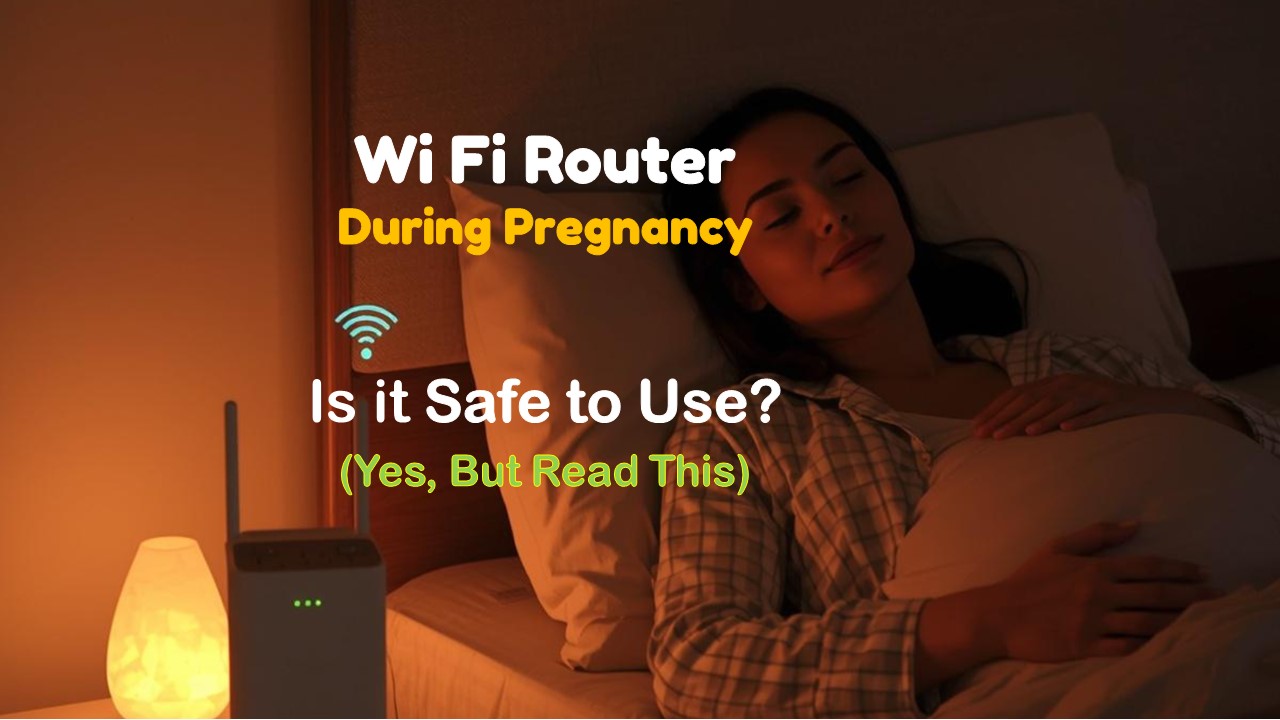
You’re going through pregnancy, finally feeling comfortable and just about to drift off when your eyes catch the tiny blinking lights on the Wi Fi router sitting on your nightstand. Suddenly, a question pops into your head, “Is it safe to sleep this close to Wi Fi router during pregnancy every single night?”
If that thought has crossed your mind, you’re not alone. Nearly every expecting mom I’ve spoken to has wondered the same thing. And honestly? That worry just means you already care deeply about protecting your little one.
The answer to your concern is, you don’t need to unplug your entire house. In this guide, I’ll walk you through what research actually says about safety related to Wi Fi router during pregnancy, how far is a truly safe distance from router, and simple, realistic steps you can take to reduce EMF exposure, without losing your internet connection or your peace of mind.
Is It Safe to Sleep Near A Wi Fi Router During Pregnancy?
Short answer is, “yes”. It is generally considered safe to sleep near a home Wi Fi router during pregnancy because:
- No confirmed evidence of harm to mom or fetus.
- Routers emit low‑level, non‑ionizing radiation.
- Major health bodies (WHO, ACOG) see no proven risk.
- For extra peace of mind, keep router 3 to 6 feet from your bed.
- Turn off Wi Fi at night if you’re still concerned.
Is Wi Fi Safe During Pregnancy? What Scientific Research Says
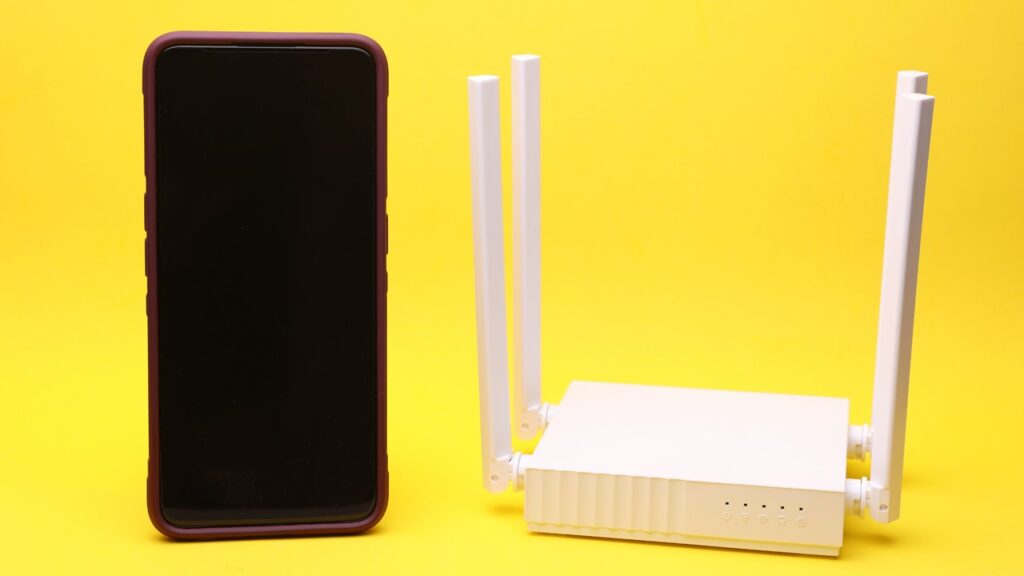
Current scientific research, including reviews from the World Health Organization (WHO), has not found any confirmed harm to a developing fetus from the low‑level, non‑ionizing radiation that routers emit. Many experts also recommend a simple “precautionary principle”, meaning it’s easy to take small steps for extra peace of mind. So, it is considered safe to sleep near a home Wi Fi router during pregnancy.
Should You Move Your Wi Fi Router During Pregnancy? A Simple Yes/No Guide
Think of it like this: you don’t need to panic, but a small adjustment can help you sleep better, literally and emotionally. So,
- No, you don’t have to move it: If your router is across the room or in another room, you’re already fine.
- Yes, consider moving it: If your router is sitting on your nightstand or within 2 feet of where you sleep, sliding it a few feet farther away is an easy, zero‑cost way to reduce exposure.
Wi Fi Radiation and Pregnancy: Potential Concerns for Fetal Development
Can EMF Cause Oxidative Stress? What Lab Studies Show
Some research studies (on cells or animals, not pregnant women) have shown that very high levels of EMF can cause oxidative stress, an imbalance between free radicals and antioxidants. Oxidative stress, in extreme cases, could theoretically affect fetal development.
But here’s the crucial context, those studies often use exposure levels hundreds or thousands of times higher than what a home router produces. It’s like worrying that a single raindrop will flood your basement because you’ve seen videos of hurricanes.
Observational Studies on Wi Fi Router During Pregnancy
The most relevant real‑world data comes from studies of pregnant women who use cell phones frequently. A large Danish study (over 100,000 pregnancies) found no strong link between cell phone use and adverse birth outcomes. So, apparently there is no evidence of any problem by using Wi Fi router during pregnancy
Expert Consensus from Pediatric and OB‑GYN Organizations
The American Academy of Pediatrics (AAP) focuses more on limiting screen time and avoiding cell phones next to the head. They do not have a specific warning against sleeping near a Wi Fi router or using Wi Fi router during pregnancy.
Similarly, ACOG states that “exposure to non‑ionizing radiation from household appliances, Wi Fi, and cell phones has not been shown to cause harm during pregnancy.”
Other studies have shown small associations with behavioral issues in children, but those findings are debated and likely influenced by other factors (like parenting style). Wi Fi routers are less intense than cell phones held directly against the body.
Safe Distance from Router: How Far Should You Sleep?
The 3‑Feet, 6‑Feet, and 10‑Feet Rules Explained
- 3 to 6 feet (across a small bedroom): Generally fine. Exposure drops significantly.
- More than 6 feet (down the hall or in another room): Excellent. Exposure is very close to background levels.
- 10+ feet: You can completely stop worrying.
Is Sleeping Next to a Router Worse Than Using a Cell Phone?
No, quite the opposite. Sleeping 6 feet from a router exposes you to far less EMF than holding a cell phone against your ear for a 10‑minute call. If you’re comfortable using your phone during pregnancy (and most of us are), you should be even more comfortable with a router across the room.

EMF Protection: 5 Practical Tips to Reduce Exposure from Wi Fi Routers During Pregnancy
Here are five simple, low‑cost things you can do to ensure safety from Wi Fi router during pregnancy.
Tip 1: Turn Off Wi Fi at Night Using a Simple Timer
Your router doesn’t need to be on while you sleep. Most modern routers have a built‑in “Wi Fi schedule” in their settings (check your router’s app or web interface). Set it to turn off at 10 PM and back on at 6 AM.
Tip 2: Move the Router to a Hallway or Unused Room
If your router is currently in your bedroom, move it to the hallway, a closet, or a home office. Even 10 extra feet makes a huge difference. You’ll still get a strong signal as Wi Fi travels easily through drywall and wood.
Tip 3: Use Wired Ethernet for Devices in the Bedroom
For devices you use in bed (laptop, smart TV, streaming stick), connect them via an Ethernet cable instead of Wi Fi. That way, you can turn off the Wi Fi function on those devices, reducing exposure to Wi Fi router during pregnancy. Plus, wired connections are faster and more reliable.
ip 4: Avoid Other EMF Sources (Baby Monitors, Electric Blankets)
While you’re making your bedroom a low‑EMF sanctuary, consider other common sources:
- Baby monitors: Use an audio‑only model with low EMF, or keep the video monitor at least 3 feet from the crib (not inside it).
- Electric blankets: Unplug them before sleep. They produce magnetic fields close to your body.
- Smart speakers: Fine at a distance, but don’t place on your nightstand.
Tip 5: Shield Paint or Fabric, Do They Really Work?
You may see ads for EMF‑shielding paint, bed canopies, or fabrics. They do work to block EMF, but they are expensive, require proper grounding, and are almost certainly overkill for a single router. But, you don’t need to spend on them, simple distance works just as well.

Router Radiation Effects on Fetus: Separating Fear From Evidence
Why Most Doctors Say “No Proven Risk” but Recommend Caution
Doctors are trained in evidence‑based medicine. They won’t tell you something is dangerous unless the evidence is clear. For Wi‑Fi routers, the evidence is not clear that there’s any risk at all. However, good doctors also listen to their patients’ anxiety. That’s why many will say: “It’s probably fine, but if moving the router helps you sleep better, do it.”
Signs of EMF Sensitivity and Why It’s Unlikely During Pregnancy
A small number of people report headaches, fatigue, or dizziness near EMF sources, a condition sometimes called “electromagnetic hypersensitivity.” However, studies have not consistently proven that EMF causes these symptoms. And even if true hypersensitivity exists, it’s extremely rare and not specifically linked to pregnancy.
In other words, if you don’t already feel sick near electronics, you won’t suddenly develop it because you’re pregnant.
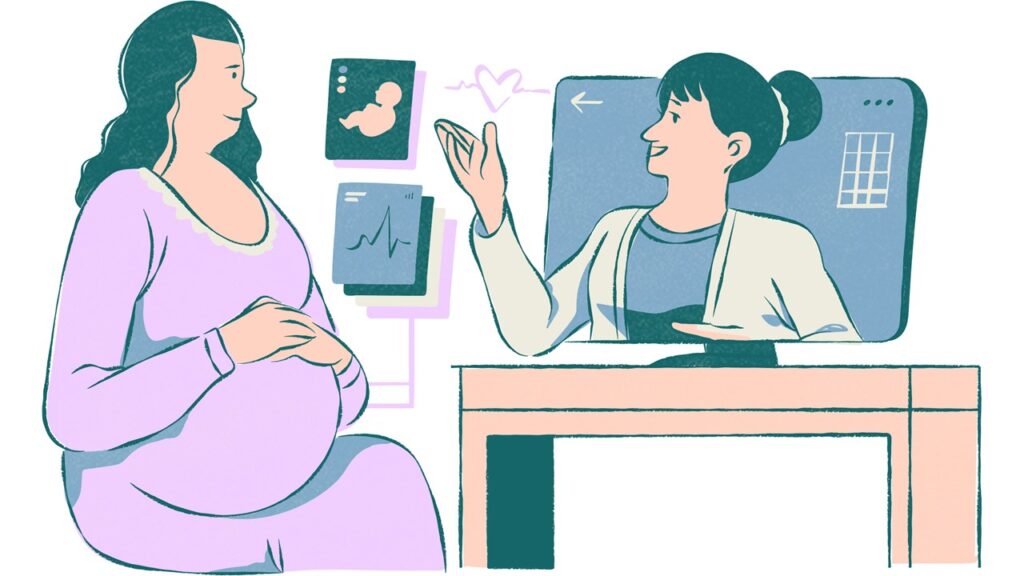
When to Talk to Your Midwife or OB‑GYN About EMF Concerns
You should absolutely talk to your provider if,
- You have a history of pregnancy loss and are anxious about every possible risk (they can offer reassurance).
- You work in an occupation with high EMF exposure (e.g., near industrial equipment).
- You’re considering expensive EMF shielding products and want a medical opinion first.
Is Wi Fi Router During Pregnancy Safe to Use: FAQ’s
Q1: Can Wi Fi cause miscarriage?
Ans: No scientific study has found a direct link between home Wi Fi exposure and miscarriage. The levels are far too low.
Q2: Is 5G Wi Fi worse than 2.4 GHz for pregnancy?
Ans: Both are non‑ionizing. 5 GHz has slightly higher frequency but lower penetration. Neither poses a proven risk. The same distance rules apply.
Q3: Should I turn off Wi Fi in my baby’s nursery?
Ans: It’s not necessary, but it’s easy to do. If it gives you peace of mind, turn it off when the room is unoccupied or set a sleep schedule.
Q4: Do EMF phone apps measure router radiation accurately?
Ans: No. Smartphone sensors cannot measure RF radiation from routers accurately. Use a dedicated EMF meter if you want real data.ns
Q5: I live in an apartment with neighbors’ Wi-Fi. Am I exposed 24/7?
Ans: Yes, but the exposure from a neighbor’s router through a wall is extremely low, often lower than your own router at 10 feet. No cause for concern.
Q6: Is Wi Fi radiation harmful for pregnancy?
Ans: No, Wi Fi radiation is not considered harmful for pregnancy, as it emits low-level, non-ionizing radiation that studies have not linked to fetal harm.
Conclusion
Your Wi Fi router during pregnancy is not a danger to your baby. The science is reassuring, the experts are not alarmed, and millions of healthy babies have been born into homes with routers running 24/7.
But if you want extra peace of mind, because pregnancy is already full of enough worries, you can simply move your router a few feet away, turn it off at night, or switch to wired connections. None of these steps are hard, and they cost little to nothing.
You’re doing a great job protecting your little one. And tonight, you can sleep soundly with or without the little blue light blinking across the room.
If these tips made a difference for you, spread the word by sharing this post and joining our community for more updates. Read our Complete Month-by-Month Guide for a Safe and Healthy Pregnancy.
Disclaimer
This article is for informational purposes and does not constitute medical advice. Always consult your healthcare provider about any concerns during pregnancy.