
Indoor Air Quality During Pregnancy: U.S. Guide (2026) to Risks, Safety & Solutions
You spend roughly 17 hours a day inside your home. And right now, every breath you take carries a silent passenger straight to your baby.
It’s a humbling thought, isn’t it? The air you’re breathing at this very moment while you’re scrolling through nursery ideas, making tea, or just trying to get comfortable is the very air your baby is breathing, too. And here’s the part that keeps scientists up at night: indoor air can be two to five times more polluted than the air outside. For the 90% of your day you spend indoors, that matters deeply.
We now know that the air inside your home isn’t just about dust or cooking smells. A groundbreaking 2026 study revealed that exposure to indoor air pollution during the first trimester was directly linked to a measurable drop in a child’s IQ by age four. The American Academy of Pediatrics (AAP) considers indoor air quality during pregnancy, a major pillar of a healthy environment. The CDC, the EPA, and top researchers all agree: the air in your home has a profound impact on your baby’s developing brain, lungs, and future health.
This isn’t about fear. It’s about clarity.
Because here’s the truth most articles won’t tell you: you have more control than you think. From a simple filter change to a smarter cleaning routine, there are proven, U.S.-approved steps you can take right now to protect your baby’s first environment.
Let’s walk through exactly what the science says, what the authorities recommend, and the simple changes that make a world of difference.
Why Indoor Air Quality During Pregnancy Matters More Than You Think?
The “90% Rule” and U.S. Statistics
Pregnant women in the United States spend about 90% of their time indoors. That means your home, your workplace, and the places you visit most frequently are where the vast majority of your exposure happens. And here’s the kicker: indoor air pollution is often 2 to 5 times higher than outdoor air pollution.
Think about that for a moment. The place where you feel safest, your home, can actually have dirtier air than the street outside.
A Vulnerable Population
The EPA, CDC, and AAP all identify pregnant women, fetuses, infants, and children as having “disproportionate risks” from environmental contaminants. Your body is working overtime to grow a tiny human, and that makes you more sensitive to pollutants that might not bother you otherwise.
Pregnant women may also detect chemical odors at levels undetectable to others. That heightened sense of smell isn’t just annoying, it’s your body’s way of alerting you to potential hazards.
Key Health Risks: What the Science Says About Indoor Air Quality During Pregnancy
The research is clear and mounting regarding indoor air quality during pregnancy. Here’s what recent studies have found:
Cognitive Development
A major 2026 study tracking 475 mother-child pairs found that an 8.8 μg/m³ increase in indoor PM2.5 over the full pregnancy was associated with a 1.4-point reduction in a child’s full-scale IQ at age 4. The same study found that the first trimester is the most vulnerable window, a 19.1 μg/m³ increase was linked to a 2.8-point drop in IQ.
Birth Outcomes
A meta-analysis of 30 studies involving 2.1 million participants found that indoor air pollution exposure increased the risk of:
- Small-for-Gestational-Age (SGA) by 23.7%
- Low Birth Weight (LBW) by 17.7%
Research also shows that prenatal exposure to pollutants can increase the risk of preterm delivery.
Maternal Health
Exposure to indoor pollutants has been linked to:
- Gestational hypertension
- Gestational diabetes
- Respiratory symptoms
- Inflammation that can interfere with placental blood flow and development
The Trimester-Specific Window
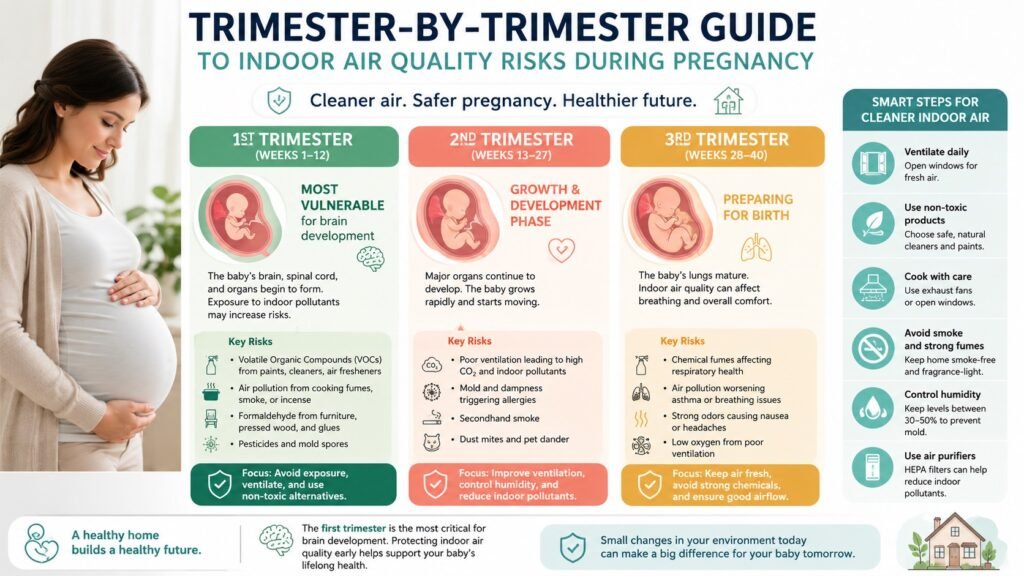
Not all trimesters are created equal when it comes to indoor air quality during pregnancy and air pollution risks.
First Trimester: Most Vulnerable
This is when your baby’s brain and heart are forming. The 2026 study found the strongest association between PM2.5 and cognitive development during the first trimester. PM1 exposure during the first trimester has also been linked to lower executive function performance in toddlers. Additionally, TCE (trichloroethylene) exposure above 2 μg/m³ during the first trimester may cause heart defects.
Second Trimester
This period appears most susceptible to spontaneous preterm birth. Higher NO₂ exposures during the first and second trimesters have been linked to an increased likelihood of behavioral problems.
Third Trimester
PM2.5 and PM10 exposure during the third trimester has been linked to increased risk of stillbirth and impaired growth.
Common Indoor Air Pollutants and Their Sources
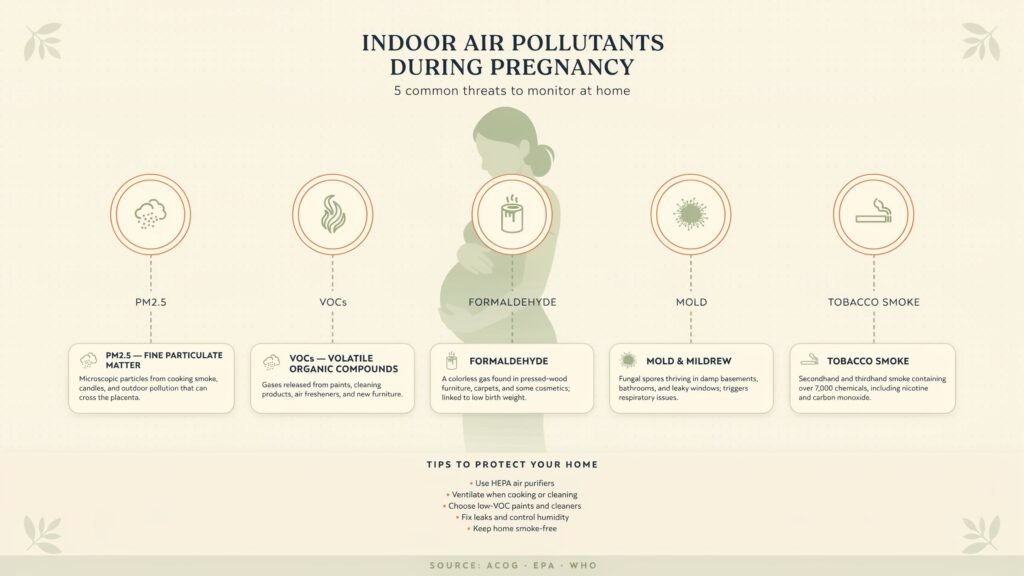
Let’s get specific. Here are the main culprits hiding in your home air:
Particulate Matter (PM2.5 & PM10)
These are tiny particles small enough to enter your lungs and even cross into your bloodstream.
Sources: Cooking (especially gas stoves and frying), candles, incense, woodsmoke, and outdoor air infiltration.
The concern: PM2.5 exposure during pregnancy has been linked to reduced cognitive performance and adverse birth outcomes.
Volatile Organic Compounds (VOCs)
These are chemicals that vaporize into the air at room temperature. Pregnant women may detect them at levels others can’t smell.
Sources: Paints, new furniture, carpets, cleaning products, air fresheners, and scented candles.
The concern: VOC exposure during pregnancy has been linked to low birth weight and developmental delays in children.
Formaldehyde
This common chemical is released from many household products.
Sources: Pressed-wood products (particleboard, plywood), glues, adhesives, and tobacco smoke.
The concern: Formaldehyde exposure is linked to spontaneous abortion, congenital malformations, and premature birth. It can also pass from mother to baby during pregnancy.
Nitrogen Dioxide (NO₂) & Carbon Monoxide (CO)
Sources: Gas stoves, unvented kerosene heaters, and car exhaust from attached garages.
The concern: Higher NO₂ exposures during pregnancy have been linked to behavioral development delays.
Mold & Mildew
Sources: High humidity, leaks, and poor ventilation.
The concern: While a 2026 ECHO study found no strong overall link between mold and shorter pregnancy duration or lower birth weight, it did find that mold exposure was associated with a higher chance of preterm birth among certain groups. Housing and social factors may influence how these exposures affect health.
Environmental Tobacco Smoke (ETS)
Sources: Smoking or vaping indoors.
The concern: Secondhand smoke during pregnancy contributes to low birth weight, stillbirth, and SIDS.
Official U.S. Guidelines for Indoor Air Quality During Pregnancy
Here’s what the top U.S. authorities actually recommend for better indoor air quality during pregnancy:
American Academy of Pediatrics (AAP)
The AAP identifies indoor air quality as a “major part of healthy environments” for children. They strongly recommend:
- Smoke-free homes and cars
- Reducing exposure to indoor pollutants during pregnancy and early childhood
Centers for Disease Control and Prevention (CDC)
The CDC advises pregnant women to:
- Check the Air Quality Index (AQI) daily and take protective action when the AQI is >100
- Allow clean indoor air inside when the AQI is less than 100
- Use MERV 13 or higher filters in HVAC systems
- During wildfires: stay inside, close windows, run AC on recirculation mode
Environmental Protection Agency (EPA)
The EPA recommends:
- Creating a “Cleaner Air Room” with a portable air cleaner
- Setting the primary ozone standard at no higher than 60 ppb to protect pregnant people, fetuses, infants, and children
- Keeping TCE levels below 2 μg/m³ to protect pregnant women and unborn children
Consumer Product Safety Commission (CPSC)
The CPSC warns:
- Avoid ozone-generating air purifiers, they create indoor air pollution and don’t actually clean the air
- Plug air purifiers directly into wall outlets, not power strips, to avoid fire hazards
10-Step Action Plan to Improve Indoor Air Quality During Pregnancy
Ready to take action? Here’s your step-by-step guide:
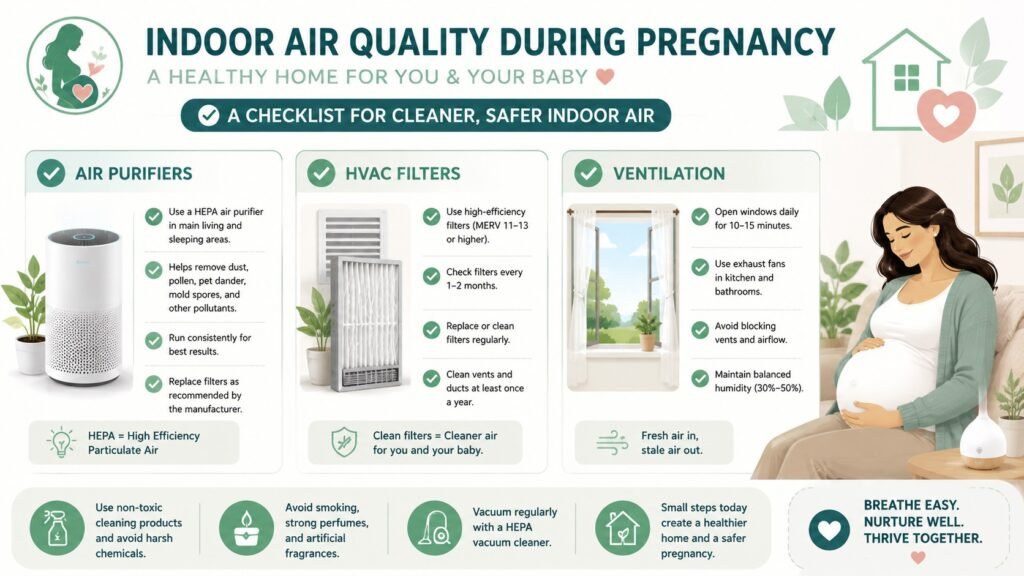
Step 1: Ventilate Wisely
Open windows when the AQI is below 100. Run exhaust fans while cooking and showering. During wildfire events or high AQI days, keep windows closed and run your HVAC on recirculation.
Step 2: Upgrade Your HVAC Filter
Switch to a MERV 13 or higher filter. MERV 13 filters capture up to 90% of particles in the 1-3 micron range, including smoke, smog, bacteria, dust, pollen, and mold spores. The EPA recommends changing your air filter every 90 days.
Where to buy: Home Depot, Lowe’s, Amazon, Walmart, and Costco all carry MERV 13+ filters.
Step 3: Choose the Right Air Purifier
Look for a portable air cleaner with:
- True HEPA filter (captures 99.97% of particles down to 0.1 microns)
- Activated carbon filter (for VOCs and odors)
- CARB-certified (zero or very low ozone emission)
- CADR (Clean Air Delivery Rate) that matches your room size
- Quiet operation (<30 dB for nursery use)
Safety note: Avoid ionizers and UV purifiers that generate ozone. Ozone is a lung irritant that can be harmful to both you and your baby.
Where to buy: Amazon, Walmart, Target, and Costco all carry pregnancy-safe options.
Step 4: Control Humidity
Keep indoor humidity between 30% and 50%. This prevents mold and dust mite growth and improves indoor air quality during pregnancy. Use a dehumidifier in damp basements and run exhaust fans in bathrooms.
Step 5: Switch to Low-VOC Products
Choose zero-VOC or low-VOC paints for the nursery. Acrylic or latex paints that are water-based are better than oil-based paints, which contain solvents that can be harmful.
Opt for fragrance-free, non-toxic cleaning products. Avoid air fresheners, scented candles, and incense.
Where to buy: Home Depot, Lowe’s, Target, and Amazon all carry zero-VOC paint options.
Step 6: Establish a Strict No-Smoking Policy
No smoking or vaping indoors or in the car. This includes cannabis.
Step 7: Test for Radon
Test your home for radon, it’s a leading cause of lung cancer. Test kits are available at Home Depot, Lowe’s, and online.
Step 8: Monitor Your Air
Use an indoor air quality monitor to track PM2.5, VOCs, humidity, and CO₂. This helps you know when to take action.
Step 9: Mind the Kitchen
Use the back burner and turn on exhaust fans when cooking. Avoid frying or grilling indoors during poor AQI days. Gas stoves emit NO₂ and PM2.5, so ventilation is key.
Even though a 2026 ECHO study found no strong overall link between gas stoves and birth outcomes, researchers still recommend frequent ventilation to reduce exposure to potentially harmful indoor air pollutants.
Step 10: Create a “Cleaner Air Room”
Designate one room, ideally your bedroom, as a sanctuary. Keep windows closed, run a HEPA purifier, and avoid pollutant sources in this space.
Indoor Air Quality During Pregnancy and Your Mental Health
Here’s something most articles don’t tell you: the air in your home doesn’t just affect your baby’s body, it affects your mind, too.
Antenatal Depression
A 2022 study from the China Medical University Birth Cohort Study found that poor perceived indoor air quality was positively associated with depression scores throughout pregnancy. Among the 2,166 pregnant women studied, the prevalence of antenatal depression was 26.7% in the first trimester, 20.6% in the second, and 20.9% in the third.
Most striking? Women who reported poor indoor air quality across all three trimesters had the highest risk of depression, a staggering OR = 3.24 (95% CI = 2.28-4.78). That means they were more than three times as likely to experience antenatal depression.
The study also found that physical activity seemed to reduce the harmful association between poor air quality and depression risk.

Special Considerations for Renters and Budget-Conscious Families
Renters’ Solutions
If you can’t modify your HVAC system, you still have options:
- Use portable air purifiers with HEPA + carbon filters
- Seal windows with weatherstripping
- Ask your landlord about mold remediation
- Use a box fan with a MERV 13 filter as a low-cost DIY purifier
Budget-Friendly Options
- DIY air purifier: Box fan + MERV 13 filter (under $50)
- Entry-level air purifiers: $50–$100 at Walmart, Target, and Amazon
- Monitor deals: Watch for sales at Costco and Home Depot
Some utility companies even offer discounts on air purifiers.
Frequently Asked Questions: Indoor Air Quality During Pregnancy
Is it safe to use an air purifier while pregnant?
Yes. The AAP and EPA recommend using HEPA air purifiers during pregnancy to reduce PM2.5. Choose a CARB-certified model that produces no ozone.
Can poor indoor air quality cause miscarriage?
While research is ongoing, exposure to high levels of PM10 throughout pregnancy has been linked to a higher risk of spontaneous abortion.
Is mold dangerous during pregnancy?
Yes, but the science is nuanced. A 2026 ECHO study found no strong overall link between mold and shorter pregnancy duration, but mold exposure was associated with a higher chance of preterm birth among certain groups. The CDC recommends keeping humidity between 30-50% to prevent mold growth.
Can I paint the nursery while pregnant?
Yes, but take precautions. Use zero-VOC or low-VOC paints. Keep the room well-ventilated, and avoid painting in the first trimester if possible.
Are air purifiers with ionizers safe during pregnancy?
No. The CPSC advises against ionizers and ozone-generating air purifiers, as ozone is a lung irritant.
What is a safe PM2.5 level during pregnancy?
Studies show that an increase of just 8.8 μg/m³ in indoor PM2.5 can affect IQ. The WHO and EPA recommend keeping indoor levels as low as possible, ideally below 5 μg/m³.
Is a gas stove safe during pregnancy?
Gas stoves emit nitrogen dioxide (NO₂) and PM2.5. A 2026 ECHO study found no strong overall link with adverse birth outcomes, but researchers still recommend using exhaust fans and ventilating while cooking.
How do I test the air quality in my home?
You can purchase an indoor air quality monitor (measures PM2.5, VOCs, humidity) or use a DIY test kit for mold and radon.
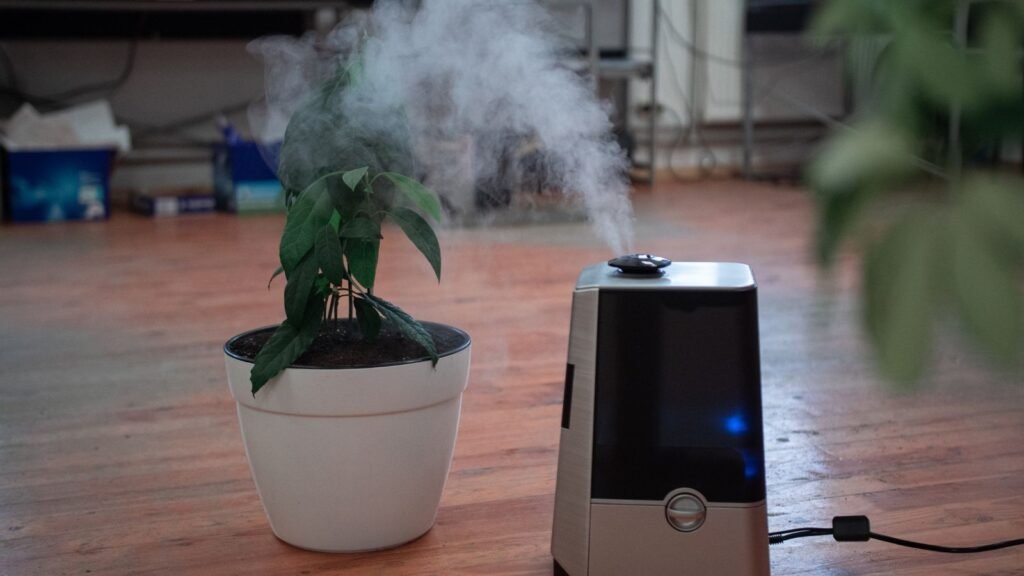
Can I use essential oils in a diffuser while pregnant?
While essential oils may be safe, aerosolized oils can act as VOCs. Use sparingly, ensure the room is well-ventilated, and consult your OB-GYN first.
Can indoor air pollution affect fetal brain development?
Yes. A 2026 study found that exposure to indoor PM2.5 during the first trimester was associated with lower IQ scores in children at age 4.
What does the CDC say about indoor air quality and pregnancy?
The CDC recommends checking the AQI daily, staying indoors when AQI > 100, using MERV 13+ HVAC filters, and avoiding indoor burning.
What is the best air purifier for pregnancy?
The best purifiers use a true HEPA filter and activated carbon, have a high CADR rating, are CARB-certified, and operate quietly (<30 dB) for the nursery.
When to Talk to Your Doctor
If you experience any of the following symptoms, discuss them with your OB-GYN:
- Unexplained headaches or dizziness
- Persistent coughing or wheezing
- Shortness of breath
- Eye, nose, or throat irritation
- Nausea that doesn’t improve
Your doctor can help determine if indoor air quality during pregnancy might be a contributing factor and recommend additional steps.
Summary: Indoor Air Quality During Pregnancy
You don’t need to do everything at once. Start with these three high-impact actions:
- Check your AQI daily and adjust your routine accordingly.
- Upgrade to a MERV 13 HVAC filter and change it every 90 days.
- Add a HEPA air purifier to your bedroom (your “Cleaner Air Room”).
Every small step you take makes a difference. Your baby’s first environment is the air they breathe in the womb and you have the power to make it cleaner, safer, and healthier.
Did this article helped you? Read more helpful articles from this site: How to Protect Your Baby from Lead Exposure During Pregnancy, How to Reduce PFAS Exposure During Pregnancy to stay safe during your pregnancy journey. Drop in your comment for feedback and suggestions.

1 Response
[…] Indoor air quality during pregnancy is one of the most important factors for health as it can contain dust, pollen, pet dander, fine particles from smoke, and gases released by products and furnishings. So, if you’ve found yourself wondering, “Which is the best air purifier for pregnancy?”, you’re not alone. […]