
Gas Appliance Safety During Pregnancy: Latest Research & Actionable Tips (2026 Guide)
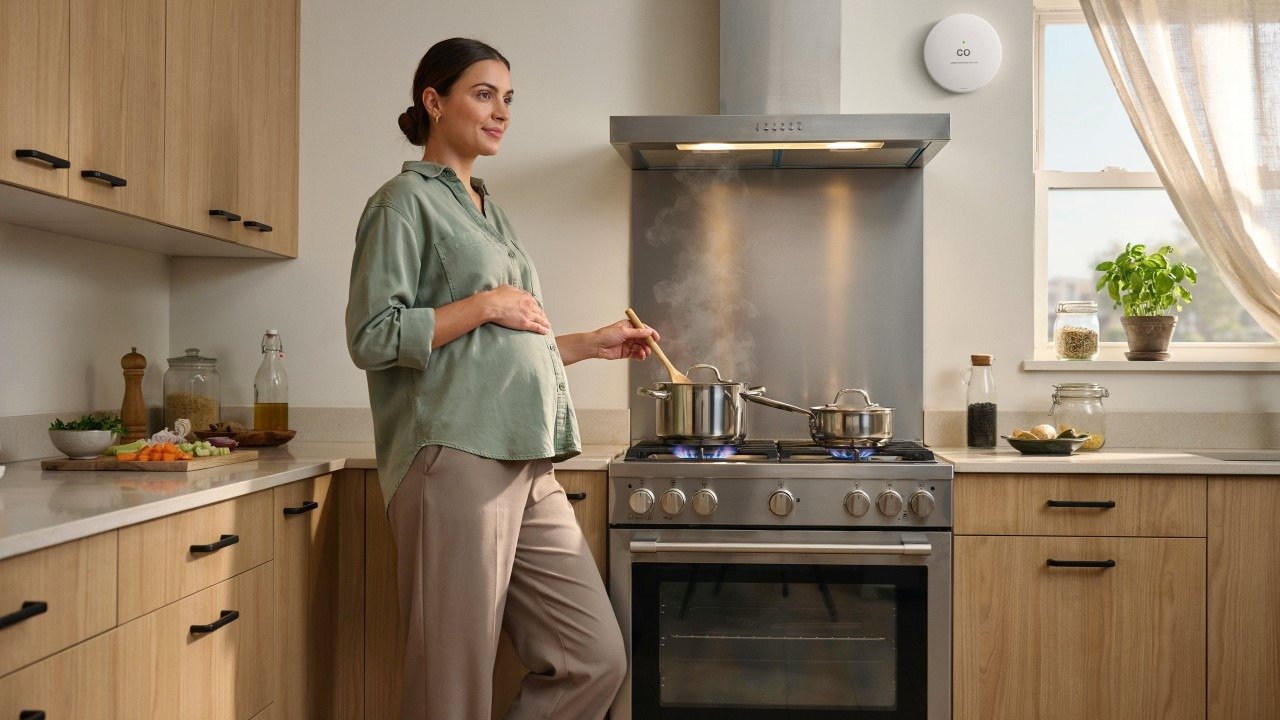
You’re standing at the stove, stirring a pot of soup, when you catch it; that faint, metallic whiff of gas. And yes, millions of pregnant women around the world have stood right where you are, caught between the need to feed their families and the gnawing fear that their gas stove might be harming their baby.
So, let’s cut through the noise together. In this guide, you will find a straight-talking, evidence-based roadmap to ensure gas appliance safety during pregnancy. The one that draws on the latest research, answers the questions that keep you up at night, and gives you practical steps you can actually use, whether you own your home or rent, have a budget or don’t.
Because you shouldn’t have to choose between cooking dinner and protecting your baby. You can do both safely and confidently. Let’s dive in.

Why Gas Appliance Safety During Pregnancy Matters? The Science Explained
What Makes Gas Appliances Potentially Risky?
Let’s start with the basics. Gas appliances like stoves, water heaters, and heaters burn natural gas or liquefied petroleum gas (LPG) to create heat or flame. But combustion isn’t clean. It produces a cocktail of byproducts that can affect indoor air quality.
The main culprits are:
- Carbon monoxide (CO): A colorless, odorless gas that interferes with your blood’s ability to carry oxygen
- Nitrogen oxides (NOx): Respiratory irritants that can aggravate asthma and other lung conditions
- Benzene: A known carcinogen that can be present in natural gas
- Formaldehyde: Another byproduct of combustion
- Fine particulate matter (PM2.5): Tiny particles that can penetrate deep into the lungs
During pregnancy, some of these chemicals can pass from mother to baby. That’s why it’s worth paying attention.
How Carbon Monoxide Specifically Affects Pregnancy?
Carbon monoxide is the biggest concern, and here’s why: CO binds to hemoglobin in your blood about 200 to 300 times more strongly than oxygen does. When you breathe in CO, it crowds out oxygen, reducing the amount of oxygen that reaches your tissues, including your baby’s developing brain and organs.
Think of it like this: your bloodstream is a highway. Oxygen and CO are both trying to get on board, but CO is a bully that shoves oxygen out of the way. The less oxygen your baby gets, the more stress there is on their developing systems. That is why gas appliance safety during pregnancy needs extra caution.
Potential consequences of significant CO exposure during pregnancy are:
The CDC notes that high levels of carbon monoxide exposure where the pregnant woman loses consciousness can clearly harm the fetus like:
- Increased risk of miscarriage or pregnancy loss.
- Impaired fetal brain development.
- Reduced birth weight.
- Possible neurological or behavioral effects later in life.
But here’s the nuance: The levels of CO that cause a pregnant woman to lose consciousness are very high and unlikely to happen in most homes with properly functioning appliances. The bigger concern is chronic, low-level exposure, the kind you might not even notice, that can affect fetal growth and brain development over time.
What the Latest Research Actually Says?
Two major studies have shaped our understanding of gas appliances and pregnancy in recent years.
The ECHO Study (2026)
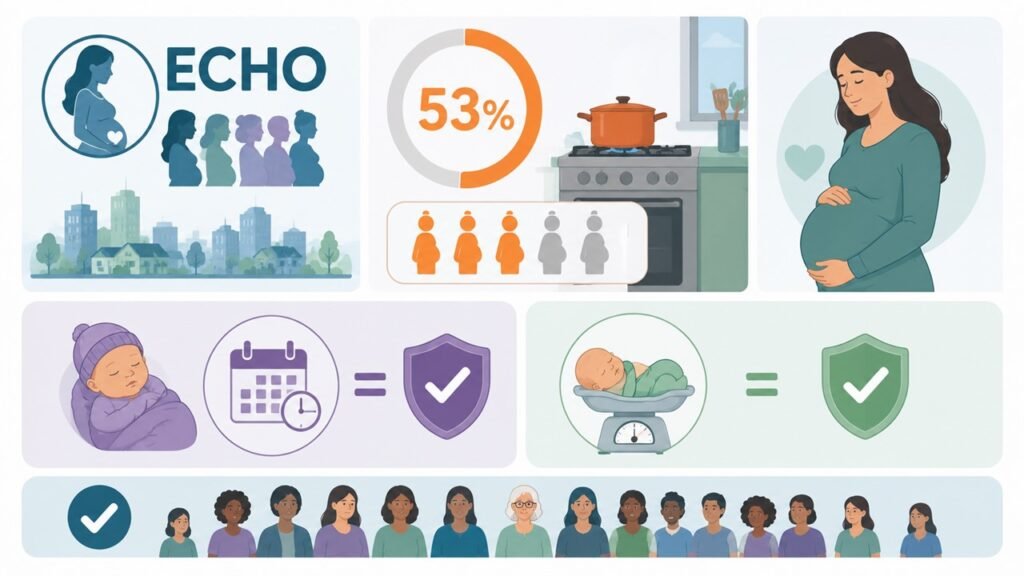
The Environmental influences on Child Health Outcomes (ECHO) Program, supported by the National Institutes of Health, conducted a massive study of 11,483 mother-infant pairs from 31 sites across the United States.
The findings? Overall, having a gas stove in the home during pregnancy was not associated with shorter pregnancy duration or lower birth weight.
Among the participants, 53% reported having a gas stove in their home during pregnancy. And here’s something interesting: the use of kitchen ventilation like a range hood or fan didn’t appear to change the relationship between gas stove use and birth outcomes.
The HAPIN Trial
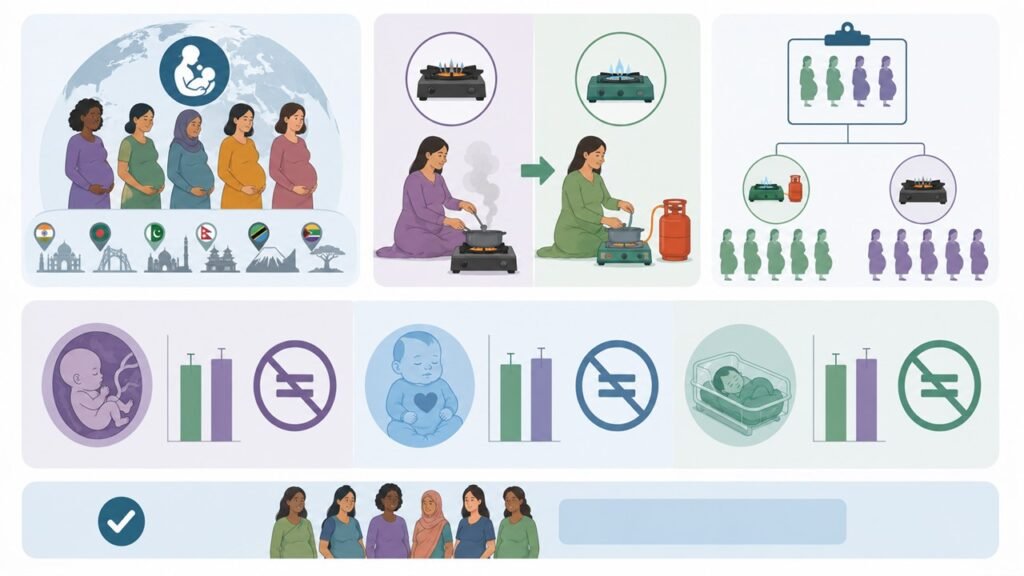
The Household Air Pollution Intervention Network (HAPIN) trial was a multi-country randomized controlled trial that enrolled 3,195 pregnant women in Guatemala, Peru, India, and Rwanda. Researchers provided some women with LPG cookstoves and fuel (a cleaner-burning option) while others continued using traditional biomass fuels.
The results were revealing:
- The LPG intervention did not significantly reduce stillbirths, congenital anomalies, or neonatal mortality.
- It did not significantly increase birth weight.
- It did not alter infant linear growth trajectories in the first 12 months.
What Does All This Mean for You?
It means the data does not support the idea that using a gas stove during pregnancy is a major threat to your baby’s growth or survival. But, absence of strong evidence of harm is not the same as evidence of zero risk.
Dr. Bennett, one of the ECHO researchers, put it this way: “Frequent ventilation through windows or doors is recommended to reduce exposure to potentially harmful indoor air pollutants”.
Risk by Appliance Type: Which Gas Appliances Pose the Greatest Risk?
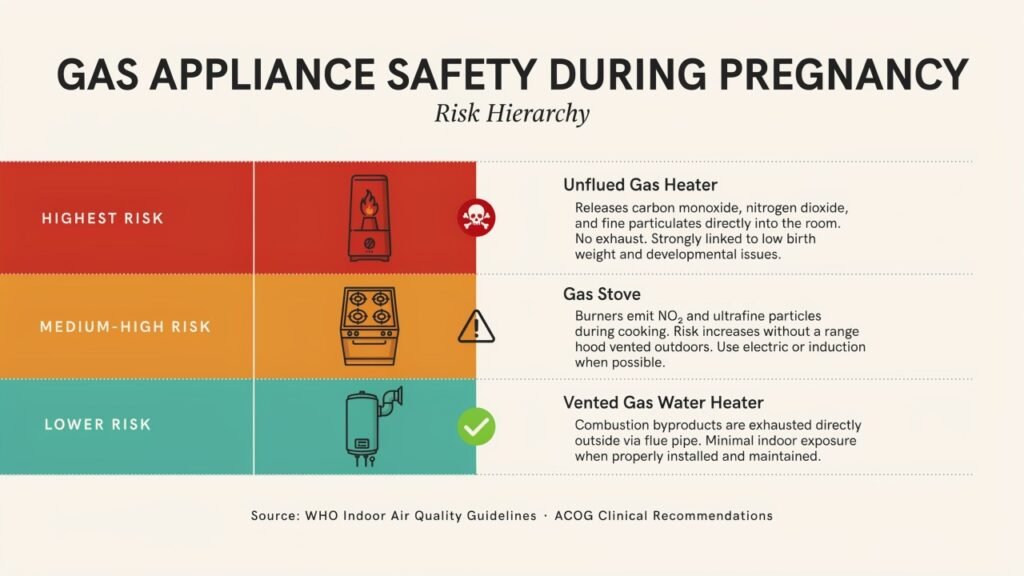
Gas Stoves and Cooktops (Medium-High Risk)
Gas stoves are the most common gas appliance in homes, and they’re also a significant source of indoor air pollution. They emit CO, nitrogen oxides, formaldehyde, and PM2.5.
What increases the risk:
- No range hood or exhaust fan
- Range hood that recirculates air rather than venting outside
- Extended cooking times
- Poor kitchen ventilation
The good news: simple habits can dramatically reduce your exposure.
Unflued Gas Heaters (Highest Risk)
Gas appliance safety during pregnancy that needs to be most cautious about is the unflued gas heater.
These heaters release all combustion gases directly into the room no chimney, no external vent. “If an unflued gas heater is not used properly or not serviced regularly, combustion pollutants in the room may go above the ‘safe levels’,” warn Australian health authorities.
The risks include:
- Carbon monoxide buildup
- Nitrogen dioxide exposure linked to asthma symptoms
- Increased likelihood of respiratory infections
Critical rule: Never use unflued gas heaters in bedrooms, bathrooms, or other small rooms without proper ventilation (like an open window), as harmful toxic gases can build up inside.
Gas Water Heaters (Lower Risk if Properly Vented)
Most gas water heaters are vented to the outside, which dramatically reduces indoor air pollution. The primary risk comes from damaged or blocked venting systems that allow CO to leak back into the home.
Portable LPG Appliances (Camp Stoves, Cassette Stoves)
These are designed for outdoor use and they should stay outdoors. Never use portable LPG appliances indoors or in enclosed spaces.
What Is an Unflued Gas Heater and Why Is It a Concern?
A flued gas heater has a flue or chimney that carries combustion pollutants and water vapor safely outside the home.
An unflued gas heater has no flue and releases combustion pollutants and water vapor directly into the room. Some unflued gas heaters are portable with a flexible hose that plugs into a wall or floor socket. Others are fixed to the wall.
The Specific Dangers
Unflued gas heaters increase indoor air pollutants, including two harmful gases: carbon monoxide and nitrogen dioxide. Carbon monoxide is invisible and has no smell or taste. Nitrogen dioxide is also difficult to detect in the home.
Who is Most at Risk?
People with asthma or heart disease, children, unborn babies, and elderly people are most likely to be affected. However, if levels are high enough, anyone can be affected.
Other Health Effects:
As well as posing a carbon monoxide risk when used incorrectly, unflued gas heaters can also increase the likelihood of respiratory infections and exacerbate asthma symptoms like coughing and wheezing.
Are There Safe Levels?
The World Health Organization has set “safe levels” for combustion pollutants. People are unlikely to experience health effects if pollutant levels stay below these safe levels. However, if an unflued gas heater is not used properly or not serviced regularly, combustion pollutants in the room may go above these safe levels. If there is no fresh air coming into the room or if the heater is faulty, pollutants can reach dangerous levels.
Expert warning: “Be very careful about using an unflued gas heater in your home if anyone has heart disease or asthma. If anyone is pregnant or elderly. If you have children”.

What Is Proposition 65 and Why Do You See Warnings on Gas Appliances?
If you live in California or have bought appliances online, you’ve probably seen a Proposition 65 warning label. These warnings can be alarming, especially during pregnancy. Here’s what they actually mean.
Proposition 65 is a California law that requires businesses to provide warnings about significant exposure to chemicals that can cause cancer and/or birth defects or other reproductive harm.
What Chemicals Do Gas Appliances Emit?
Appliances that use natural gas such as some ranges, dryers, and hot water heaters may emit benzene, carbon monoxide, or formaldehyde when in use.
Here’s the key distinction:
- Benzene is present in natural gas itself
- Carbon monoxide and formaldehyde are created when natural gas is burned
- Gas Appliance Safety During Pregnancy: some of these chemicals can pass from mother to baby.
Should You Panic?
No. Proposition 65 warnings are required at very low exposure thresholds, often far below levels that would cause actual harm. The presence of a warning does not mean the appliance is dangerous when used properly.
How to Reduce Exposure (Proposition 65 Recommendations)
The California Office of Environmental Health Hazard Assessment recommends:
- Cook on back burners, they may be better ventilated than the front ones.
- Use a range hood vented to the outside.
- Alternatively, open windows and/or exterior doors.
- Minimize exposure to dust.
- Wash your hands frequently, especially before preparing food and eating.
- Clean floors regularly using a wet mop or a vacuum with a HEPA filter.
- Wipe up dust regularly.
If you suspect a gas leak or smell a strong gas odor, leave the building immediately.
Carbon Monoxide Poisoning Symptoms: How to Tell Them Apart from Pregnancy Symptoms
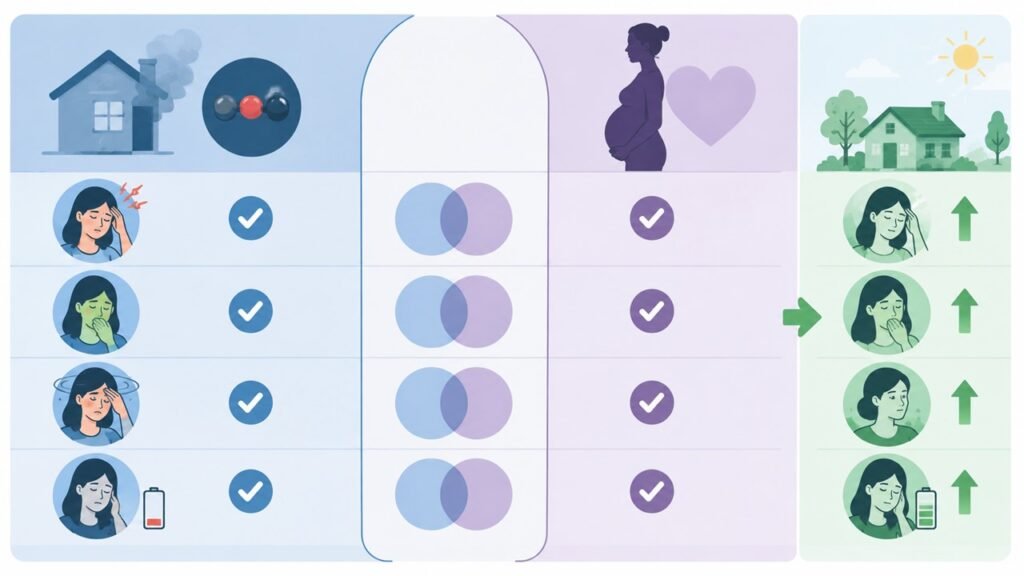
This is one of the most important topic. Why? Because the early symptoms of CO poisoning overlap almost perfectly with common pregnancy symptoms.
Common symptoms of carbon monoxide poisoning include:
- Headache (often a tension-type headache)
- Dizziness
- Nausea and vomiting
- Fatigue and weakness
- Confusion
- Shortness of breath
Sound familiar? It should. These are also classic first-trimester pregnancy symptoms.
The Difference?
| Pregnancy Symptoms | CO Poisoning | |
|---|---|---|
| Headache | Common, varies | Often persistent, tension-type |
| Nausea/Vomiting | Common (morning sickness) | Present, may come with confusion |
| Dizziness | Common | Present |
| Fatigue | Common | May be severe |
| Key differentiator | Symptoms persist regardless of location | Symptoms improve when away from home |
| Household clue | Only you affected | Other family members or pets have similar symptoms |
What Is Carboxyhemoglobin (COHb)?
When carbon monoxide enters your bloodstream, it binds to hemoglobin, the protein in red blood cells that carries oxygen. This forms a compound called carboxyhemoglobin (COHb).
Normal levels:
- Non-smokers: 1 to 3% COHb
- Smokers: up to 9% COHb
What levels mean:
- 15 to 25% COHb in the mother: associated with reductions in birth weight, cardiomegaly (enlarged heart), delays in behavioral development, and deficits in cognitive function
- 30 to 50% COHb: acute poisoning requiring immediate treatment
How CO Affects the Fetus Differently?
Carbon monoxide crosses the placenta and can accumulate in the fetus to a greater extent than in the mother. During CO exposure, fetal COHb levels eventually overtake maternal levels and can reach levels as much as 10% higher than the mother’s.
Fetal signs of CO toxicity:
- Decreased fetal movement
- Changes in fetal heart rate (Category II patterns)
- Severe cases: Fetal mortality may be as high as 67% in severe intoxications.
When to Seek Immediate Medical Help?
Go to the emergency room immediately if:
- You experience confusion, chest pain, or loss of consciousness
- You have symptoms that improve when you leave home and return when you come back
- Other family members or pets have similar symptoms
- Your fetal movements decrease significantly
- Your CO detector has alarmed and you have any symptoms
What Happens at the Hospital?
Diagnosis:
- The key test is measuring your carboxyhemoglobin (COHb) level.
- All women of childbearing age suspected of having CO poisoning should have a pregnancy test.
- An elevated COHb level of 2% or more for non-smokers and >9% for smokers strongly supports a diagnosis of CO poisoning.
Treatment:
- 100% oxygen administered until you are symptom-free, usually about 4 to 5 hours
- Hyperbaric oxygen therapy is the treatment of choice for pregnant women, even if they are less severely poisoned
- Hyperbaric oxygen is safe to administer, and international consensus favors it as part of a more aggressive approach to treating pregnant women
For severe cases:
- If CO poisoning is confirmed, contact the Poison Control Center at (800) 222-1222.
- The CDC recommends administering 100% oxygen until the patient is symptom-free or until a diagnosis of CO poisoning has been ruled out.

How to Stay Safe: A Step-by-Step Practical Guide Related to Gas Appliance Safety During Pregnancy
Ventilation: Your Most Powerful Tool
The single most effective thing you can do is ventilate, ventilate, ventilate.
Actionable tips:
- Always use a range hood or exhaust fan when cooking on a gas stove. Make sure it vents to the outside, not just recirculates air.
- Open windows and doors while cooking, especially if you don’t have a range hood.
- Run your exhaust fan during cooking and for 5–10 minutes after you finish.
- For gas heaters, ensure adequate fresh air intake. Never use unflued heaters in small, enclosed spaces.
- Create cross-ventilation by opening windows on opposite sides of the kitchen.
The CDC recommends increasing ventilation by opening a window or using a fan while cooking at home to keep your home healthy.
Appliance Maintenance: What to Check and When?
A well-maintained appliance is a safer appliance.
Annual professional inspection:
- Heating systems, gas appliances, vents, chimneys, and flues should be inspected by a qualified professional every year
- Gas heaters should be serviced at least every two years by a licensed gasfitter and tested for carbon monoxide spillage
Monthly self-checks:
- Look for improper connections, visible rust, or stains on vents and chimneys.
- Check that pilot lights are burning blue. Yellow or orange flames indicate incomplete combustion.
- Listen for unusual sounds from appliances.
Carbon Monoxide Detectors: Selection, Placement, and Maintenance
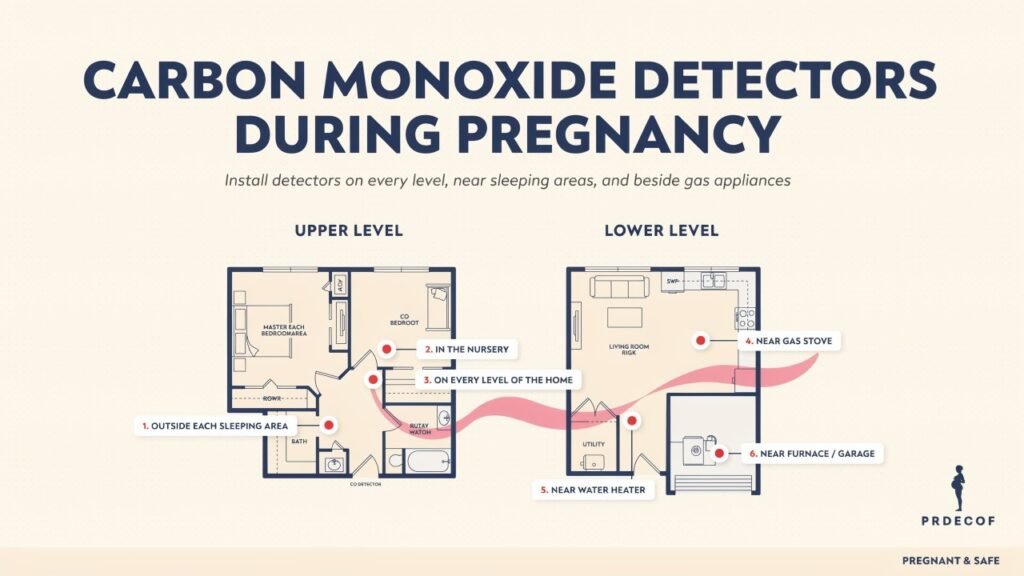
A working CO detector is non-negotiable during pregnancy. It’s your early warning system for an invisible threat.
Selection:
- Choose alarms that meet UL2034 (USA) or EN50291 (Europe) standards.
- Consider combination smoke/CO detectors for convenience.
- Models with digital displays show CO levels, which can help you monitor the situation.
Placement:
- Install on every level of your home, including the basement
- Place near all sleeping areas (outside bedrooms)
- Install in rooms with gas appliances (kitchen, utility room)
- Avoid placing detectors too close to gas appliances (to prevent false alarms from normal startup emissions)
Maintenance schedule:
- Test your detectors monthly.
- Replace batteries annually (or when the low-battery alarm sounds).
- Replace the entire unit every 5 to 7 years. (check the manufacturer’s recommendation)
What to Do If You Suspect a Gas Leak?
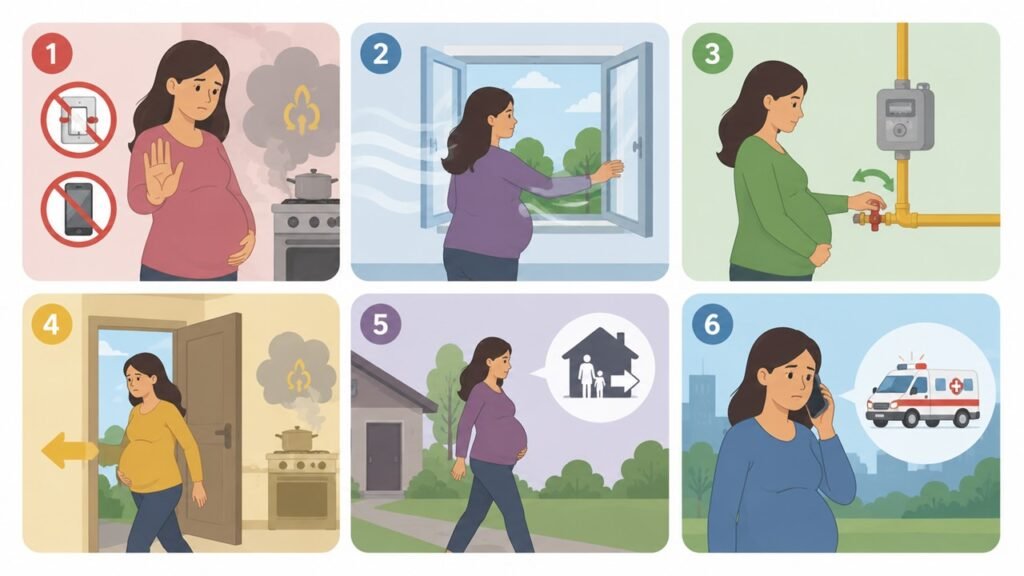
Follow these steps immediately:
- Do NOT turn on or off any electrical switches (this includes lights, appliances, and phones). A spark could ignite the gas.
- Do NOT use a phone or any flame source inside the home.
- Open windows and doors to ventilate the area.
- Turn off the gas supply at the main valve if it’s safe to do so.
- Evacuate immediately. Get everyone, including pets, out of the home.
- Call emergency services and the gas company from outside the home.
- Do not re-enter until emergency responders declare it safe.
- If there is a strong gas odor, leave the building immediately.
What to Do If Your CO Detector Alarms?
If anyone has symptoms (headache, nausea, dizziness, confusion):
- Evacuate immediately.
- Call 911.
- Do not re-enter until emergency responders clear the home.
If no one has symptoms but the alarm is sounding:
- Open windows and doors.
- Turn off gas appliances.
- Call the gas company or a qualified professional.
- Do not ignore the alarm as CO is odorless and colorless, so you can’t rely on your senses.
Practical Cooking and Heating Habits to Ensure Gas Appliance Safety During Pregnancy
Small changes to your daily routine can make a big difference:
- Use back burners when possible (they tend to vent better under most range hoods)
- Keep pot lids on while cooking to reduce combustion byproducts
- Cook for shorter durations or batch-cook to reduce the frequency of cooking
- Consider using alternative cooking methods for some meals; microwave, toaster oven, slow cooker, or electric kettle
- If using a gas heater, ensure the room is well-ventilated and the heater is properly maintained
Frequently Asked Questions: Gas Appliance Safety During Pregnancy
Is it safe to use a gas stove during pregnancy?
Yes, it is generally considered safe if the appliance is well-maintained, the kitchen is well-ventilated, and a working carbon monoxide detector is installed.
Can using a gas cooker cause miscarriage?
High-level carbon monoxide exposure has been linked to pregnancy loss. However, a properly maintained, well-ventilated gas stove is not associated with a significant increase in miscarriage risk.
What are the symptoms of carbon monoxide poisoning in pregnancy?
Headache, dizziness, nausea, vomiting, confusion, shortness of breath, and fatigue. These overlap with normal pregnancy symptoms, making CO poisoning easy to miss.
How can I tell if my symptoms are from CO poisoning or just pregnancy?
Symptoms improve when you leave the home; other family members or pets have similar symptoms; symptoms occur primarily when gas appliances are in use.
Where should I install a carbon monoxide detector during pregnancy?
On every level of your home, near all sleeping areas, and in rooms with gas appliances.
Can I use a gas heater while pregnant?
Vented gas heaters are safer than unflued ones. Never use unflued gas heaters in bedrooms, bathrooms, or small rooms without ventilation.
Does the ECHO study prove gas stoves are safe during pregnancy?
No. The ECHO study found no strong overall link between gas stoves and adverse birth outcomes like preterm birth or low birth weight. But it did not prove they are completely safe. It suggests that the risk may be lower than previously feared, especially with proper ventilation.
What should I do if my carbon monoxide detector goes off?
If anyone has symptoms, evacuate immediately and call 911. If no symptoms, open windows, turn off gas appliances, and call the gas company. Do not ignore the alarm.
Can carbon monoxide cross the placenta?
Yes. CO binds to hemoglobin more strongly than oxygen, reducing the oxygen available to the fetus. This is why CO exposure during pregnancy is a concern.
Are portable butane/cassette stoves safe during pregnancy?
Never use them indoors or in enclosed spaces. They should only be used outdoors in well-ventilated areas.
How often should gas appliances be inspected?
Heating systems and gas appliances should be inspected annually by a qualified professional.
Is LPG safer than natural gas during pregnancy?
Both produce combustion byproducts including CO. LPG is cleaner than solid biomass fuels, but it is not zero-emission. Proper ventilation and maintenance are important regardless of gas type.
Summary: Gas Appliance Safety During Pregnancy
Let’s recap what really matters:
- Gas appliances are not inherently dangerous: risk depends on maintenance, ventilation, and exposure duration.
- Ventilation is your most powerful tool.
- Install CO detectors near sleeping areas, and in rooms with gas appliances.
- Schedule annual professional inspections for all gas appliances.
- Know the symptoms of CO poisoning.
- Have an emergency plan.
- Stay informed, not fearful: the latest research (ECHO, HAPIN) suggests risks are manageable with proper precautions.
You are doing exactly what a loving parent does: asking questions, seeking answers, and taking action. That alone is a beautiful thing.
Breathe. Plan. Act. And give yourself credit for being the thoughtful, protective parent your baby already has.
Did this guide help you? Do read A Complete Month-by-Month Guide for Safe and Healthy Pregnancy from this site and drop in your comment for feedback.



2 Responses
[…] concern: Higher NO₂ exposures during pregnancy have been linked to behavioral development […]
[…] pollution near the source is often more effective. Use appropriate kitchen ventilation for safety from gas and smoke whenever possible while […]