Postpartum Insomnia: Why You’re Tired But Can’t Sleep & How to Heal?

If you have spent 3:00 AM fighting back tears, feeling furious at your own nervous system while everyone else in the house sleeps peacefully, please hear this: You are not going crazy, and this is not your fault.
What you are experiencing isn’t just “newborn sleep deprivation,” nor is it a personal failure to relax. You are dealing with clinical postpartum insomnia with exhausting fatigue. It is a biological state of hyperarousal driven by a severe hormonal drop, cortisol spikes, physical pain, and maternal hypervigilance. The well-meaning advice to “just sleep when the baby sleeps” feels like a slap in the face because your brain’s natural emergency brake is stuck.
In this guide, we are ditching the dismissive clichés to unpack what is actually happening inside your body, from biological triggers like postpartum thyroiditis and depleted iron stores to safe, lactation-aligned sleep support. More importantly, you’ll discover an immediate, 15-minute somatic reset protocol you can use tonight when midnight panic sets in, helping you shift out of fight-or-flight so you can finally get the restorative sleep your body desperately needs.
To overcome postpartum insomnia with exhausting fatigue, you first have to understand why it happens. There is a profound biological difference between being sleep-deprived and experiencing clinical postpartum insomnia.
Postpartum Insomnia: Why You Can’t Sleep When You’re Exhausted?
Physical Depletion vs. Nervous System Hyperarousal
- Normal Sleep Deprivation: Your body is exhausted, and the moment an opportunity to rest appears, your brain immediately dips into slow-wave restorative sleep.
- Postpartum Insomnia with Exhausting Fatigue (Hyperarousal): Your body is severely exhausted, but your autonomic nervous system is stuck in an elevated “fight-or-flight” state (sympathetic dominance).
When you lie down, your body interprets bed as a place of anticipation, alarm, or panic rather than safety. Your brain releases adrenaline and cortisol, keeping your heart rate elevated and your mind on high alert.
Why “Sleep When the Baby Sleeps” Fails for Insomnia?
Telling a mother struggling with postpartum insomnia with exhausting fatigue to “sleep when the baby sleeps” is like telling someone with a broken leg to “just go for a light jog.”
- It creates immense performance anxiety around sleep.
- It turns the baby’s nap time into a ticking time bomb (“I only have 45 minutes to fall asleep right now!”).
- It causes frustration and guilt when sleep doesn’t happen magically on demand.
Instead of forcing sleep during short infant rest windows, modern perinatal psychology recommends shifting the goal to Non-Sleep Deep Rest (NSDR) or somatic calm, giving your nervous system rest even if unconsciousness doesn’t happen right away.

Biological & Medical Root Causes of Postpartum Insomnia
Postpartum sleep disturbances are frequently rooted in rapid biological changes following childbirth. Research indicates that up to 60% of new mothers experience significant sleep disruptions beyond standard infant caregiving in the first few months after delivery. Understanding these root causes is essential when managing postpartum insomnia with exhausting fatigue.
1. The Postpartum Hormonal Cliff
During pregnancy, estrogen and progesterone levels reach all-time highs. Progesterone is your body’s natural calming neurosteroid. It interacts directly with GABA receptors in the brain to promote deep sleep and relaxation.
Within 24 to 48 hours after placental delivery:
- Progesterone and estrogen levels drop by over 90% to baseline or sub-baseline levels.
- This sudden drop strips away your brain’s primary neurochemical buffer against anxiety, directly contributing to postpartum insomnia with exhausting fatigue.
- Evening cortisol (your primary stress hormone) stays abnormally high instead of dipping before bedtime.
2. Postpartum Thyroid Dysfunction (Postpartum Thyroiditis)
Postpartum thyroiditis affects approximately 5% to 10% of women in the United States during the first year after giving birth, according to data from the American Thyroid Association. It often progresses through two distinct phases:
Phase 1: Hyperthyroidism (Typically 1 to 4 months postpartum)
- Symptoms: Severe insomnia, heart racing, unexplainable anxiety, night sweats, feeling hot, rapid weight loss.
- Impact: Excess thyroid hormone acts like constant caffeine in your bloodstream, driving postpartum insomnia with exhausting fatigue.
Phase 2: Hypothyroidism (Typically 4 to 8 months postpartum)
- Symptoms: Bone-deep fatigue, brain fog, dry skin, feeling constantly cold, hair loss, depressive mood.
- If you are experiencing severe exhaustion accompanied by anxiety and insomnia, asking your health care provider for a thyroid screening is a critical first step.
3. Low Ferritin and Postpartum Anemia
Blood loss during delivery, combined with the heavy nutrient demands of pregnancy and lactation, frequently drains maternal iron stores.
- Serum Ferritin represents your stored iron reserves.
- Even if your complete blood count (CBC) shows normal hemoglobin, your ferritin can be severely depleted.
- The Sleep Connection: Iron is a crucial cofactor in dopamine synthesis and sleep regulation. Ferritin levels below 30 to 50 µg/L are strongly linked to Restless Legs Syndrome (RLS), frequent nocturnal awakenings, and postpartum insomnia with exhausting fatigue.
4. Sensory Hypervigilance and “Phantom Baby Cries”
Evolutionary biology hardwires new mothers to respond rapidly to infant distress signals. However, in modern environments, this evolutionary trait can overfire into hypervigilance.
- Auditory Hallucinations (“Phantom Cries”): You step into the shower or lay down in a quiet room, and you hear your baby crying, even when they are sleeping soundly.
- Cause: Your brain’s auditory processing centers are operating on maximum sensitivity. Ambient white noise (fans, air conditioners) gets misinterpreted by an overtired brain as infant distress, exacerbating postpartum insomnia with exhausting fatigue.
5. Nighttime Prolactin Surges & Sleep Architecture
Prolactin, the primary hormone responsible for breast milk production, is released in pulsatile surges throughout the day, reaching its highest levels during overnight hours.
- The Evolutionary Mechanism: Prolactin naturally alters sleep architecture by increasing slow-wave (deep) sleep during short rest periods.
- The Insomnia Misalignment: When elevated evening cortisol and anxiety collide with nighttime prolactin surges, the body gets trapped in “REM rebound” and light stage-1 sleep. This causes vivid dreams, night awakenings, and unrefreshing sleep, even if you were technically in bed for 7 hours.
The Postpartum Pain-Insomnia Loop
It is nearly impossible for your nervous system to power down into deep REM and slow-wave sleep when your body is transmitting active physical pain signals. Severe sleep loss and physical discomfort feed off each other in a bidirectional loop that locks in postpartum insomnia with exhausting fatigue:
- Surgical & Tissue Trauma: C-section incision pain, severe perineal lacerations, and pelvic floor soreness make finding a comfortable sleeping position difficult, causing frequent micro-arousals throughout the night.
- Uterine Involution (Afterpains): As your uterus contracts back to its pre-pregnancy size (often intensified during nursing by oxytocin release), sharp abdominal cramping can disrupt your ability to fall back asleep after midnight feeds.
- Breast Engorgement and Mastitis: Throbbing tissue pressure from initial milk entry or plugged milk ducts keeps body temperature elevated and triggers inflammatory cytokines, directly disrupting sleep architecture.
- The Sensitivity Amplifier: Clinical studies show that acute sleep deprivation lowers your pain threshold. The less you sleep, the more intensely your body perceives physical healing pains at 2:00 AM, worsening postpartum insomnia with exhausting fatigue.
Tactical Solution: Coordinate non-steroidal anti-inflammatory drugs (NSAIDs like ibuprofen) or prescribed pain management directly with your OB-GYN or midwife to align peak pain relief with your primary sleep window.

Postpartum Insomnia Recovery Timeline Matrix
Use this quick-reference milestone matrix to help benchmark your symptoms and know when to transition from home recovery protocols to clinical screening for postpartum insomnia with exhausting fatigue:
| Postpartum Stage | Dominant Sleep Trigger | Common Symptoms | Primary Action Strategy |
|---|---|---|---|
| Weeks 1 to 2 (The Hormonal Cliff) | Precipitous estrogen/progesterone drop; acute incision/perineal pain. | Night sweats, adrenaline surges upon laying down, high emotional reactivity. | Prioritize pain management, 15-minute stimulus control rule, and somatic box breathing. |
| Weeks 3 to 6 (The Hypervigilance Peak) | Elevated evening cortisol, “phantom baby cries,” light-stage sleep dominance. | Bedtime dread, racing mind when baby sleeps, sleeping “with one eye open.” | Protect a 4-hour uninterrupted sleep block; set up amber lighting; start cognitive shuffling. |
| Months 2 to 4 (Medical Vulnerability Window) | Postpartum thyroiditis flare-ups; iron/ferritin depletion; nocturnal prolactin surges. | Unexplainable heart racing, extreme daytime fatigue paired with night wakefulness. | Request full lab work: TSH, Free T4, Serum Ferritin, CBC, Vitamin D panel. |
| Months 6+ (Learned Chronic Insomnia) | Conditioning of mattress with anxiety; persistent circadian misalignment. | Baby sleeps through the night, but parent lies awake for hours. | Engage in specialized Perinatal CBT-I (Cognitive Behavioral Therapy for Insomnia). |
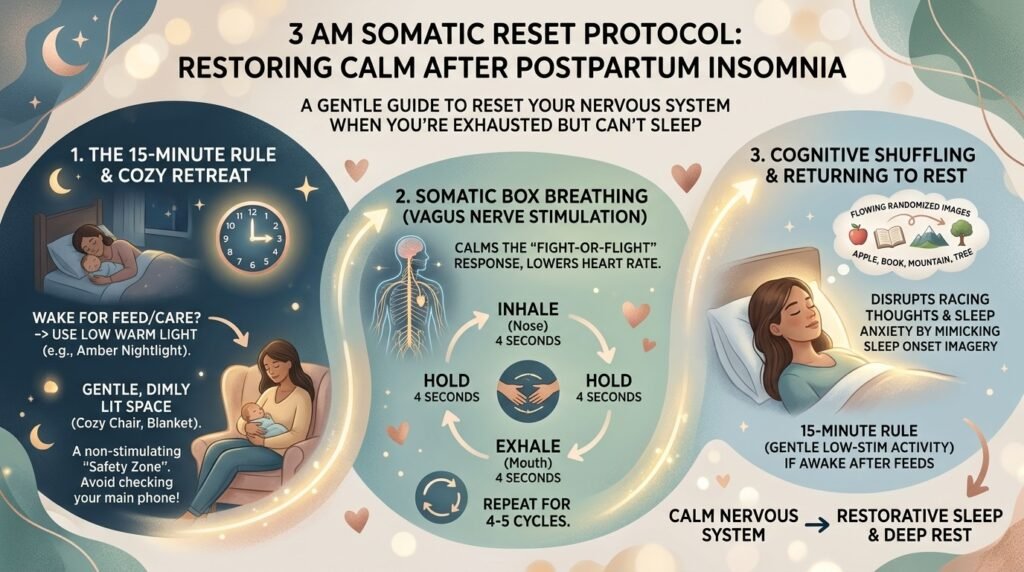
What to Do at 3:00 AM: The In-the-Moment Somatic Reset Protocol
When you find yourself wide awake in a dark room at 3:00 AM struggling with postpartum insomnia with exhausting fatigue, standard sleep hygiene advice like “don’t look at screens” isn’t enough. You need an active circuit breaker for your nervous system.
Step 1: The 15-Minute Stimulus Control Rule
If you have been lying in bed for more than 15 to 20 minutes with a racing mind:
- Get out of bed. Leave bed if awake > 15 mins.
- Move to a cozy, dim spot. Sit in a comfortable chair with low, warm lighting (no overhead lights).
- Engage in a low-dopamine, non-screen activity. Read a physical book, listen to an audio podcast on a low volume, or fold warm laundry avoid screen engagements.
- Return only when sleepy. Head back to bed only when your eyelids feel heavy and you experience a genuine sleep signal.
Step 2: Cognitive Shuffling for Racing Thoughts
Developed by cognitive scientists, “cognitive shuffling” disrupts the brain’s logical, analytical thinking networks (which fuel insomnia) by mimicking the random imagery that naturally occurs during the transition to sleep.
How to do it:
- Pick a neutral word, such as BEDTIME.
- Take the first letter, B. Think of gentle words starting with B: Butterfly, Beach, Blanket, Bicycle, Banana.
- Once you run out of words, move to the second letter, E: Elephant, Echo, Emerald, Engine.
- Continue down the word. By forcing the brain to generate non-emotional, random images, you disengage the stress circuits keeping you alert.
Step 3: Somatic Box Breathing for Heart Palpitations
To rapidly stimulate the vagus nerve and lower your heart rate, use the 4-4-4-4 Box Breathing Method endorsed by clinical sleep specialists:
- Inhale slowly through your nose for 4 seconds.
- Hold your breath gently for 4 seconds.
- Exhale fully through your mouth for 4 seconds.
- Hold empty for 4 seconds.
- Repeat for 4 to 5 cycles while resting your hands on your lower abdomen.
Medical Evaluation: Blood Work & Questions for Your Doctor
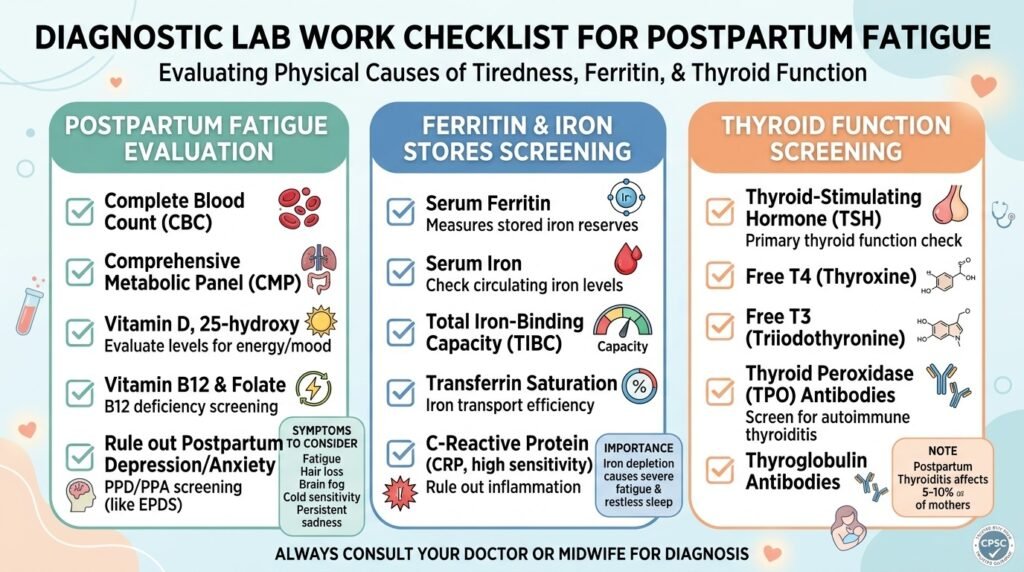
You do not have to endure postpartum insomnia with exhausting fatigue alone. Schedule a visit with your OB-GYN, midwife, or primary care physician to rule out underlying physiological triggers.
Diagnostic Lab Request Checklist
Print or bookmark this table to share directly with your healthcare provider at your next visit:
| Recommended Blood Test | What It Measures | Target Optimal Range for Postpartum |
|---|---|---|
| TSH (Thyroid-Stimulating Hormone) | Overall thyroid function | 1.0 to 2.5 mIU/L |
| Free T4 & Free T3 | Active circulating thyroid hormones | Mid-to-upper normal range |
| Serum Ferritin | Iron storage reserves | > 50 µg/L (Optimal for sleep/restlessness) |
| Complete Blood Count (CBC) | Red blood cells and hemoglobin | Normal range (Rule out active anemia) |
| Vitamin D (25-Hydroxy) | Vitamin D status (impacts mood & sleep) | 40 to 60 ng/mL |
| Vitamin B12 & Folate | Nerve function and cellular energy | Upper normal range |
Differentiating Insomnia from PPD/PPA Using the EPDS
During your 6-week postpartum visit (or mental health follow-ups), U.S. healthcare providers frequently utilize the Edinburgh Postnatal Depression Scale (EPDS) alongside standard clinical interviews.
- Pure Postpartum Insomnia: Your primary distress revolves around the physical inability to sleep and the resulting physical fatigue, but your mood and bonding with your baby remain stable during waking hours.
- Insomnia Secondary to PPA/PPD: Your sleep disruption is accompanied by persistent feelings of hopelessness, severe panic attacks, detachment, intrusive thoughts, or an inability to experience joy during waking hours.
Red Flags: When Sleep Loss Signals PPA, PPD, or Emergency
Important Safety Note: According to the American College of Obstetricians and Gynecologists (ACOG), severe, prolonged sleep deprivation significantly increases the risk for Postpartum Depression (PPD) and Postpartum Anxiety (PPA).
Contact your doctor or mental health professional immediately if you experience:
- Inability to sleep for 24 to 48 consecutive hours, even when relief care is available.
- Persistent intrusive, frightening thoughts or visions about your baby’s safety.
- Feeling utterly disconnected from reality, hearing things others don’t hear, or feeling intense euphoria paired with zero need for sleep (potential signs of Postpartum Psychosis, a rare medical emergency).
If you are in the U.S. and need confidential, free support, call or text the National Maternal Mental Health Hotline at 1-833-TLC-MAMA (1-833-852-6262), available 24/7.
Lactation-Safe Sleep Aids and Supplements
Many nursing and pumping parents experiencing postpartum insomnia with exhausting fatigue hesitate to take sleep aids out of fear that medications will transfer into breast milk or cause extreme sedation. Always consult your healthcare provider or IBCLC, but here is what current evidence-based literature shows regarding common options.
1. Magnesium Glycinate
- Why it helps: Magnesium binds to GABA receptors and helps relax tense muscle tissue. The glycinate form is highly bioavailable and far gentler on the digestive tract than magnesium citrate or oxide.
- Lactation Safety: Magnesium is a natural dietary mineral and is considered safe during lactation when used within standard dietary guidelines (typically 200–400 mg daily).
2. Over-the-Counter Sleep Aids (Unisom vs. Benadryl)
The National Institutes of Health (NIH) LactMed database and the InfantRisk Center evaluate over-the-counter sleep aids for nursing parents:
Doxylamine Succinate (Unisom SleepTabs):
- Profile: An antihistamine frequently prescribed off-label alongside Vitamin B6 for morning sickness during pregnancy.
- Lactation Considerations: Small amounts pass into breast milk. Short-term, occasional use is generally considered low risk for older infants, though it may cause mild drowsiness in the baby or a temporary drop in milk supply in sensitive individuals.
Diphenhydramine (Benadryl / ZzzQuil):
Lactation Considerations: Similar profile to doxylamine. Occasional single doses are unlikely to harm a nursing baby, but repeated daily use may lower prolactin levels and decrease milk production.
3. Melatonin & L-Theanine
- Melatonin: While naturally produced by the pineal gland, exogenous melatonin supplements lack standardized FDA regulating oversight. High doses (5–10 mg) can cause vivid dreams and morning grogginess. If used while nursing, clinical experts generally recommend keeping doses very low (0.5 mg to 1 mg) for short periods.
- L-Theanine: An amino acid found naturally in green tea that promotes alpha brain waves (relaxed alertness) without sedation. Limited clinical data exists for lactation, so discuss with your doctor prior to use.

Restoring Sleep Architecture: Long-Term CBT-I Strategies
Cognitive Behavioral Therapy for Insomnia (CBT-I) is considered the gold-standard, first-line medical treatment for chronic insomnia by the American College of Physicians, outperforming prescription sleep medications in long-term efficacy when overcoming postpartum insomnia with exhausting fatigue.
Here are key CBT-I principles tailored for the realities of parenting:
1. Set Up a Low-Stimulation Nighttime Feeding Environment
Nighttime infant care should disrupt your body’s melatonin production as little as possible.
- Use Amber/Red Light Bulbs: Standard white or blue LED lighting instantly suppresses melatonin production. Swap bedside and nursery lights for warm red or amber plug-in nightlights.
- Avoid Checking Phone Notifications: Checking social media or news feeds while feeding the baby triggers a surge of dopamine and blue light exposure that resets your internal clock. Keep your phone facing down or use audio-only options like guided sleep meditations.
2. Protect a 4-Hour Uninterrupted Sleep Block
Human sleep architecture relies on completing at least two full 90-minute sleep cycles (roughly 3 to 4 continuous hours) to hit consolidated slow-wave deep sleep. Experiencing four isolated 1-hour sleep fragments is significantly more taxing on the brain than one continuous 4-hour block.
Practical Partner Shift Strategy:
- Shift A (8:00 PM to 12:00 AM): Partner 1 assumes full responsibility for infant care (using pumped milk, formula, or handling non-feeding soothing). Partner 2 sleeps continuously in a separate room with earplugs or a sound machine.
- Shift B (12:00 AM to 4:00 AM or 8:00 AM): Switch roles. Partner 2 takes over infant care while Partner 1 gets their consolidated block.

Frequently Asked Questions: Postpartum Insomnia with Exhausting Fatigue
Why am I so exhausted postpartum but unable to fall asleep?
You aren’t lacking tiredness, you’re experiencing biological hyperarousal. Post-delivery hormone crashes and elevated stress hormones leave your nervous system stuck in “fight-or-flight,” making it physically impossible to drop into deep sleep even when you are exhausted down to your bones.
Can postpartum thyroiditis cause severe fatigue and insomnia?
Yes. Postpartum thyroiditis affects up to 10% of new mothers in their first year. It typically begins with a hyperthyroid phase (insomnia, anxiety, heart racing) before shifting to a hypothyroid phase (severe fatigue, brain fog). A simple TSH and Free T4 blood test confirms diagnosis.
What sleep aids are safe to take while breastfeeding?
Short-term, occasional use of over-the-counter sleep aids like doxylamine succinate (Unisom) or diphenhydramine (Benadryl) is generally considered low risk per LactMed and ACOG guidelines, though it may temporarily reduce milk supply. Magnesium glycinate is a common non-pharmacological alternative. Always consult your OB-GYN or IBCLC before taking any medication or supplement.
How do I stop hearing phantom baby cries keeping me awake at night?
Phantom cries occur when an overtired auditory cortex misinterprets ambient white noise (like fans or air conditioners) as a baby crying. To calm this sensory hypervigilance, use a variable-frequency white noise machine, practice 4-4-4-4 somatic box breathing upon waking, and establish a clear agreement with your partner on who is responsible for the next wake-up shift so your brain can fully power down.
Does nighttime breastfeeding make postpartum insomnia worse?
Not necessarily. Nighttime breastfeeding triggers oxytocin release, which promotes physical relaxation. However, turning on bright lights, checking your phone, or worrying about milk supply during night feeds can spike cortisol and cause sleep-onset insomnia once the feeding is complete.
Can postpartum insomnia happen with a second or third baby if I didn’t have it with my first?
Yes. Every pregnancy and postpartum recovery involve distinct hormonal shifts, nutritional depletions (e.g., lower baseline ferritin stores from prior pregnancies), and altered baseline stress levels. Managing care for an older child alongside a newborn also significantly elevates bedtime cortisol and hypervigilance.
What is the difference between sleep onset insomnia and sleep maintenance insomnia postpartum?
Sleep onset insomnia is difficulty falling asleep when you first lie down (usually driven by bedtime anxiety and high cortisol). Sleep maintenance insomnia is falling asleep easily but waking up at 2:00 or 3:00 AM and being unable to return to sleep (often linked to postpartum thyroid shifts, night sweats, low blood sugar, or physical recovery discomfort).
Summary: Postpartum Insomnia, Reclaiming Your Sleep, One Night at a Time
Living with postpartum insomnia with exhausting fatigue while navigating the relentless demands of a newborn is one of the hardest challenges early parenthood can throw at you. Remind yourself that this is a temporary, treatable physiological state.
Start small tonight:
- Try the 15-minute rule and cognitive shuffling if you find yourself awake at 3:00 AM.
- Schedule a routine follow-up with your doctor to request a ferritin and thyroid panel.
- Talk with your partner or support network about protecting a consolidated 4-hour sleep block.
Your nervous system built a human, went through labor and delivery, and is working overtime to protect your child. With patience, physiological validation, and the right care, your body will learn to feel safe enough to rest again.
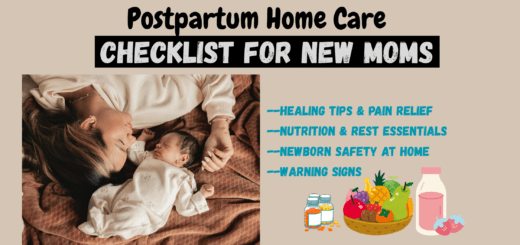
Did this guide help you? Consider sharing it with another mom and stay connected for more useful guides. Also read Postpartum Home Care Checklist and drop in your comment for feedback.