
Is Painting a Room Safe During Pregnancy? Medical Guidelines, VOC Risks, & 7 Safety Protocols
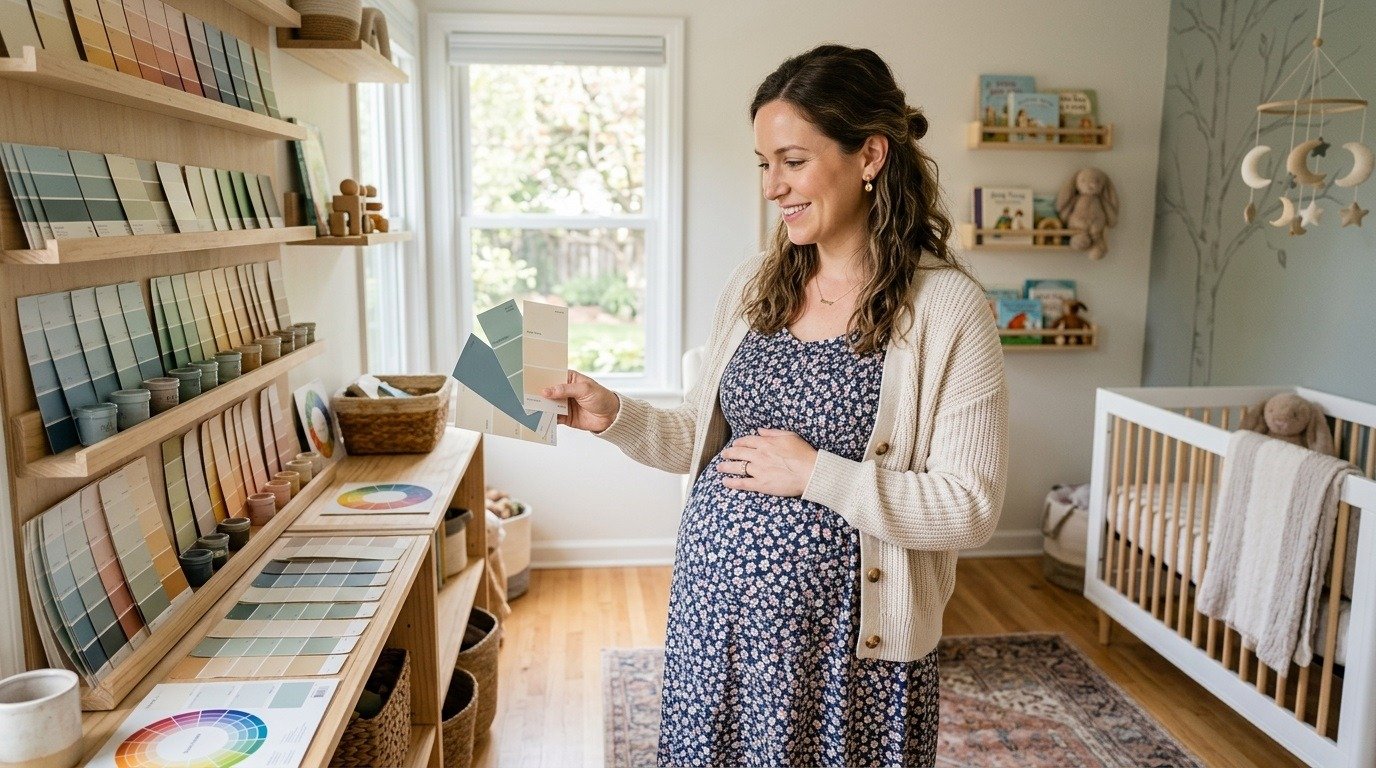
Designing and painting a nursery is one of the most exciting milestones of preparing for a new baby. However, for expecting mothers, the distinctive smell of fresh paint instantly triggers concern: Is painting a room safe during pregnancy, or could paint fumes harm my developing baby?
The short answer from medical authorities, including the American College of Obstetricians and Gynecologists (ACOG), the American Pregnancy Association (APA), and MotherToBaby (Organization of Teratology Information Specialists), is that painting a room with modern, water-based latex paint in a well-ventilated space carries a very low risk of harm.
However, “low risk” does not mean zero precautions. Your level of exposure, the chemical formulation of the paint, the trimester you are in, and the age of your home all play critical roles in determining safety.
While modern interior paints are far safer than those used decades ago, solvent exposure, air quality, physical safety, and hidden environmental hazards like lead dust still require careful consideration.
This guide breaks down the clinical medical evidence on paint chemical exposure, outlines trimester-by-trimester safety guidelines, explains essential personal protective equipment (PPE), and provides actionable steps to ensure your home or 100% safe nursery transformation remains for both you and your baby.
Is Painting a Room Safe During Pregnancy? The Bottom Line
Modern household painting is considered low risk for expecting mothers if performed with low or zero VOC (Volatile Organic Compound) water-based acrylic latex paints in a well-ventilated space. Expecting mothers should avoid solvent-based oil paints, professional spray painting, stripping old paint built before 1978 (due to lead dust risks), climbing ladders, and staying in freshly painted rooms before fumes have fully cleared.
Understanding Paint Exposure Risks During Pregnancy
To evaluate safety, it helps to understand what happens chemically when paint dries. Traditional paints release chemical vapors into the air through a process known as “off-gassing”.
When liquid paint is applied to a wall, the solvents and liquid carriers evaporate so the pigments and binders can form a solid film. During this evaporation phase, gaseous organic compounds escape into the surrounding air.
Key Chemical Categories in Paint
- Water-Based Latex/Acrylic Paints: These are the standard choice for interior walls today. Water acts as the main carrier, resulting in significantly lower chemical vapor emissions and quick drying times.
- Oil-Based (Alkyd) Paints: These paints rely on organic solvents (like mineral spirits or petroleum distillates). They off-gas much higher concentrations of volatile chemicals over a longer duration and pose a higher risk during pregnancy.
- Volatile Organic Compounds (VOCs): Solvents that easily evaporate at room temperature. Common paint VOCs include toluene, xylene, acetone, and formaldehyde. High VOC inhalation can cause headaches, dizziness, nausea, and respiratory irritation.
ACOG Medical Guidance: The American College of Obstetricians and Gynecologists notes that while industrial exposure to organic solvents poses clear reproductive hazards, casual exposure to modern household interior paints in well-ventilated spaces has not been shown to cause adverse pregnancy outcomes.
What Clinical Toxicologists Say?
According to clinical toxicological data from MotherToBaby (OTIS) and the Agency for Toxic Substances and Disease Registry (ATSDR), modern interior household paints contain minimal toxic heavy metals or high-risk teratogenic solvents compared to historical or industrial coatings.
Modern water-based acrylic paints are formulated without dangerous chemical compounds like ethylene glycol ethers, phthalates, or volatile biocides. Because of these formulation upgrades, brief home exposure carries an extremely low risk for fetal development when standard cross-ventilation rules are followed.
Trimester-by-Trimester Safety Breakdown
Your baby’s development varies across pregnancy, making timing a key factor when planning home improvement projects. Let’s have a trimester-by-trimester safety breakdown for the question, is painting a room safe during pregnancy?
First Trimester (Weeks 1 to 12)
Highest Caution: The first trimester is the critical window of organogenesis, during which your baby’s core organ systems, central nervous system, and brain pathways are actively forming.
Because embryonic tissues are rapidly dividing, they are most susceptible to external chemical teratogens. While water-based latex paint is low-risk, medical experts strongly advise delegating all physical painting tasks during the first trimester to a partner, family member, or professional contractor.
Accidental Inhalation? Here is What to Do (Don’t Panic!)
If you spent 20 or 30 minutes in a room with fresh paint fumes during your first trimester, take a deep breath: brief, low-level exposure to modern household latex paint has never been conclusively linked to birth defects or miscarriage.
Follow this 4-step reassurance checklist:
- Step into fresh air immediately: Walk outside or move to an unpainted, well-ventilated room.
- Drink cold water: Hydration helps clear lingering chemical taste or throat dryness.
- Check for acute warning signs: Monitor how you feel for 15 to 30 minutes. Mild lightheadedness or nausea usually resolves quickly once you are in fresh air.
- When to call your OB-GYN or healthcare provider: Contact your healthcare provider if you experience persistent dizziness, severe headache, vomiting, or breathing difficulty.

Second Trimester (Weeks 13 to 27)
The Ideal Window: The second trimester is widely regarded as the safest and most comfortable window for nursery or home improvement. Major organ structures are already established, physical energy typically returns, and your bump has not yet limited your physical mobility.
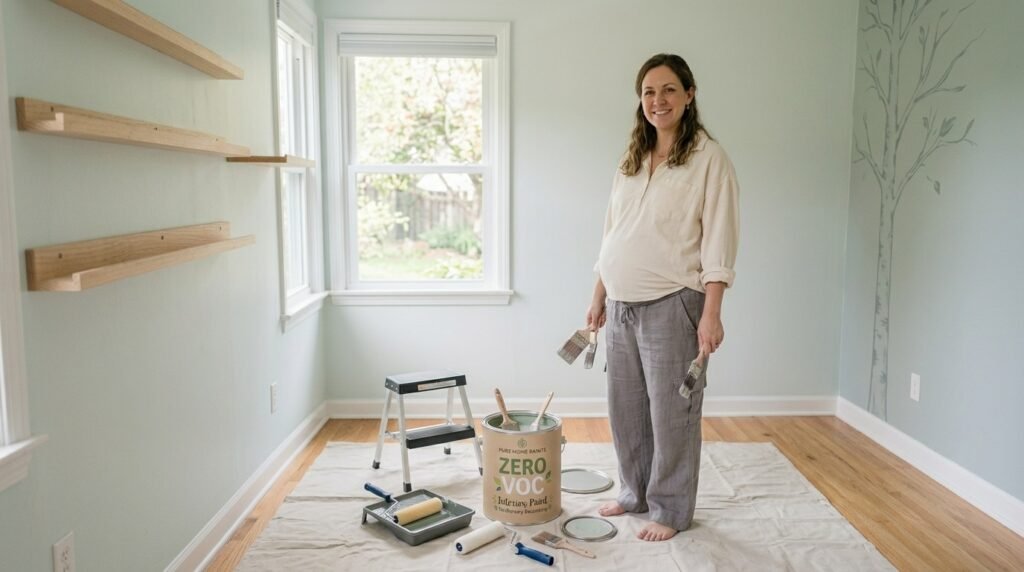
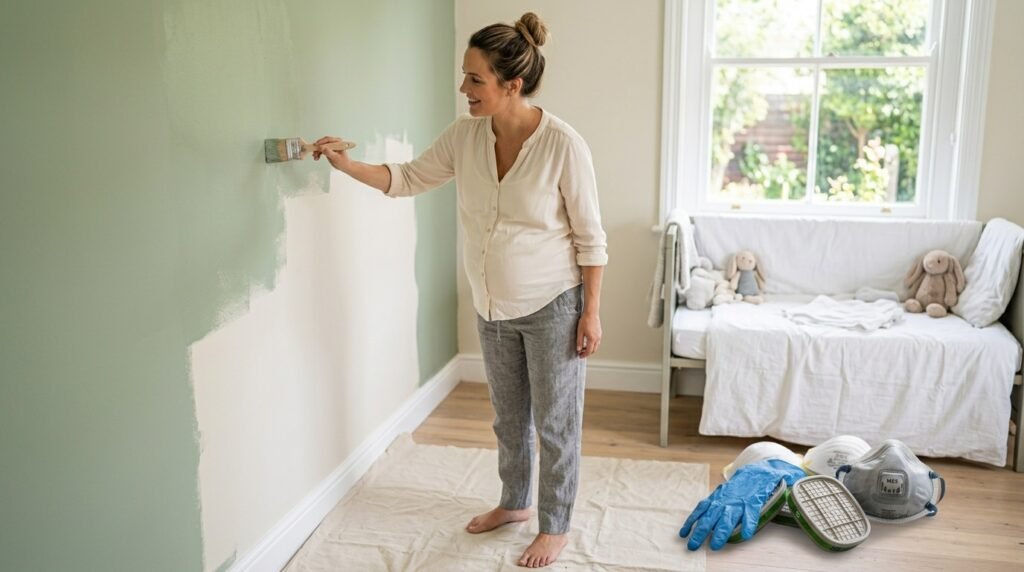
If you want to handle a paintbrush yourself, doing so during these weeks, using low or Zero-VOC water-based paint in a well-ventilated room, is considered safe by medical guidelines.
Third Trimester (Weeks 28 to 40): Ergonomic & Balance Considerations
During the third trimester, chemical toxicity is no longer the primary risk, physical strain and loss of balance are.
- Center of Gravity Shifts: As your belly grows, your center of gravity shifts forward, increasing the risk of falls from step stools or ladders.
- Joint Laxity: The hormone relaxin loosens ligaments, making joint strain and pelvic floor discomfort more likely.
- Reduced Lung Capacity: The expanding uterus pushes up against your diaphragm, making physical exertion in confined spaces more tiring.
During the third trimester, delegate overhead painting, ladder work, and heavy lifting. Focus your energy on selecting color palettes, decor, and setting up nursery furniture.
7 Crucial Safety Rules for Painting While Pregnant
If you choose to paint or supervise a nursery transformation during pregnancy, adhere strictly to these seven safety protocols.
Rule 1: Choose Certified Zero-VOC or Low-VOC Paint
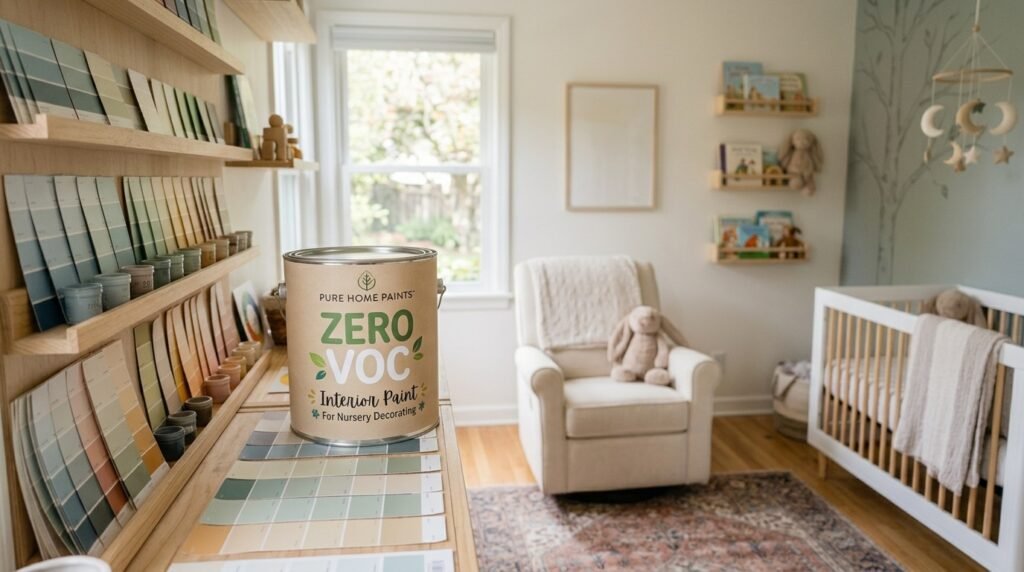
Standard paints emit VOCs for days after application. Modern eco-friendly paints eliminate or drastically reduce these emissions. Look for formulas certified by Green Seal or the GREENGUARD Gold Standard.
- Zero-VOC Paints: Contain less than 5 grams of VOCs per liter ($< 5\text{ g/L}$).
- Low-VOC Paints: Contain less than 50 grams of VOCs per liter ($< 50\text{ g/L}$).
WARNING: The Hardware Store Tint Counter Loophole
You might buy a paint can clearly labeled “Zero-VOC Base,” but as soon as the paint associate adds standard color pigments at the hardware store mixing counter, VOC levels can jump right back up (adding up to 10–20 g/L of chemical solvents per gallon).
So, explicitly request Zero-VOC Base AND Zero-VOC Colorant Tints (such as Benjamin Moore’s Gennex Waterborne Colorant system, Clare Paint, or ECOS Paints).
Rule 2: Create Active Cross-Ventilation
Never paint in an enclosed room. Opening a window is a start, but active ventilation is required to flush chemical vapors outdoors.
- Set up a Box Fan: Position a window fan facing outward to pull fumes out of the room (creating negative air pressure).
- Open Opposite Windows: Keep interior doors open and crack windows in adjacent rooms to create a continuous cross-breeze.
- Utilize HVAC Circulation: Run your central HVAC fan continuously with a fresh MERV 13 or HEPA air purifier installed.
Rule 3: Wear the Right Respiratory Protection (PPE)
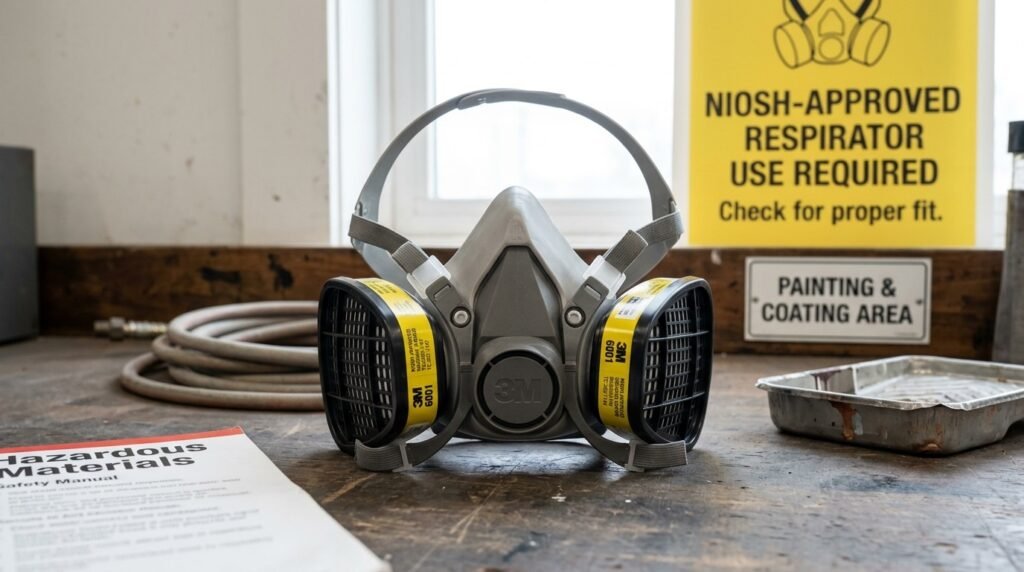
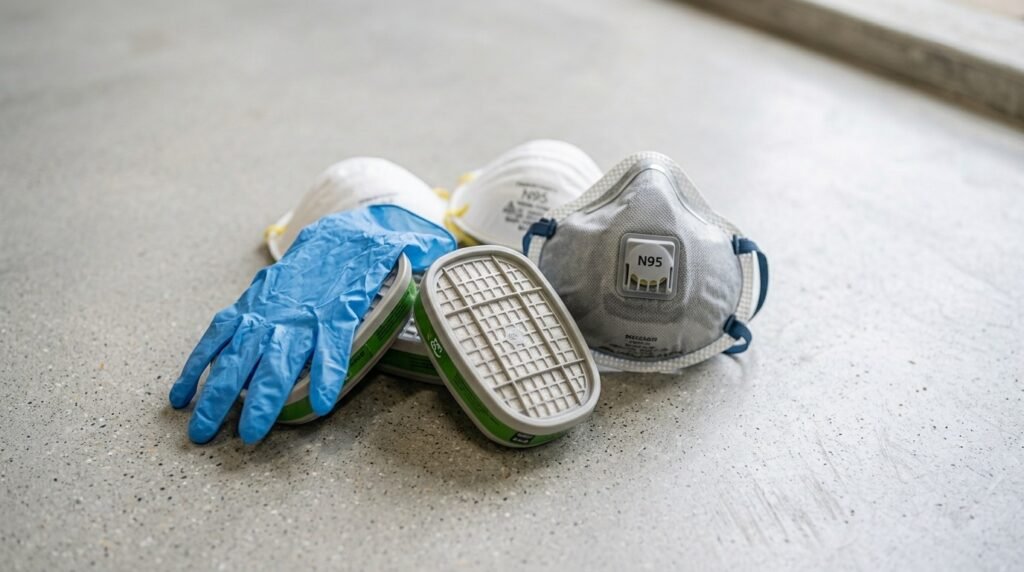
CRITICAL PPE NOTE: Standard N95 Masks Do NOT Filter Paint Fumes
A standard N95 or KN95 dust mask only traps physical airborne particles like drywall powder or sawdust, it lets 100% of gaseous chemical Volatile Organic Compounds (VOCs) pass straight through to your lungs.
What to buy instead: If you are painting or standing near active painting, wear a NIOSH-approved Half-Facepiece Respirator equipped with Organic Vapor (OV) Cartridges (such as the 3M 6000 Series with 6001 OV cartridges). The activated carbon layer inside these cartridges actively adsorbs chemical vapors before you breathe them in.
Rule 4: Wear Protective Clothing to Prevent Dermal Absorption
Chemicals can be absorbed through skin contact. Wear long sleeves, full-length pants, and nitrile gloves. If paint splatters onto your skin, wash it off immediately with warm water and mild soap, never use harsh chemical solvents like mineral spirits or turpentine on your skin.
Rule 5: Keep Food and Drinks Out of the Work Area
Never leave open water bottles, snacks, or coffee cups inside a room that is actively being painted. Gaseous VOCs can settle onto food and liquid surfaces, leading to accidental chemical ingestion.
Rule 6: Take Frequent Fresh-Air Breaks
Limit active painting sessions to 30 to 45 minutes at a time. Step outside or move into a completely unpainted living space to breathe fresh outdoor air and stay hydrated.
Rule 7: Enforce a 48-to-72-Hour Curing Window
Do not sleep in a freshly painted room immediately, even if Zero-VOC paint was used. Keep windows cracked and fans running for 48 to 72 hours after painting concludes to allow the paint film to fully cure and off-gas before setting up the crib or bassinet.
Partner Painting Rule: The 3-Zone Containment Strategy
Can I Stay in the House While My Partner Paints the Nursery?
Yes, expecting mothers can safely stay home while a partner, family member, or professional contractor paints, provided you follow the 3-Zone Containment Strategy:
- Zone 1 (The Painting Room): Keep the nursery door completely closed. Place a box fan in the nursery window blowing outward to create negative air pressure. This pulls fumes directly out of the house rather than into the hallway.
- Zone 2 (The Buffer Zone): Keep hallway windows cracked and do not linger in rooms directly adjacent to or across from the nursery.
- Zone 3 (Your Safe Haven): Relax in an unpainted section of the house located on a separate floor or on the opposite side of the home.
Hidden Dangers to Avoid Entirely During Pregnancy
While applying water-based interior paint is low-risk, certain home renovation activities carry severe medical hazards during pregnancy and must be completely avoided.
| Renovation Hazard | Associated Risk | Safe Medical Alternative |
|---|---|---|
| Sanding Pre-1978 Paint | Lead Dust Exposure: Inhaled lead dust passes through the placenta, causing irreversible neurological damage and developmental delays. | Hire an EPA Lead-Safe Certified Renovator to test and encapsulate old lead paint. |
| Chemical Paint Strippers | Methylene Chloride / NMP Toxicity: Solvent strippers contain carcinogens and teratogens linked to fetal harm. | Use mechanical scraping with local HEPA vacuum attachment (performed by non-pregnant partner). |
| Oil-Based Spray Painting | Aerosolized Solvent Inhalation: Spraying atomizes toxic solvents, making pulmonary absorption rapid. | Avoid spray equipment entirely; stick to manual water-based roller application. |
| Stain Stripping / Varnishing | High VOC Off-Gassing: Wood stains and polyurethanes off-gas heavy solvents over extended periods. | Use water-based polyurethane alternatives and delegate application. |
Frequently Asked Questions: Is Painting a Room Safe During Pregnancy?
Can paint fumes cause miscarriage or birth defects?
Brief, low-level exposure to modern indoor water-based latex paint in a well-ventilated home has not been linked to miscarriage or birth defects. High-level, chronic occupational exposure to industrial organic solvents (such as methylene chloride or toluene) does carry severe reproductive risks, which is why commercial solvents and oil paints must be avoided.
How long after painting a room is it safe for a pregnant woman to sleep in it?
Wait 48 to 72 hours after painting before sleeping in the room. Keep windows cracked and run an air purifier equipped with a HEPA filter and an activated carbon canister (which absorbs chemical vapors) during this window.
Are zero-VOC colorants used at hardware store mixing counters?
Not automatically. While the base paint can may be Zero-VOC, traditional colorants added at the counter often contain VOC solvents. Always explicitly ask the store associate for Zero-VOC tints (such as Benjamin Moore Gennex or Clare).
Is it safe to use water-based acrylic paint for craft projects or baby shower decor?
Yes. Small craft projects using water-based, non-toxic acrylic paint emit negligible VOCs. Keep a window cracked, wear nitrile gloves to avoid dermal absorption, and wash hands thoroughly with soap and warm water afterward.
What should I do if I begin feeling dizzy or nauseous while painting?
Stop painting immediately. Leave the room, step into fresh outdoor air, drink a glass of cold water, and sit down. If dizziness, confusion, or a severe headache persists after 30 minutes in fresh air, contact your OB-GYN or midwife for medical evaluation.
What should I do if I accidentally inhaled paint fumes while pregnant?
Don’t panic. Stepping into fresh outdoor air quickly resolves brief, mild exposure. Drink plenty of water and rest. If you experience persistent dizziness, severe headache, confusion, or nausea, contact your obstetrician or call your local Poison Control Center (1-800-222-1222 in the U.S.) for guidance.
How long after painting is a room safe for a pregnant woman or newborn baby?
Even zero-VOC paints require time to dry and cure fully. Keep windows cracked and exhaust fans running for 2 to 3 days (48 to 72 hours) after painting completes. Once any lingering odor has completely dissipated and the surface feels dry, the room is safe for occupation.
Is chalk paint or milk paint safe during pregnancy?
Yes! Authentic milk paint and natural chalk paints are typically water-based, non-toxic, and virtually odorless, making them excellent choices for furniture projects during pregnancy. Always check the manufacturer’s technical safety sheet to confirm no solvent-based sealers or toxic topcoats are required.
Can I paint wooden nursery furniture or cribs while pregnant?
You can paint wooden furniture if you use water-based, zero-VOC acrylic or chalk paints in an outdoor space or open garage. Avoid using oil-based wood stains, polyurethane varnish, or chemical furniture refinishers, as these contain high solvent concentrations.
Summary: Is Painting a Room Safe During Pregnancy?
When asking yourself is painting a room safe during pregnancy, remember that taking modern safety precautions makes all the difference. By selecting zero-VOC water-based latex paints, setting up strong cross-ventilation, wearing protective gear, keeping your feet firmly on the floor, and skipping high-risk demolition work, you can enjoy preparing your nursery without compromising safety.
When in doubt, listen to your body, take frequent rest breaks, and don’t hesitate to pass the paintbrush to an eager partner, family member, or friend!
Did this guide help you? Consider sharing it with another mom-to-be and drop in your valuable suggestions below.