How to Shower Safely After a C-Section: Timeline, Medical Rules, Incision Care & Red Flags

Stepping into the shower safely after a C-section can feel like preparing for an obstacle course you never trained for. You’re exhausted, fiercely protective of your lower belly, and suddenly wondering if basic water and soap could somehow undo your major abdominal surgery.
If your heart is racing a bit at the thought of stepping over that tub ledge or you’re terrified of getting your incision wet, take a deep breath. You are so normal, and you are not alone in feeling this way.
That first shower at home is supposed to be a moment of pure relief, the quiet reset every sleep-deprived new mom desperately needs. But when you’re navigating nerve numbness, a tender scar, and an “apron belly” fold that makes drying off feel downright impossible, the fear of messing something up can take over completely.
What if water burns the stitches? What if the Steri-Strips peel off too soon? And how do you actually wash your legs when bending over isn’t an option?
Here’s the good news: shower safely after a C-section doesn’t require complex medical skills, just a few smart, physical hacks that no one bothered to mention in your hospital discharge papers.
In this guide, we’re stripping away the clinical jargon and breaking down the exact step-by-step shower protocol used by postpartum nurses. You’ll discover the indirect washing technique that protects your incision, the zero-friction drying secret for belly folds, and the simple 10-second test to know if your scar is healing perfectly.
Let’s turn that nerve-wracking shower into the safe, refreshing reset you truly deserve.

How to Shower Safely After a C-Section
When is it safe?
Most mothers can take a standing shower 24 to 48 hours after surgery, once approved by their OB-GYN or postpartum care team.
The Key Safety Rules for shower safely after a C-Section:
- Never submerge: No baths, hot tubs, or swimming for at least 6 weeks.
- Indirect water flow: Face away from the showerhead; let warm water cascade over your shoulders and flow gently down your stomach.
- No scrubbing: Use a fragrance-free, gentle cleanser. Let soapy suds run over the incision naturally.
- Pat dry (Never rub): Gently pat the scar with a fresh towel or use a hair dryer on the COOL setting.
In a Panic? Read This First
- Did a Steri-Strip fall off early? Don’t panic. If your wound is closed and not bleeding, gently pat the area dry and leave it alone. Do not force or peel remaining strips.
- Is your incision stinging? This is usually a temporary reaction to warm water or soap. Rinse thoroughly with plain lukewarm water and pat dry.
- When to call your doctor immediately: If you see active bright red bleeding, a gap opening in your scar, or thick foul-smelling discharge, place a sterile pad over the wound and call your doctor or OB-GYN right away.
The Postpartum Shower Timeline: When Is It Actually Safe?
The transition from a hospital sponge bath to a standing shower at home is a huge milestone in your C-section recovery. However, timing depends heavily on the type of incision closure your surgeon used and whether you experienced any surgical complications.
According to the American College of Obstetricians and Gynecologists (ACOG), keeping your surgical incision clean and dry is one of the most effective ways to prevent surgical site infections (SSIs), which affect approximately 3% to 15% of C-section deliveries globally.
| RECOVERY TIMELINE | PERMITTED WASHING METHOD | INCISION SAFETY RULES |
|---|---|---|
| Days 1–2 (In Hospital) | Assisted Sponge Bath /Guided Standing Shower | Keep hospital bandage clean; avoid soaking. |
| Days 3–14 (Home Care) | Standing Shower Only | Indirect warm water; pat dry completely. |
| Weeks 2–6 | Full Standing Showers | Let Steri-Strips fall off naturally; no rub. |
| Week 6+ | Baths, Hot Tubs, Swimming | ONLY after OB-GYN 6-week clearance. |
Day 1 to Day 2: The Hospital Phase
Before leaving the hospital, your nurse will likely remove your initial heavy surgical dressing (unless you have a negative-pressure wound vacuum like a PICO pump). Once that primary bandage is off, you’ll usually receive the green light for your first shower.
Your first post-op shower should always be supervised. The combination of standing up, warm water, and pain medications can cause a sudden drop in blood pressure (orthostatic hypotension), leaving you dizzy or lightheaded.
Days 3 to 14: Returning Home
Once you’re home, daily showering is actually encouraged! Showering removes sweat, bacteria, and lochia (postpartum bleeding) residue that can collect around your groin and lower abdomen.
During these first two weeks:
- Showers only: Keep them under 10 to 15 minutes to prevent exhaustion.
- Lukewarm water: Avoid scalding hot water, which dilates blood vessels and increases dizziness.
- No body soaks: Standing or seated showering is fine, soaking in a tub is not.
Why Baths Are Strictly Off-Limits for 6 Weeks
It’s tempting to think a warm bath would soothe your aching muscles, but submerging a fresh surgical incision in stagnant water is a recipe for infection.
Your cervix remains slightly dilated after birth as your uterus sheds lochia. Submerging your lower body in bathwater introduces bacteria into both your vagina and your unhealed abdominal incision. Save the bath salts until your OB-GYN confirms your incision is completely closed at your 6-week postpartum checkup.
Why warm showers make you dizzy post-surgery?
According to guidelines from the Association of Women’s Health, Obstetric and Neonatal Nurses (AWHONN), postpartum mothers face a heightened risk of orthostatic hypotension, a sudden drop in blood pressure when standing. Surgical blood loss, lower hemoglobin levels, and heat-induced vasodilation (expansion of blood vessels from warm water) direct blood away from your brain and core.
The 3-Step Fainting Prevention Protocol
- Keep water lukewarm, not hot: High heat dramatically accelerates blood pressure drops.
- Sit before standing: Use a shower stool or bench so you aren’t standing in static posture for longer than 5 minutes.
- The “Cool Washcloth” Trick: Keep a cool, wet washcloth on the back of your neck to help regulate core body temperature while washing.

5-Step Protocol to Shower Safely After a C-Section
To make your shower routine stress-free, follow this protocol every time you bathe during the first month.
Step 1: Prepare Your Bathroom Environment
Before you even turn on the water, set up your space so you don’t have to strain your core muscles:
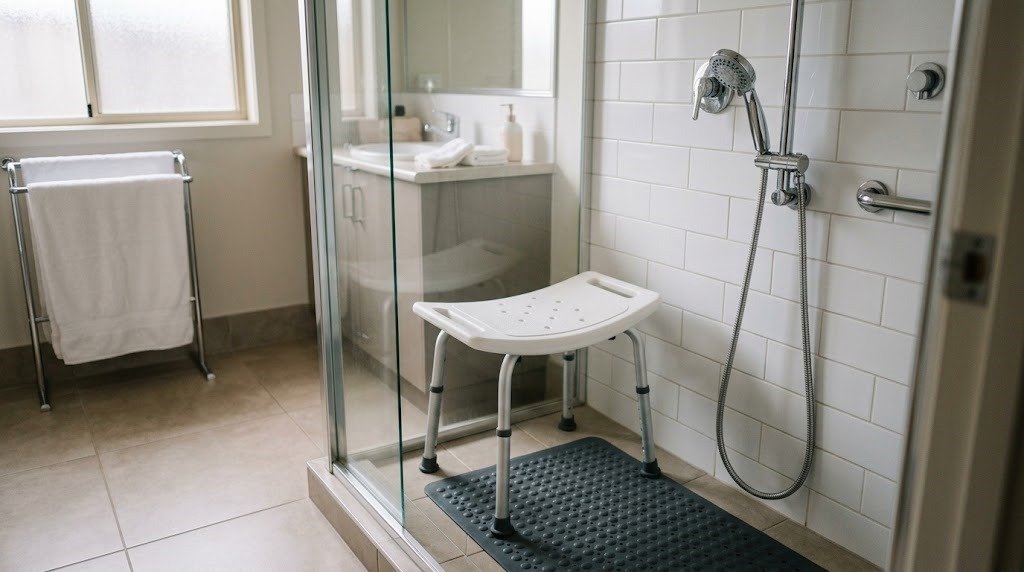
- Place a non-slip bath mat both inside and outside the shower.
- Set up a shower stool or chair (available at retailers like Target, Walmart, or Amazon). Being able to sit while washing your hair prevents fatigue.
- Keep your supplies at chest height. Move your body wash, shampoo, and towel so you don’t have to reach up or bend down.
- Ask for backup. Have your partner or a family member stay in the bathroom or right outside the door for the first 3 to 4 home showers.
Step 2: Position Your Body Away from Direct Pressure
Never let a high-pressure shower stream hit your C-section incision directly. Strong water pressure can force bacteria into microscopic gaps in the wound or prematurely tear off protective skin adhesives.
- Turn your body so your back faces the showerhead.
- Let the water hit your upper back and shoulders.
- Allow the water to cascade gently over your chest, down your stomach, and over your lower belly.
Step 3: Cleanse with Care (The “Rinse-Over” Method)
When washing the area around your incision, less is more.
- Take a small amount of fragrance-free, gentle cleanser (such as Cetaphil Gentle Skin Cleanser or Dove Sensitive Skin).
- Lather the soap in your hands above your belly button.
- Gently smooth the suds over your upper abdomen and let the warm shower water rinse the soap down over your scar naturally.
- Never use a loofah, washcloth, or scrub brush near your incision line. These harbour bacteria and can snag on stitches or staples.
Step 4: Wash Surrounding Body Areas Without Bending
Bending forward at the waist puts immense intra-abdominal pressure on your healing fascia.
To wash your lower body safely:
- Use a long-handled shower sponge to clean your legs and feet.
- If you drop something (like the soap bar), do not bend down to pick it up. Leave it until your shower is finished and ask your support person to grab it.
- To clean your perineal area (if experiencing heavy lochia), use your hospital-issued peri bottle filled with warm water while sitting on your shower stool or toilet.
Step 5: Execute the Zero-Friction Drying Method
How you dry off after your shower is just as important as how you wash!
- Never drag or rub a towel across your incision line.
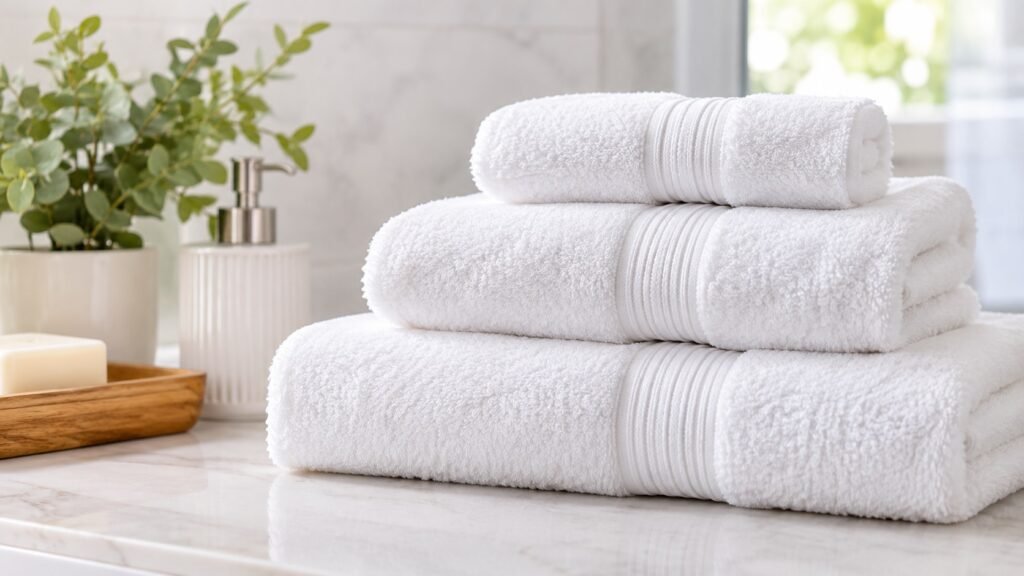
- Take a fresh, clean towel (or clean paper towels) and gently pat the incision area until surface moisture is absorbed.
Towel Hygiene & Cross-Contamination Rules
- The Single-Use Rule: Never reuse a body towel on your C-section scar. Use a fresh, dedicated washcloth or clean paper towel solely for the incision line.
- Top-to-Bottom Separation: Dry your upper body and hair first, pat your incision dry second, and dry your perineal area last to prevent transferring vaginal lochia or fecal bacteria to your open abdominal wound.
How to Handle Different Wound Closures in the Shower
Every surgeon has a preferred closure technique. How you care for your scar in the shower depends directly on what is covering your incision.
| CLOSURE TYPE | SHOWER CARE INSTRUCTIONS |
|---|---|
| Steri-Strips (Skin Tape) | Let water cascade over them; do not peel manually. They will fall off naturally within 7–10 days. |
| Surgical Glue (Dermabond) | Avoid oil-based soaps near the scar; gently pat dry. Glue dissolves slowly over 10–14 days. |
| Metal Staples | Watch for towel snags; ensure 100% dry after shower. Removed by doctor at 7–14 days post-op. |
| PICO / Wound Vac | Keep pump unit OUT of water; cover waterproof dressing properly per surgeon instructions. |
1. Steri-Strips (Paper Tape Strips)
Steri-Strips are thin, sterile adhesive strips placed across your incision to reinforce closure.
- In the shower: Water can safely run over Steri-Strips. They are designed to stay sticky when wet.
- After the shower: Gently pat them dry. Do not blow-dry them with hot air, as heat can break down the adhesive prematurely.
- Removal: Let them curl up and fall off on their own (usually around Days 7 to 10). If edges curl up, you can carefully trim the loose ends with clean scissors, but never pull off a strip that is firmly stuck.
2. Surgical Glue (Dermabond)
Liquid skin adhesive forms a clear or bluish waterproof barrier over your incision.
- In the shower: Surgical glue is water-resistant. Water will slide right off it.
- Key warning: Avoid oil-based soaps, body lotions, or ointment around the scar, as lipids dissolve the adhesive barrier early.
- Removal: The glue will naturally slough off over 10 to 14 days as your top layer of skin sheds.
3. Metal Staples
Some surgeons use stainless steel staples, particularly for emergency C-sections or higher-BMI mothers.
- In the shower: Staples can get wet, but you must be extremely cautious with towels or sponges.
- After the shower: Ensure the metal staples are thoroughly pat-dried to prevent skin maceration around the entry points.
4. PICO / Negative-Pressure Wound Vacs
If you received a PICO pump (a small battery-powered vacuum device attached to a sealed bandage), you must take extra care:
- The dressing itself is waterproof, but the electronic pump unit is NOT.
- Disconnect or secure the pump unit outside the shower according to your discharge instructions.
- Do not direct the shower stream straight at the seal edges of the dressing.
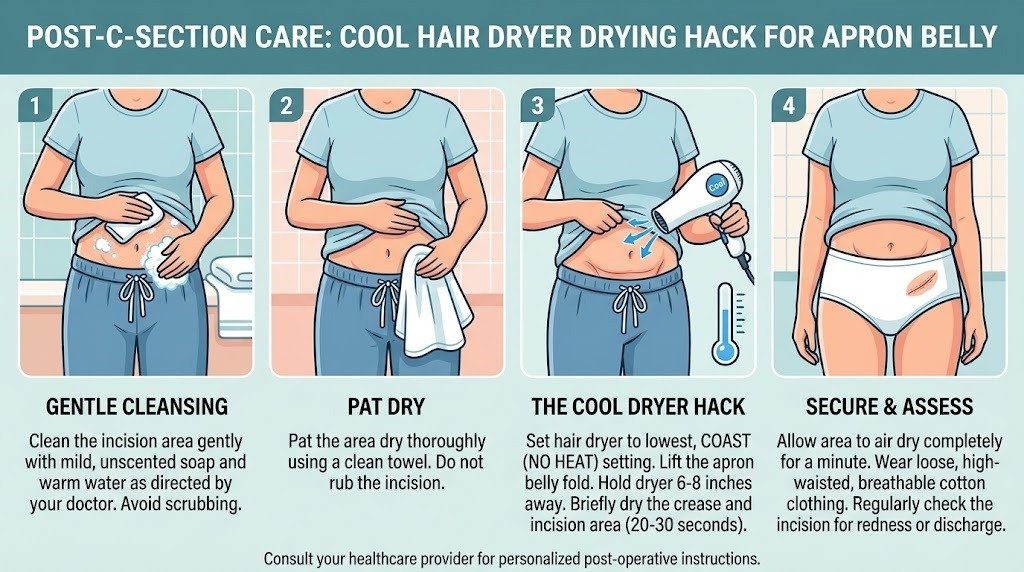
The “Apron Belly” Drying Hack: Preventing Yeast & Intertrigo to Shower Safely After a C-Section
For mothers with an “apron belly” (a fold of skin or abdominal panniculus that hangs over the lower incision line), drying off after a shower presents a unique physical challenge.
When moisture becomes trapped under a skin fold, the dark, warm environment creates a breeding ground for Candida (yeast infections) and intertrigo (inflammatory skin breakdown). In fact, studies show that skin fold moisture is one of the leading contributors to post-op wound complications in plus-size mothers.
The 3-Step Cool Hair-Dryer Method
To ensure 100% dryness beneath an abdominal overhang without painful rubbing:
- Gently Lift and Pat: Stand upright or recline on your bed. Gently lift the belly fold upward with one clean hand. Use a fresh towel or sterile paper towel to pat away excess surface water.
- The Cool Hair-Dryer Hack: Set a standard hair dryer to the COOL / NO-HEAT setting. Hold the nozzle 8 to 10 inches away from your skin and direct the cool air stream beneath the belly fold for 30 to 60 seconds. (Never use a warm or hot setting, which can burn numb skin).
- Tuck a Moisture Barrier: Place a sterile, dry 4×4 gauze pad or a soft piece of 100% breathable cotton fabric under the skin fold right above (not directly touching) the incision to absorb sweat throughout the day.
Physical Support Mechanics for Plus-Size / Large Panniculus Care
Lifting a heavy abdominal fold can pull painfully on deep muscle stitches. To lift safely without straining your core:
- The Wall-Recline Method: Stand with your back supported firmly against the shower wall, or sit on a sturdy shower bench.
- Use Both Hands to Cup, Not Pull: Use the palm of your hand to gently cup and lift the abdominal fold straight upward toward your chest rather than pulling it outward.
- Tuck a Breathable Layer: Once dry, tuck a sterile 4×4 gauze pad or a folded 100% cotton interlock barrier into the fold. This prevents skin-on-skin friction (intertrigo) and absorbs residual sweat throughout the day.
Red Flags: When C-Section Incision Symptoms Require Immediate Care
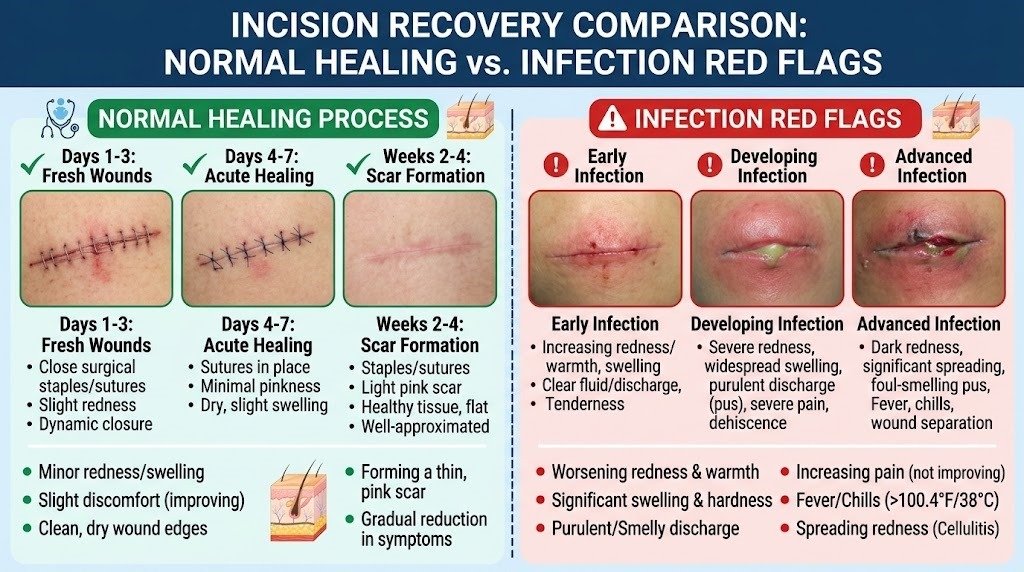
While mild itching, numbness, and slight tugging sensations are normal parts of nerve regeneration, you must know how to spot the signs of a surgical site infection.
According to CDC Wound Care Guidelines, catching an infection early prevents severe complications such as wound dehiscence (opening of the surgical site) or deep tissue abscesses.
When to Seek Immediate Medical Attention
Contact your OB-GYN, midwife, or triage line immediately if you notice:
- Redness spreading outward from the scar line.
- Thick green or foul-smelling pus oozing from the incision.
- Fever over 100.4°F (38°C) accompanied by chills.
- The incision edges pulling apart or opening.
- Heavy vaginal bleeding that fills more than one maxi pad in an hour.
Essential Shower Safety Gear (Available at U.S. Retailers)
Having the right recovery tools ready in your bathroom to ensure shower safely after a C-section and more comfortable. Most of these items are easily found at major retailers like Target, Walmart, CVS, or Amazon.
- Shower Stool or Transfer Bench: Look for a water-resistant stool with rubber non-slip feet. Being able to sit down while washing your hair conserves your energy and prevents dizziness.
- Handheld Showerhead Extension: A detachable showerhead with a flexible hose lets you control exactly where the water flows, keeping direct spray off your lower belly.
- Fragrance-Free Cleanser: Choose mild cleansers such as Cetaphil Gentle Skin Cleanser, CeraVe Hydrating Body Wash, or Dove Sensitive Skin Beauty Bar. Avoid soaps containing artificial dyes, heavy perfumes, or exfoliating acids.
- Long-Handled Body Sponge: Allows you to clean your legs, calves, and feet without bending forward or twisting your abdominal core.
- Sterile Gauze Pads (4×4 inches): Perfect for patting small sections of the incision dry or tucking under belly folds to manage moisture.
Frequently Asked Questions: Shower Safely After a C-Section
What should I do if my Steri-Strips get completely soaked in the shower?
It is completely normal for Steri-Strips to get soaked during a shower. Gently pat them dry with a clean towel. Do not attempt to dry them with hot air or rub them. As long as the edges remain attached to your skin, leave them alone. They will peel off naturally over 7 to 10 days.
Can I wash my hair normally after a C-section?
Yes, but avoid bending forward over a sink or tub. Wash your hair standing upright in the shower with your back to the water stream, or sit on a shower stool and tilt your head back slightly. If lifting your arms hurts your abdominal stitches, ask your partner or a family member to help shampoo your hair for the first week.
Is it normal for my C-section incision to sting in the shower?
Mild tingling or temporary sensation changes can happen as severed nerve endings begin to heal. However, sharp burning or severe stinging usually indicates that your soap contains irritating fragrances/chemicals, your shower water is too hot, or the skin is developing an infection or yeast outbreak. Switch to plain warm water or fragrance-free soap, and consult your care provider if stinging persists.
What is the best soap to use on a C-section scar?
The best soap is a plain, unscented, hypoallergenic cleanser. Look for liquid options labeled “fragrance-free” and “for sensitive skin.” Avoid antibacterial soaps containing harsh chemicals unless your surgeon specifically prescribed a product like Hibiclens prior to or after your surgery.
Can I apply antibiotic ointment like Neosporin after showering?
Do not apply any creams, ointments, or silicone scar gels to your incision until your OB-GYN has inspected the scar and confirmed it is 100% closed (typically at your 6-week postpartum visit). Applying heavy ointments to a fresh surgical wound traps moisture and bacteria, increasing infection risk.
Can I shower if my C-section incision is slightly oozing clear fluid?
Yes. Light, clear, or pale pink fluid (serosanguinous drainage) in small amounts is a normal part of early tissue healing. Showering with gentle, indirect water helps keep the area clean. However, if the fluid turns thick, milky, yellow/green, or smells foul, skip the shower and contact your provider immediately.
What should I do if soap gets directly under my Steri-Strips?
Do not try to peel or scrub under the strips to remove the soap. Simply turn your back to the water and let clean, warm water cascade over the area until all suds naturally rinse away. Gently pat dry with a clean paper towel.
Is it safe to wear my C-section belly band immediately after showering?
No. Always wait 15 to 20 minutes after your shower before strapping on a compression garment or belly binder. Trapping microscopic skin moisture beneath elastic or latex fabrics creates a warm, dark environment that encourages fungal and yeast growth (Candida) over your scar line.
Can I use antibacterial hand soap on my incision if I run out of body wash?
No. Antibacterial hand soaps contain harsh surfactants, heavy synthetic fragrances, and alcohol that strip the skin’s protective lipid barrier and delay tissue regeneration (re-epithelialization). Stick to plain warm water or a gentle, fragrance-free facial/body cleanser like Cetaphil or Dove Sensitive Skin.
Summary: Shower Safely After a C-Section
Taking your first few showers after a C-section requires extra patience, gentle movements, and a little preparation but it is also a vital step in reclaiming your physical comfort and peace of mind.
Remember: go slow, listen to your body, sit down if you feel tired, and never hesitate to reach out to your doctor or midwife if a symptom feels off. You have just been through major surgery while bringing new life into the world. Be gentle with yourself, take it one shower at a time, and enjoy every second of that warm, refreshing reset.
Did this guide help you? Consider sharing it with another mom and stay connected for more useful guides for your safe postpartum journey. Do read Complete Postpartum Home Care Checklist from this site for useful tips.